

PlayStation’s Biggest Marketing Mistake No One’s Talking About
Unless you live under a rock, you’ll know by now that on July 1st, Sony announced that starting in January 2028 there will be no more physical games for their consoles going forward.
I’m not here to debate the rights and wrongs of the decision to stop putting games on discs. That’s not my purpose with this particular article today.
But just in case it matters: I’m still a physical-first gamer myself. Not physical-only, but physical-first. I buy digital for things like indies or hard to get physicals or games I’m taking a risk on and waiting for a sale that I’m comfortable with. But for day-one games and the ones I care to collect for, I’m a physical gamer.
In fact, for the past year some games I’d normally pick up on Switch I’ve been buying on PS5 instead because I won’t buy game key cards since they don’t appeal to me.
But my reasons and my habits are my own. I’m not here to judge or dictate the rights or wrongs of personal player habits. I am and will always be an advocate of consumer choice and protections, and my passion for my favorite hobby – while suffering some wounds this year – isn’t going anywhere anytime soon.
That aside, what I AM here to talk about is this: I may write about games for the love of it, but I make my living as a marketer. Specifically, an enterprise B2B tech content marketer with a decade of experience under my belt.
And there’s something that’s been bothering me about Sony’s big “death to discs” announcement that isn’t just what they said but how they said it.
So let’s discuss.
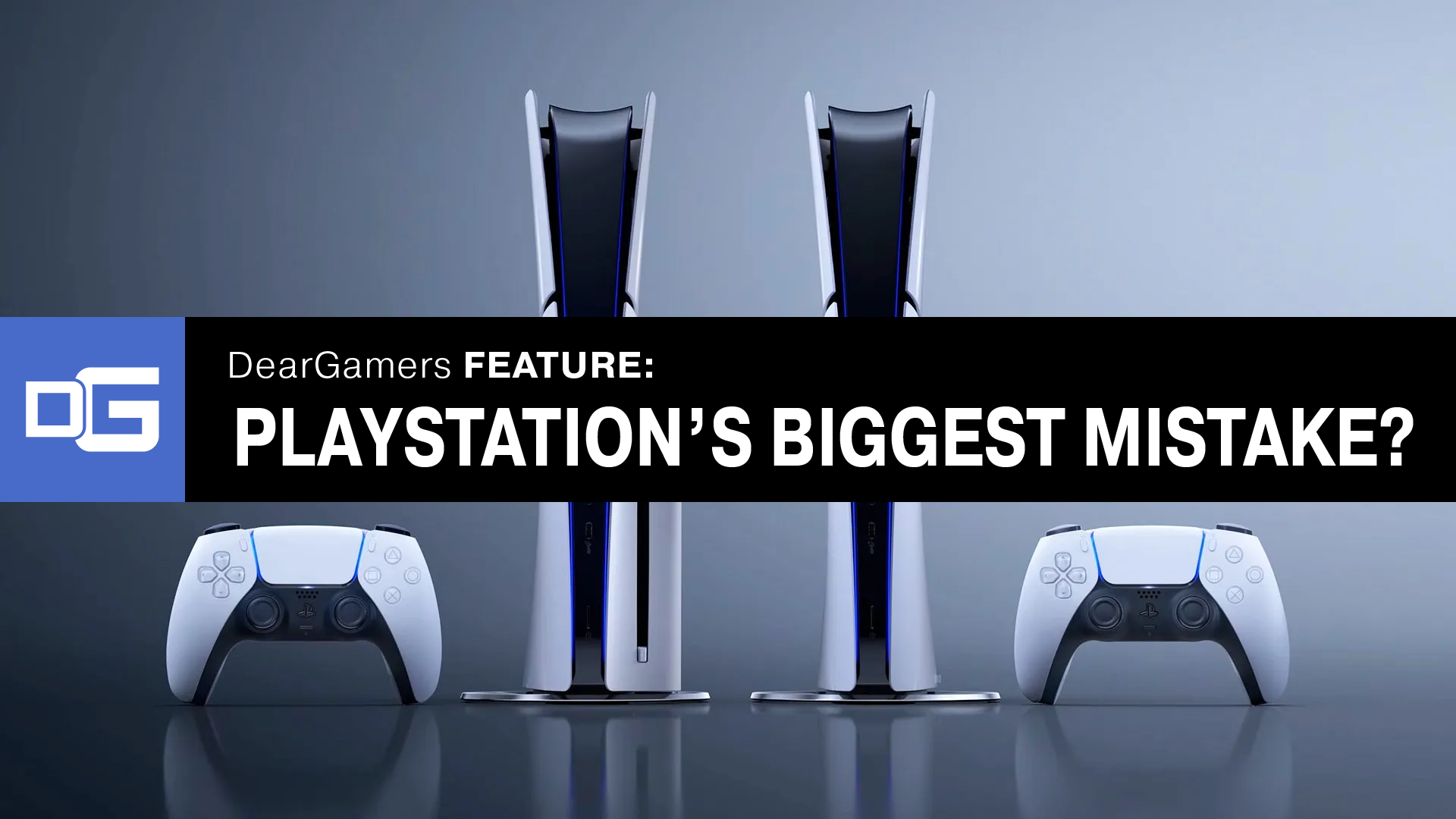
First of all, let’s just assume for the sake of argument that the decision to go all-digital is irreversible.
Sony as the parent company of PlayStation is looking at market viability and manufacturing lines and how to optimize their profits not just in the gaming sector, but across their entire product portfolio and production pipelines. There’s a diminished demand for Blu-rays but heightened demands for other tech that they could be supporting.
Of course, looking within PlayStation itself there are other factors like the closed ecosystem control of software sales on their platforms, the cost of physical media production and third-party supply chain distribution, and the compatibility of software across current gen and next gen hardware (especially if the Sony handheld rumors are true). We all know the incentives behind why PlayStation would want to discontinue support for physical games.
All that being the case, if I were to sum up my take as a marketer on HOW they announced the death of discs, it would go something likes this:
Sony had an opportunity to reassure their core audience by positioning themselves as the partner to help lead players into the all-digital future.
They could have led the announcement with plans about how they will support your existing physical library, clarity around what third-party retail support will look like, and steps for how they will improve consumer protections for a better user experience on their platforms.
But they didn’t do that.
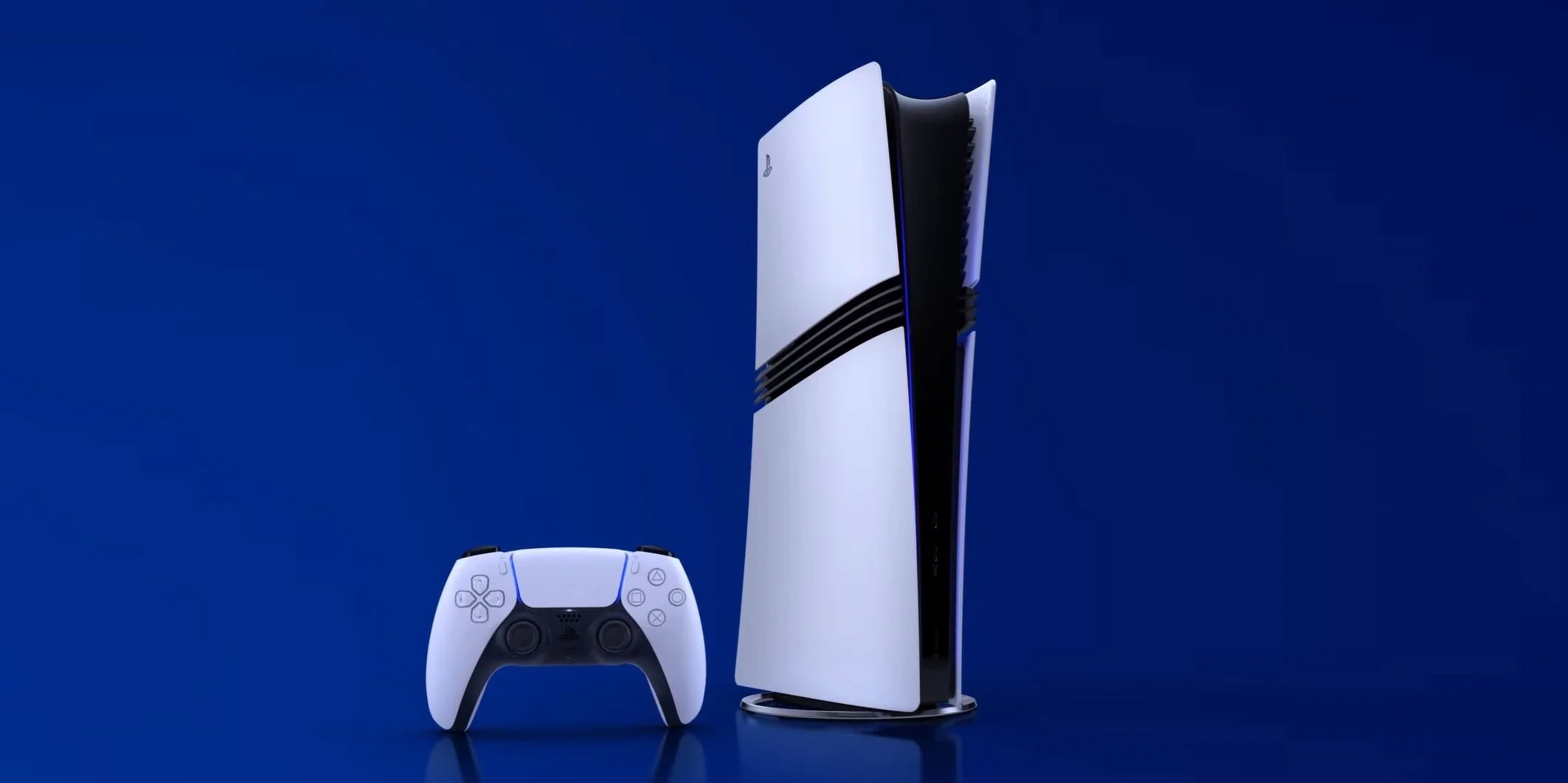
Rather than offer a roadmap of how they’ll lead players into the next generation, they incited a car crash and pulled a hit and run, going silent on socials in the weeks to follow with no response or update on the situation.
Where they could have instilled confidence, they have instead sparked anxiety – which was already primed to explode given the amount of stress and negativity roiling in the gaming community all throughout 2026.
Prices for consoles are repeatedly spiking, $80 games are starting to rear their head, and RAMageddon rages on as AI drives up the cost of everything – not to mention the swathes of industry layoffs seemingly penalizing devs whether they make a good game or not. Gamers are constantly assailed with bad news that makes it seem like the thing they love is about to be out of reach.
And you choose NOW to announce what many of them were dreading with the death of physical media and yet another blow to consumer choice?
It’s an ultimate failure to read the room.
“Tone deaf” doesn’t even begin to describe PlayStation’s announcement. “Arrogant” probably helps.
When people say that PlayStation is leaning on their market dominance that puts them miles ahead of their primary competitor in the dedicated home console space, I can’t really disagree. They’re seemingly winning this generation against Xbox 3-to-1 and are touting an 80% rate of digital vs. physical software sales.
In their PlayStation blog announcement, they even framed their messaging as aligning with purchasing habits and player preference – as if the decision was something their audience would celebrate.
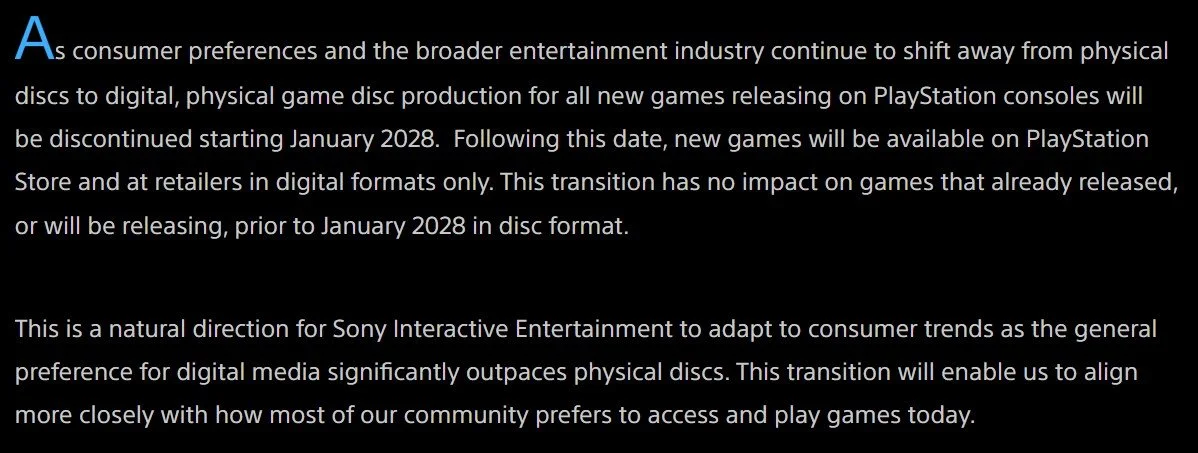
Are they totally wrong about buying habits? No. The data clearly suggests otherwise. Most of their consumer base has moved to digital purchases, and clearly they’re banking on the remaining 20% to either do the same or get left behind in the hopes that the latter category will be a negligible percentage.
But does that mean their core audience – the target demographic who will read this announcement and share it online – will unanimously applaud the removal of physical media?
Of course not.
People don’t celebrate less choice. They don’t celebrate vendor lock-in and closed commercial ecosystems. They don’t dance on the graves of nostalgia, even if they themselves have left their halcyon days behind in favor of modern convenience.
And I want to double down on the importance of the “core audience” for a moment.
The “core” are more likely to be in that 20% of physical game purchases. They’re more likely to be the gamers who aren’t just picking up 1 or 2 new games a year on average. They’re more likely to be the evangelists who create word of mouth for your brand. They’re more likely to make additional purchases for services, peripherals, merch, collector editions and other paraphernalia associated with your platform and IP.
While they may not be the biggest piece of the pie by sheer headcount, they certainly are the loudest and have the highest attach rate. Their loyalty is where you generate repeat spend. Their fandom is where you engender free publicity on social platforms.
So why would you choose to break their trust, replacing it instead with outrage and anxiety, when they represent the most bought-in portion of your addressable market? At a time when console sales are flagging and profit margins are seemingly never enough to keep studios in the black no less.
Something that Sony seems to have forgotten in all this is that their products are a leisure, not a necessity. They are the thing that people want. The thing that the core audience or the enthusiast love. But they aren’t a thing that people need – and in an economic downturn, that’s a thing that people will eventually have to cut when push comes to shove.
So becoming a source of anger, disappointment, and stress during a time like this is extremely antithetical to how you should be heralding in the next console age – especially when you consider the challenge you’re already facing with next gen:
For the first time, it seems like the majority of the gaming audience isn’t looking forward to next gen with anticipation. Rather, the main question on a lot of people’s lips is: Why?
Why do we need next gen hardware, when it feels like this current gen is still finding its legs with true exclusive software that gets the most out of what these systems have to offer?
Why would someone buy in to the next generation when the technical leaps between systems have diminishing returns, leading to longer and longer legs on cross gen releases?
Why are we gearing up for next gen systems when the cost of everything is skyrocketing through the roof, making it harder for people to justify spending more on their hobbies as the cost of living rapidly outpaces the salary curve?
Rather than excitement, the general tone is one of dread – and that’s not a way to sell luxury or leisure items.
Even if Sony can’t control hardware costs due to other market factors like memory quintupling in price, what they can control is their messaging.
Dropping a bomb and going silent isn’t the move when your audience is feeling the pressure on all sides and looking to you to help quell their anxiety as the source of their favorite escape from reality.
Instead of a closed door slammed in their face, offer an open hand with clarity and a plan. Reassure them.
Have answers to questions like:
How will I be able to bring forward my physical library into the new digital ecosystem?
What will retail support look like going forward – is it codes in boxes or cardboard on a carousel?
Will there be any updates to PlayStation’s digital store policies for things like refunds and returns?
What protections will be put in place for digital rights management? What can users expect for retaining access to the content they’ve purchased?
Given the simultaneous announcement of end-of-life support for the PS3 and Vita storefronts, will you adopt a new PlayStation digital eShop model that enables continuity across generations instead of a cyclical sunsetting of access?
Will there be any changes to game library sharing or family plans for subscription services?
Will you enable gift purchases between friends?
What updates can we expect to improve cybersecurity, identity and access management, and account recovery?
What are you doing to help me as the customer feel supported, valued, and justified in my loyalty?
Clearly, PlayStation isn’t ready to answer those questions. But my take as a marketer is that they could and should have been.
Did they need to announce the impending changes to their end-of-life support for physical media this early?
Yes, I actually believe so. Announcing the news now gives a heads up to their partners (from retailers to developers) and also lets current PlayStation owners make informed purchasing decisions for their physical and digital libraries.
But while the timing may have been necessary, the messaging has been a complete failure.
They could have softened the blow and shown how they intend to stay aligned with their core audience by having answers to the questions I outlined above about what the future will look like.
They could have even shown solidarity with enthusiasts’ values in regards to things like game preservation. While I don’t want to muddy the distinction between consumer protections (i.e. not having your digital games removed from your library after purchase) and actual game preservation, aligning with this cause could have been a major win for Sony.
Especially since preservation isn’t complete if it isn’t digital – leaving a huge space for it in the all-digital future. Yes, physical media plays a role in preservation – but physical media degrades. It doesn’t stay compatible as hardware evolves and standards change. And nowadays, the majority of games (especially in the indie space) don’t even get a physical print.
Making a public stand for digital preservation libraries, historical records, and developer access so that we can continue to honor and learn from the past would be a massive W for all involved.
But that’s not what Sony did. They had a massive opportunity to usher in the all-digital future with at least some semblance of optimism and understanding – but not only have they squandered it, they’ve seemingly stomped it into the dirt.
What they’ve done is set a severely negative tone for the PS6 before it’s even been officially announced. Their next gen hardware’s first unofficial marketing beat is one of insane backlash, the likes of which they must not have even remotely anticipated.
And again, I’ll reiterate – rather than inspiring their target audience with hope and confidence, leaving them asking how they will move forward into the next generation, they’ve instead left them wondering why they even should.
They’ve done some actual brand damage with this press release. Just how much it will ultimately end up hurting them in the long run yet remains to be seen.
As a quick aside, I want to pause and say that despite my condemnation of PlayStation’s announcement both as a marketer and as a physical gamer, I’m not here to root for their downfall.
If PlayStation or Xbox or Nintendo or even Steam falter and fail, the fallout lands on everyone. It lands on the developers they own or partner with. It lands on the third-party developers releasing games on their platforms. It lands on the players that are bought into their ecosystems. It even lands on the players yet to come – those of the next generation who we hope to see grow into the hobby and inherit our passion.
So to that end, I would caution all those who are trying to bully people into universal boycotts or pirating games. Those sorts of actions don’t just hurt Sony or the other platform holders – but everyone around them.
I’m not here to tell you what to do, but I urge you to consider your actions and listen to others’ perspectives. Engage in productive discourse, and leave room for differing opinions and paths forward.
Getting back to the main topic at hand, one final thing that I want to touch on that seems underrepresented in the conversations around the death of physical games is this:
PlayStation consoles and games are a leisure item. A luxury. A hobby. An escape. Or even a passion.
A huge marketing vector for them is through the heart of the core gamer. So a lot of their messaging can and should lean on emotional appeal.
And maybe it’s my bias as a physical gamer. Maybe I’m just getting old.
But to me, physical games play an important role as an emotion-led purchase driver. They make the intangible, tangible.
I think part of the problem we see with all media nowadays – from movies and music to video games – is how we attach value to those things and a sense of permanence.
In many ways, we’ve already given up on owning media. We’ve long since moved over to streaming for our music and our shows. These things flit on and off of services, bouncing from one platform to the next, outside of our control. We don’t attach a monetary value to a single TV series or even films and albums nowadays outside of attending physical venues for things like cinema or concerts.
Media has largely been devalued to the cheapest possible service you can subscribe and unsubscribe to as it comes and goes.
Gaming has been trying to catch up to that fateful trend for the past decade now since the advent of things like Game Pass and the meteoric rise of free to play live service games on the wings of things like Fortnite.
Especially with younger audiences nowadays, buying a full price video game when you can mess around with something cheaper or even free on your tablet with friends must seem like a foreign concept. Many of the youngest gamers growing up today may have never or will never hold and own a physical game.
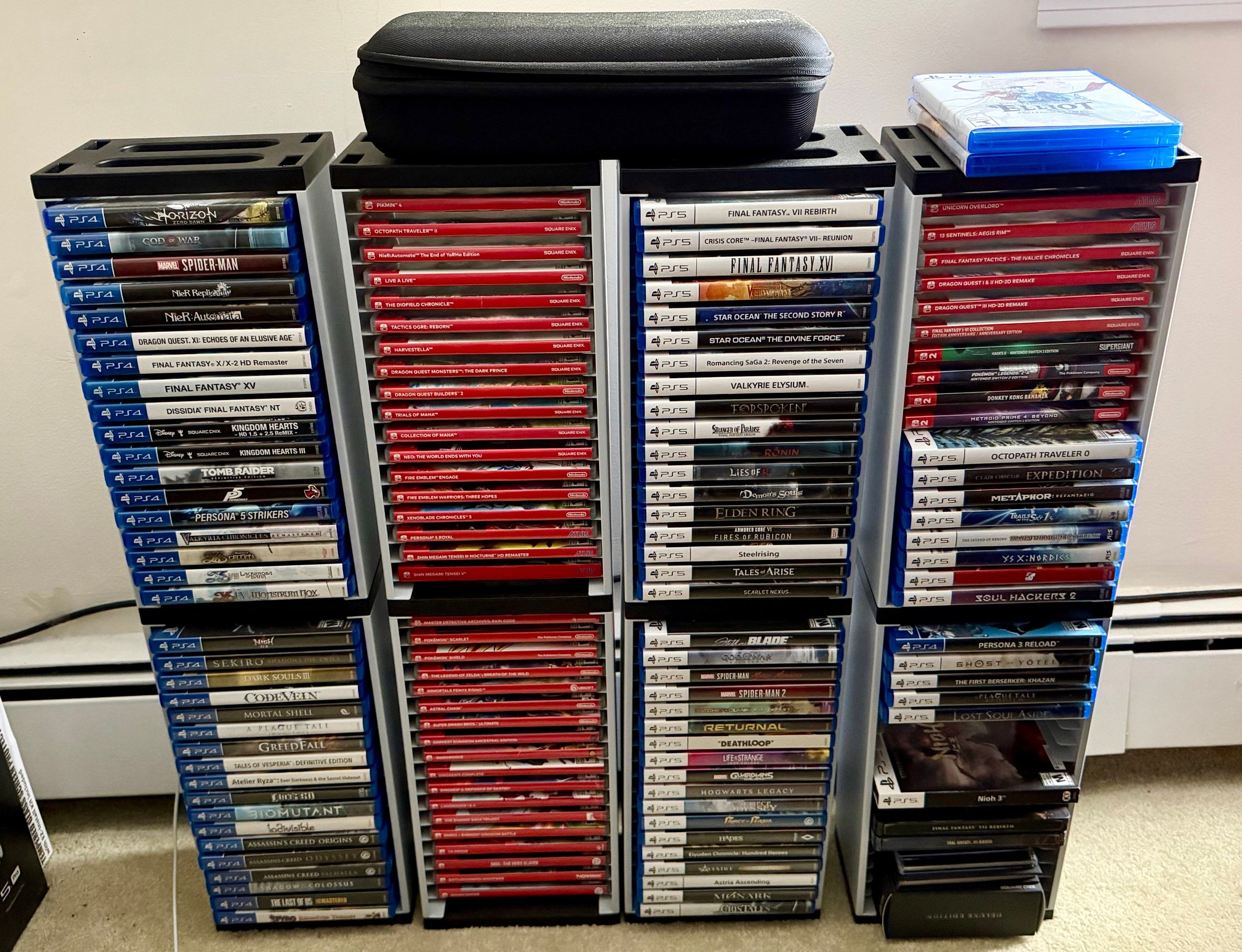
But what if that’s part of the problem?
If you can hold a thing. Own it in your home where you see it day after day. Find it under a Christmas tree or open it up on a birthday. Store it away and rediscover it someday, maybe years down the line.
Then you make a memory. You attach a tangible value to it. You understand the cost you paid to have and to hold onto it.
It becomes a physical presence in your life. A source of nostalgia that goes beyond the ephemeral realm of the digital world.
Looking at it that way, taking a stand to remain a physical part of your audience’s daily life is an opportunity to reach them in an era where that’s increasingly difficult to do, rather than a line item on the chopping block for clinical cost cutting measures.
Maybe that doesn’t make sense as a multi-national business conglomerate with stocks and shareholders.
But to me? As a marketer, looking for ways to move beyond the purely logical and enter the emotional realm of how to sell to an enthusiastic, lifelong audience?
Yeah. That sounds like an investment worth making.
So to sum this all up, I’ll address my closing words to PlayStation:
The all-digital future itself isn’t a shock. We all saw it coming eventually.
So it’s not just a matter of what you said. But how you said it.
Or even more accurately, it’s all the many, many things you didn’t say.
You created more questions when instead you should have been ready with answers.
You should have provided details for the roadmap that will take us into the all-digital future. Offered reassurances, clarity, and a basic recognition of the things that make gaming special.
We get it – we’re you’re consumers, not your friends.
But in the face of blustering economic headwinds and a gaming industry that’s on fire every other day, now isn’t the time to be bullish and arrogant in your messaging.
Now is the time to make the emotional appeal.
In the retail space, you’re a want to have. Not a need to have.
And right now, your consumers need a life raft.
Not to be told to learn how to swim, or get left behind and drown.