Paranormasight: The Mermaid’s Curse Accessibility Review
Almost exactly 3 years ago, I was sat here writing a review called “I (Should Not Have) Loved Paranormasight.”
Why was that the title of my review?
Well first and foremost: I don’t do horror. And secondly, I’m picky about visual novels.
And still to this day, I don’t do horror. And can be picky about visual novels.
So Paranormasight – a horror visual novel – shouldn’t have worked on me the first time. And it DEFINITELY shouldn’t have worked on me a second time…
…right?
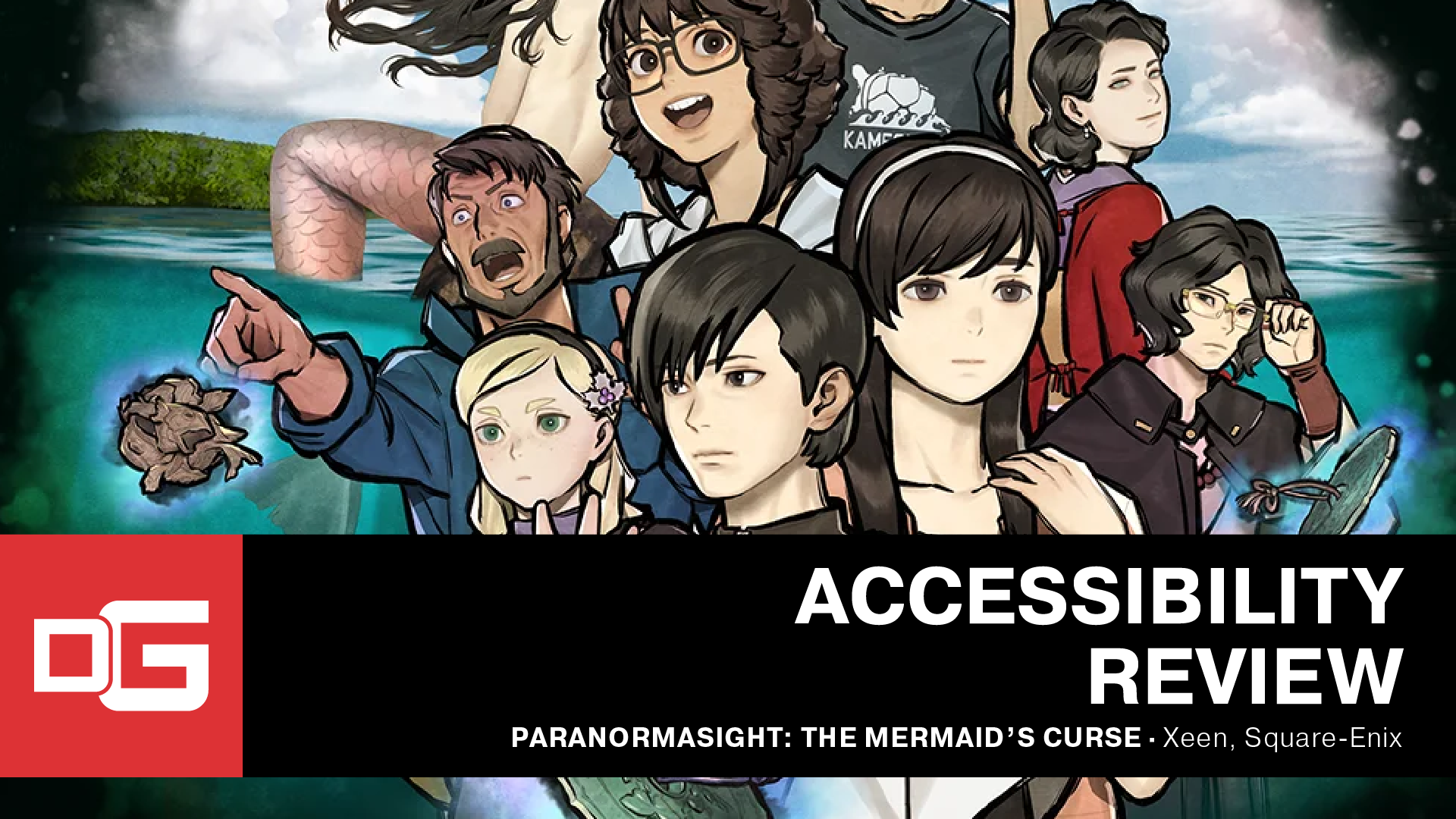
Welp. I guess lightning does strike twice because here I am – taking ANY excuse I can to talk about these games.
For context, Paranormasight: The Seven Mysteries of Honjo is a Nintendo Switch, PC, & mobile game from creator Takanari Ishiyama with publishing help from Square Enix. It was an extremely cool but under-the-radar release back in 2023, a first for Ishiyama’s games in terms of getting localized and brought to the West.
It garnered not only enough critical praise but a strong enough cult following to spark continued support for the IP in the form of supplemental media like a Paranormasight manga. But what I didn’t have on my bingo card this year was a whole new entry in the series.
Almost out of the blue in the 2026 February Nintendo Partner Direct, Square Enix revealed Paranormasight: The Mermaid’s Curse. Not only was the sequel itself a surprise, but it was dropping in just two weeks!
My mind was BLOWN. And while I couldn’t get to it on day 1 for the launch… I’ve gotten to it now. And I’ve got some interesting, completely spoiler-free thoughts to share about its accessibility.
Before we delve into the actual accessibility review though, I do just want to take a moment to say that I thoroughly enjoyed my time with this game and recommend it just as strongly as the first Paranormasight.
In terms of how the two compare, the art style, visuals, and gameplay are all fairly similar, but I do think the first game opens stronger and has better scares for the horror fan eyeing these two titles. But otherwise, this new entry brings back the fantastic aesthetics, iterates slightly on the gameplay, and introduces us to a whole new group of fascinating characters to follow in a twisted tale of curses, Japanese mythology, murder, and mayhem.
But I’ll leave it there for now – let’s take a look at what this game does well for accessibility, as well as two key areas where I think it could innovate and improve.
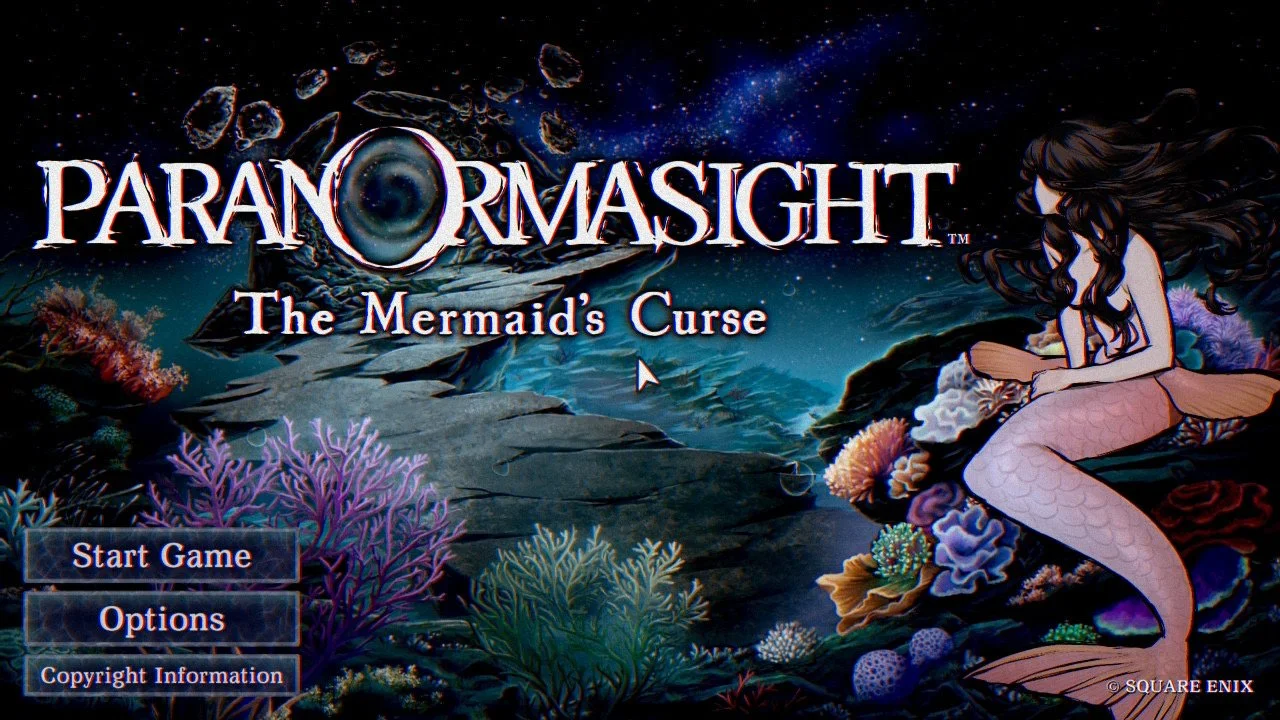
Now, you may be thinking, “It’s a visual novel. How much accessibility could it really need?”
So long as the text size is good, you might assume that something from a gameplay-light genre like this might not have many barriers to accessibility.
But while one of the two main areas of improvement I hinted at before might be fairly obvious to anyone familiar with these games, the other might actually surprise you… so stick around to find out!
The Basics: (Spoiler-Free) Story Premise & Gameplay
To give you a high-level idea of what Paranormasight: The Mermaid’s Curse is about, it follows the stories of several playable characters converging on an island called Kameshima in 1980s Japan. While the events are fictionalized, the narrative does pull heavily from Japanese myths and folktales, mostly focused on mermaids.
In fact, if you’re a One Piece fan like myself… your knowledge of Fishman Island might be shockingly helpful here.
Also, to answer your question if you’re a newcomer to Paranormasight: Yes, you can technically start here. You don’t have to play the games in order – The Mermaid’s Curse is a mostly standalone story, albeit with some references and callbacks to certain characters and events from the first game.
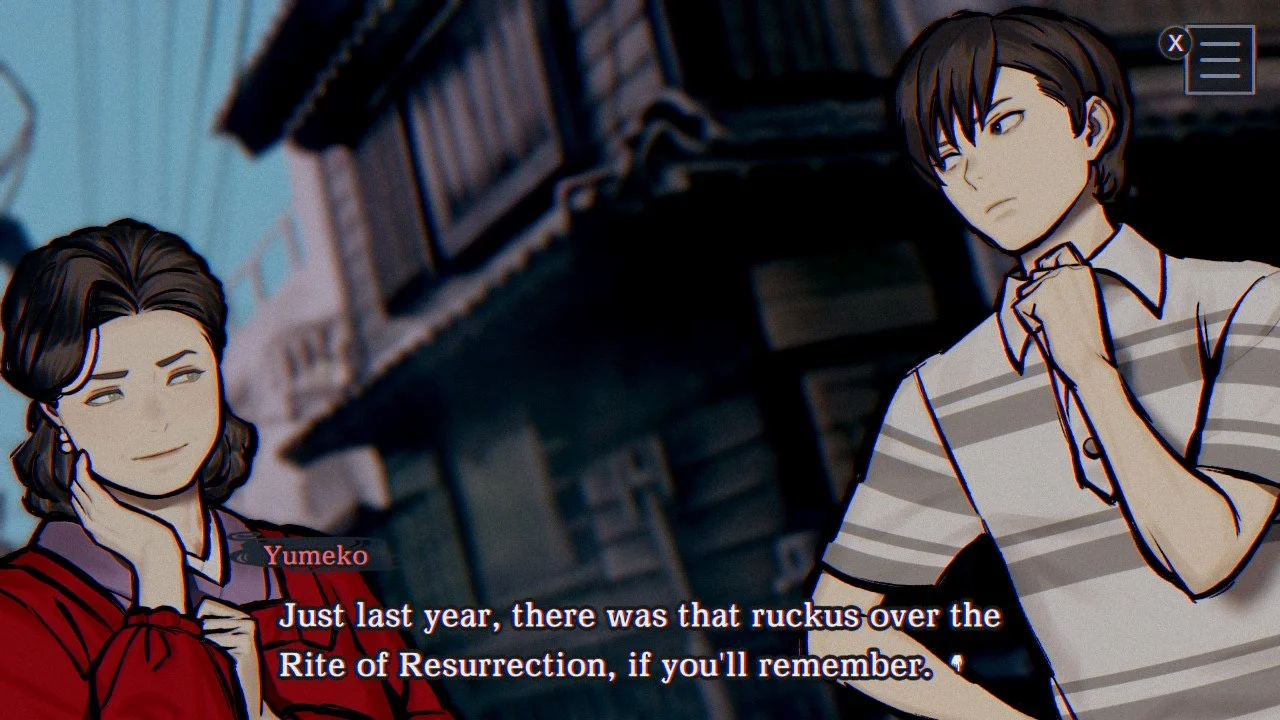
The story unfolds in various “chapters” or “scenes” that will be laid out on a story chart for you in the game’s menu. These chapters are organized chronologically on an expanding timeline for each of the main characters as a way to help you visualize when each event takes place relative to the rest of the others you’ve unlocked so far.
When you’ve fully completed a chapter, it will gray itself out to let you know you’ve seen and engaged with everything you need to progress. But sometimes certain choices will require you to circle back around so the scene will stay partially colorized to let you know there’s more to find.
For the most part, Paranormasight is what you’d expect for a visual novel. 90% of the time, the gameplay consists of progressing through dialogue, occasionally making pivotal decisions, and engaging in some point-and-click style exploration.
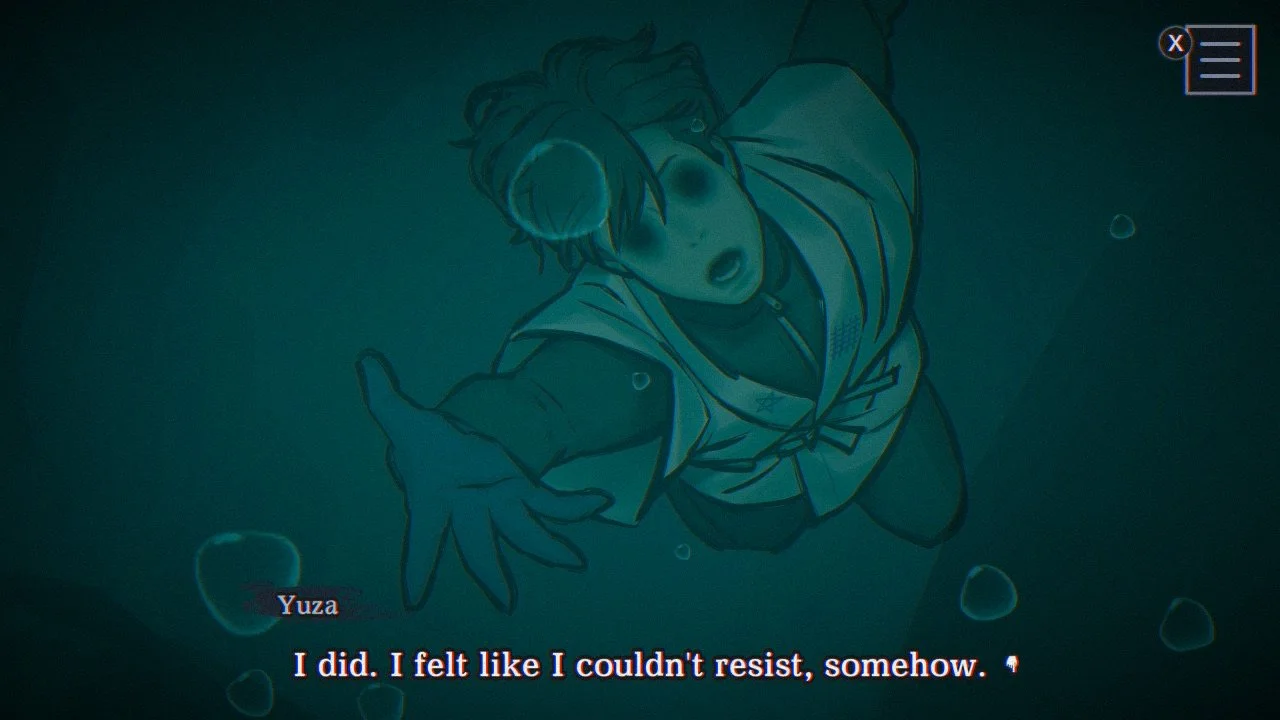
But one thing that The Mermaid’s Curse adds to the formula is a (mostly optional) diving mini game. Outside of a couple story sequences involving one of the main characters, Yuza, going on some dives, this mini game is something you can select from the story chart at any time.
The actions are very simple: you dive for as long as you can hold your breath, inspect points of interest marked by an exclamation point to gather shellfish, and try to bring your haul back up to the surface before you run out of air.
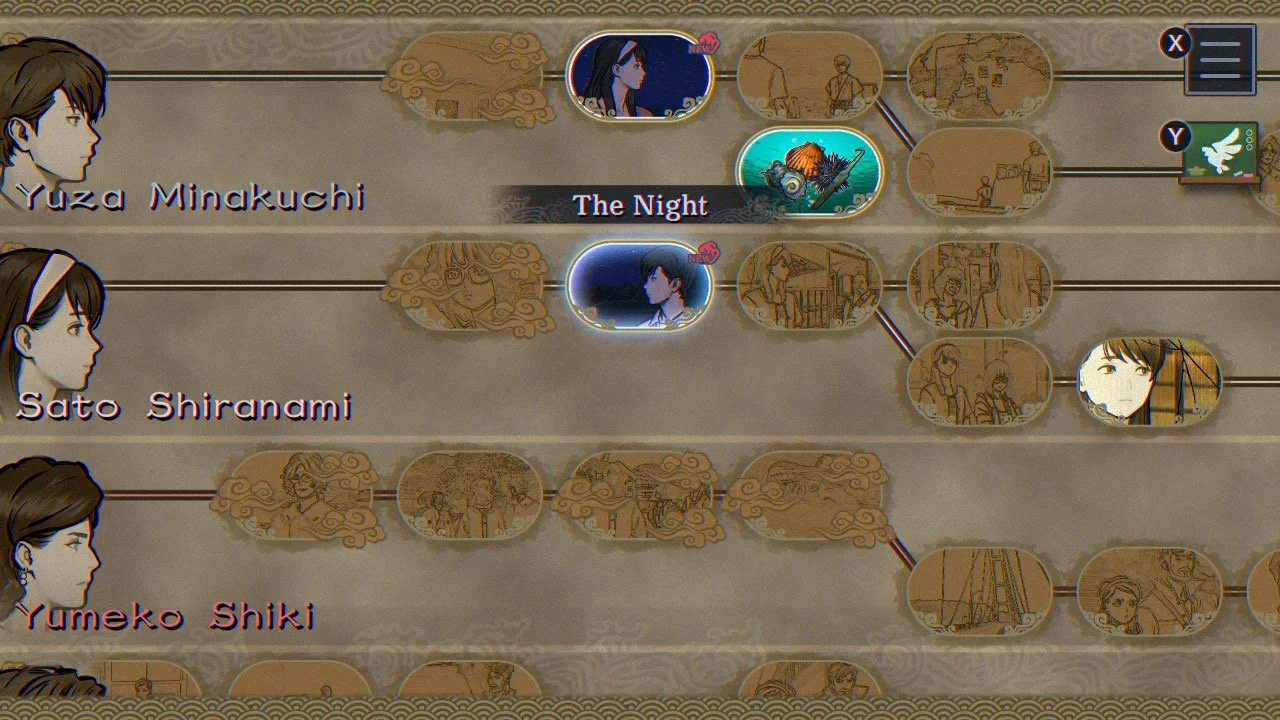
If you succeed, you’ll receive a score based on the quality and quantity of your catch. This score translates into experience points that increase your diver rank. With each new rank reached, you can increase one of your four stats that govern how long you can stay under, how fast you swim, how quickly you gather crustaceans, and how well you detect gathering spots.
If you fail… well you’ll drown and get a game over. But the consequences are next to none – you can either retry the dive immediately or stop diving and quit for the day.
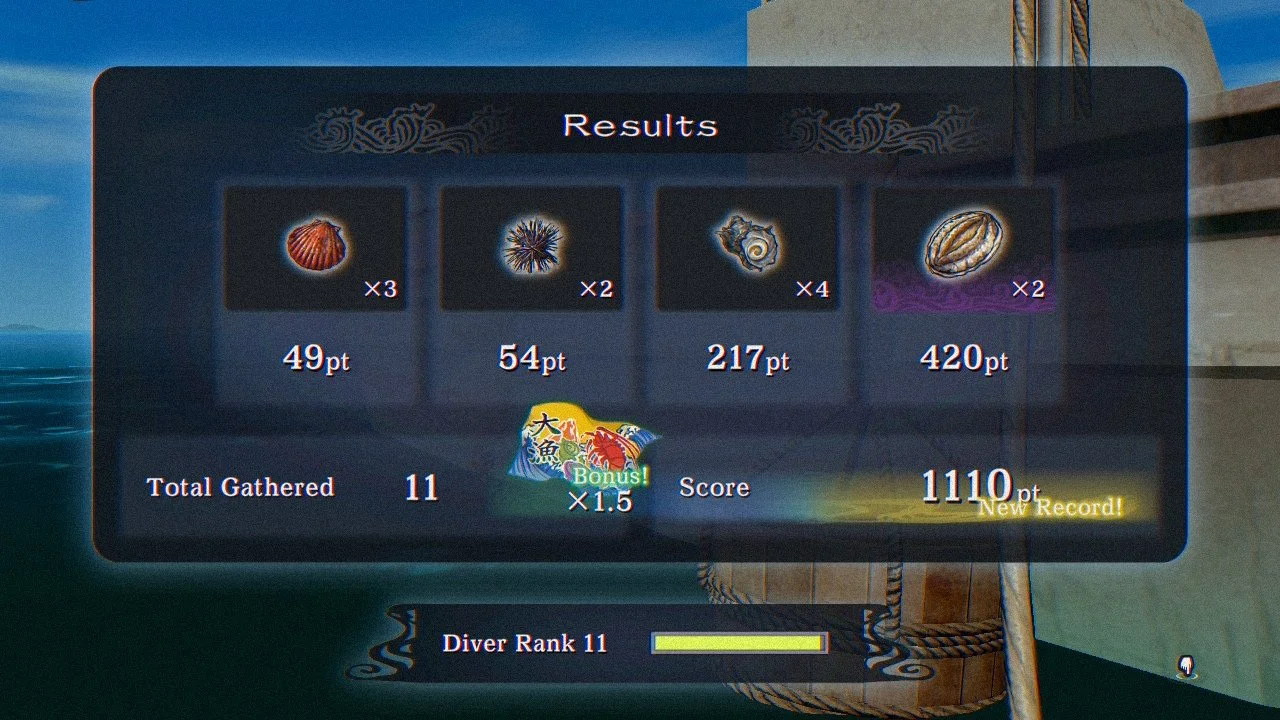
The controls for this mini game are simple… if a bit floaty. Yes, I know it’s swimming so duh but the number of times I swam just past the thing I was trying to get was a touch irritating when I saw my air gauge winding down. But it does settle into a satisfying little loop for a change of pace in the gameplay – and I’ll have more to say about the controls/options a little further down.
For now, I’ll end this section by saying that the game does have multiple endings on a varying scale of very good to very, very bad and while I won’t say exactly how many there are, I will say that each time you roll credits there’s a number with the name of the ending that can help you keep track of what and how many you’ve seen.
Visibility, Art Style, & Text
Paranormasight’s striking and unique art style was one of the two main reasons I was initially drawn to the series (the other being the avid critical reception and praise). Needless to say, that highly identifiable art style is back here in the sequel.
It features thick black lines and a somewhat muted but thematically powerful color palette (especially given the first game’s emphasis on Japanese ukiyo-e paintings). The animations are minimal as characters more or less jump from one set expression to another, but it’s handled with a ton of punch and impact especially in big moments.
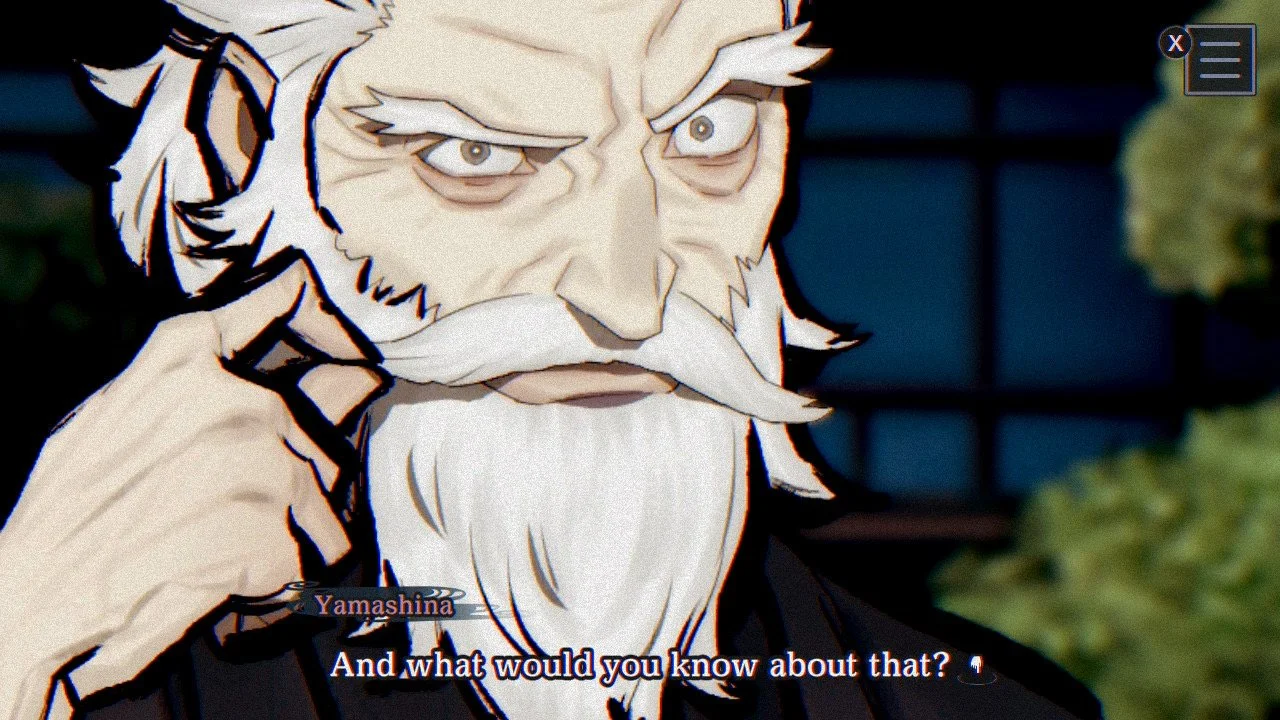
This simple but effective art style actually translates into some great accessibility. It features strong contrast with simple shape language and those thick black outlines make it very easy to distinguish characters and background elements. It’s naturally very readable and the only thing most players will struggle to see are intentionally hidden “collectibles” in the form of very weird bird stickers that return from the first game. But even these come with some (albeit vague) hints in your menu to help you track them down if you want to find all 20.
The game’s font and text size are also very readable by default, which is essential for a visual novel like this where players spend the vast majority of their time reading. Not only does the game lack voice acting, but it also gives you a ton of reading materials in your files for additional insight into the key events, Japanese historical references, and character profiles.
Having a good text size and readable font (with a strong outline!) is a major boon. Important keywords in your files are also highlighted in a different color to help you identify them when scrolling.
ALSO. MY FAVORITE.
Paranormasight ticks a huge box with me when it comes to accessibility: it has a text log that saves your recent dialogue for review. I don’t remember it specifying how much it keeps in memory, but I wouldn’t be surprised if it’s the last ~100 lines of text. It’s literally your main menu screen – when you open the menu, the majority of your screen is the text log (with the rest of your menu/options organized on the left).
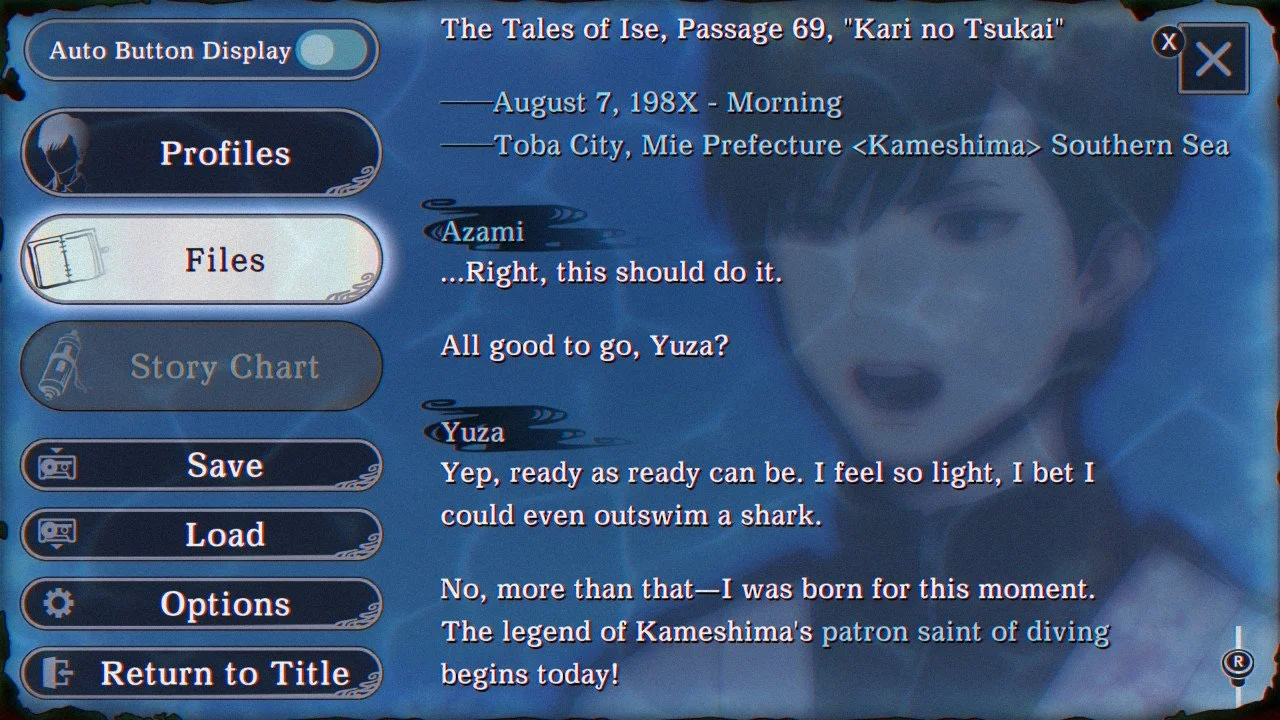
Visual novels, JRPGs – heck any game featuring a good amount of text – should have a text log or chat history of some sort. This helps with readability, recall, and any number of other potential issues for players who need more time to read, have trouble remembering things, take breaks from their games, and/or deal with various environmental distractions.
I’ll round out this section by saying that you can revisit the text log, character profiles, story files/hints, and gameplay tutorials at any time – even in the middle of dialogue scenes or key decision points. The game has a lot of information, but you can retrieve and review it whenever you need to.
Menus, UI, & Settings
As I was just saying, you can bring up your whole menu at any time – even in the middle of making a consequential choice mid-dialogue. With a single button press (X on Switch), you can access the text log, all your key information, the options menu, and even manually save/load a game file.
You have 5 manual save files and an autosave. The only thing that will technically “lose” you progress is if you exit out to the story chart mid-chapter, unless it’s a chapter you’ve already completed (in which case, many chapters have a couple starting points you can choose to jump back into when revisiting).
Also, because of how the story chart lets you freely select which chapters to play or re-play at any time and you always have the ability to alter your choices or actions, there is no permanently missable content in the game.
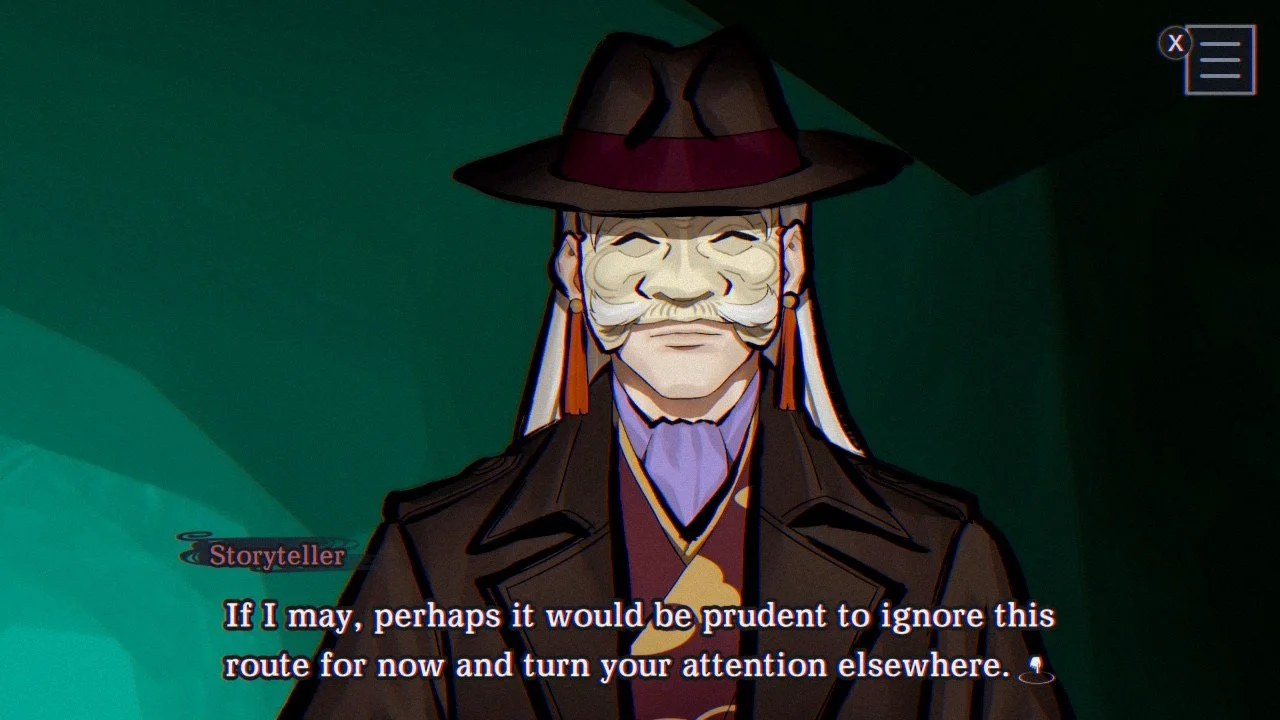
You can always revisit chapters, make new choices, attempt to answer puzzles again after gathering more information and so on. Revisiting chapters multiple times is even fairly painless since holding the cancel button will fast forward through dialogue, only stopping when you’re required to input a response.
Both the UI and controls during gameplay are pretty simple. Sometimes you’ll have an action in the bottom left of your screen like “Think?” or an item box. In the top right you’ll always see the icon for your menu shortcut.
Otherwise, you look around from a first-person perspective with the right stick and manipulate a mouse cursor with the left. You can zoom in/out, but the default FOV is already pretty good. Mostly you’ll click on things in the environment or characters in the scene to perform basic actions like examining, talking, etc.
There’s little in the way of customizable controls though. You can invert the camera for both normal scenes and the diving mini-game, as well as invert the confirm/cancel buttons (at least on Switch – I did not review for PC/mobile). But that’s about it – no additional button remaps.
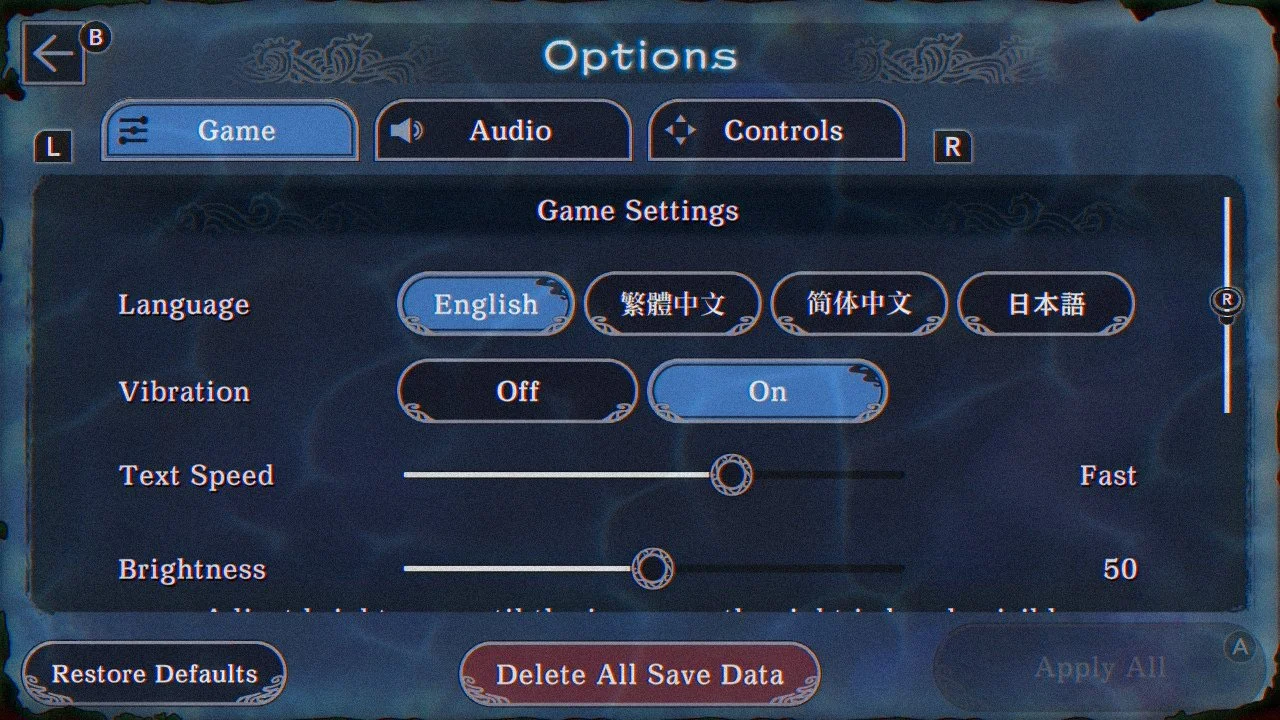
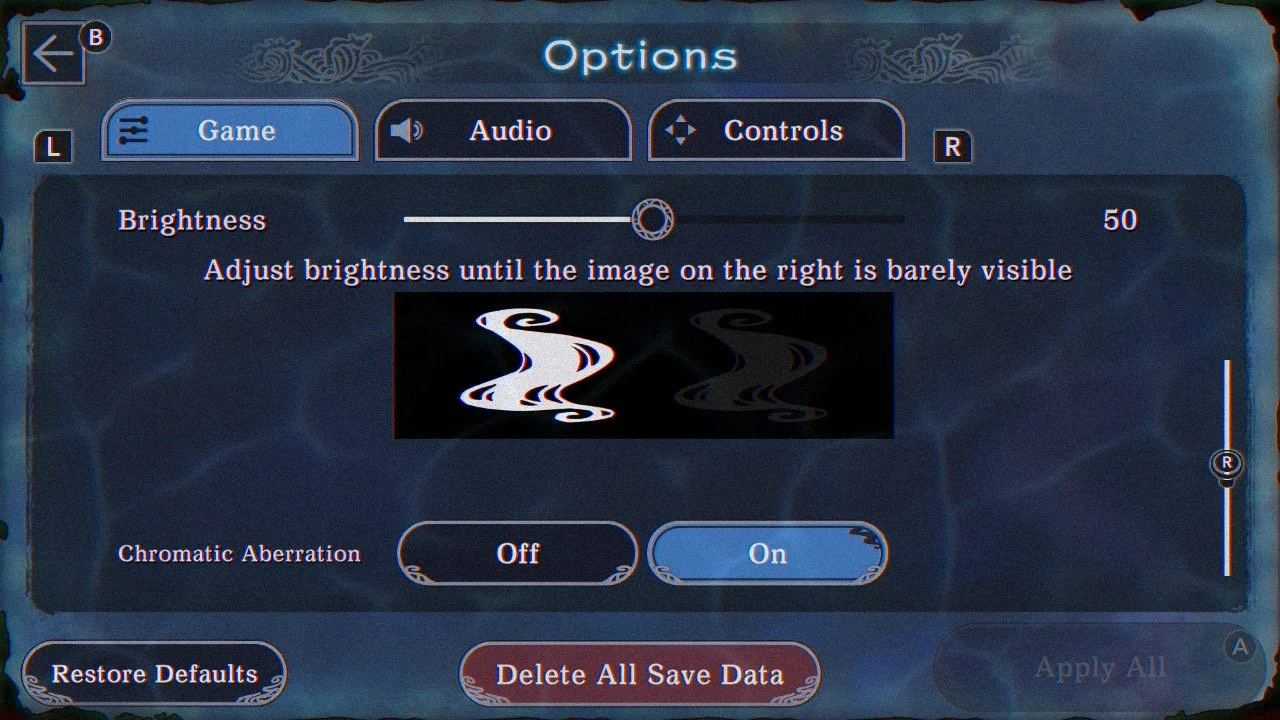
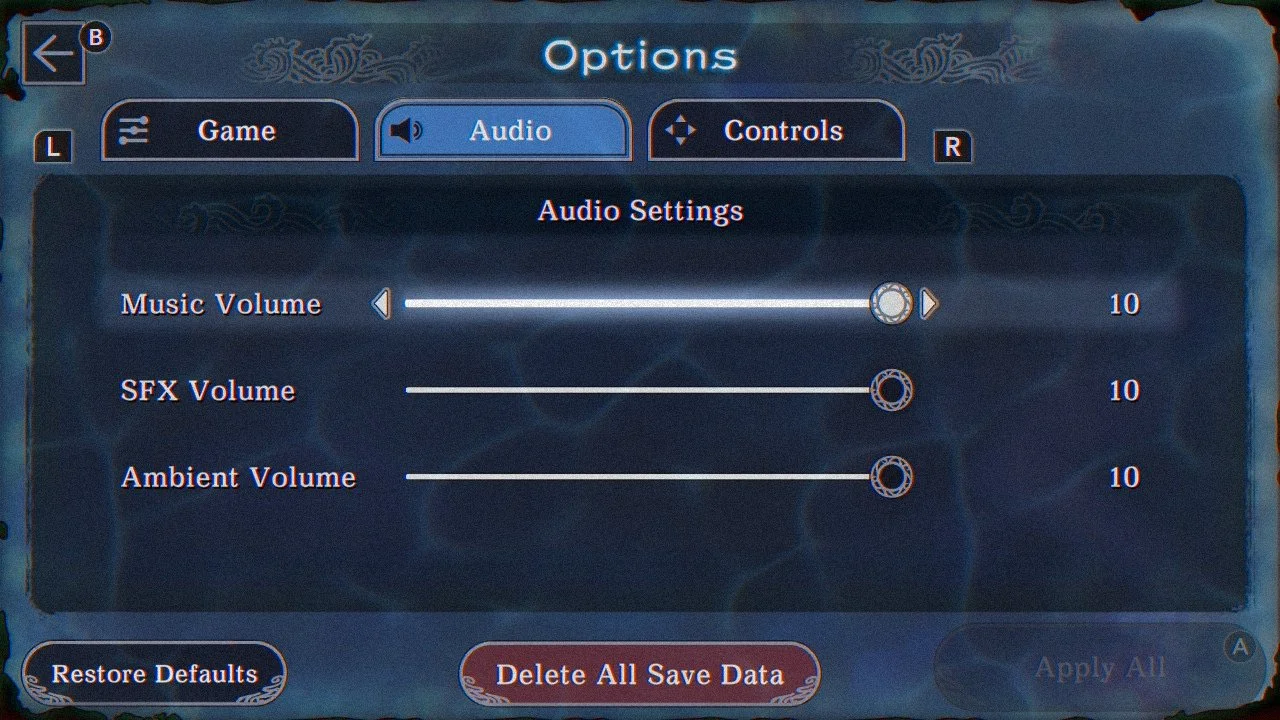
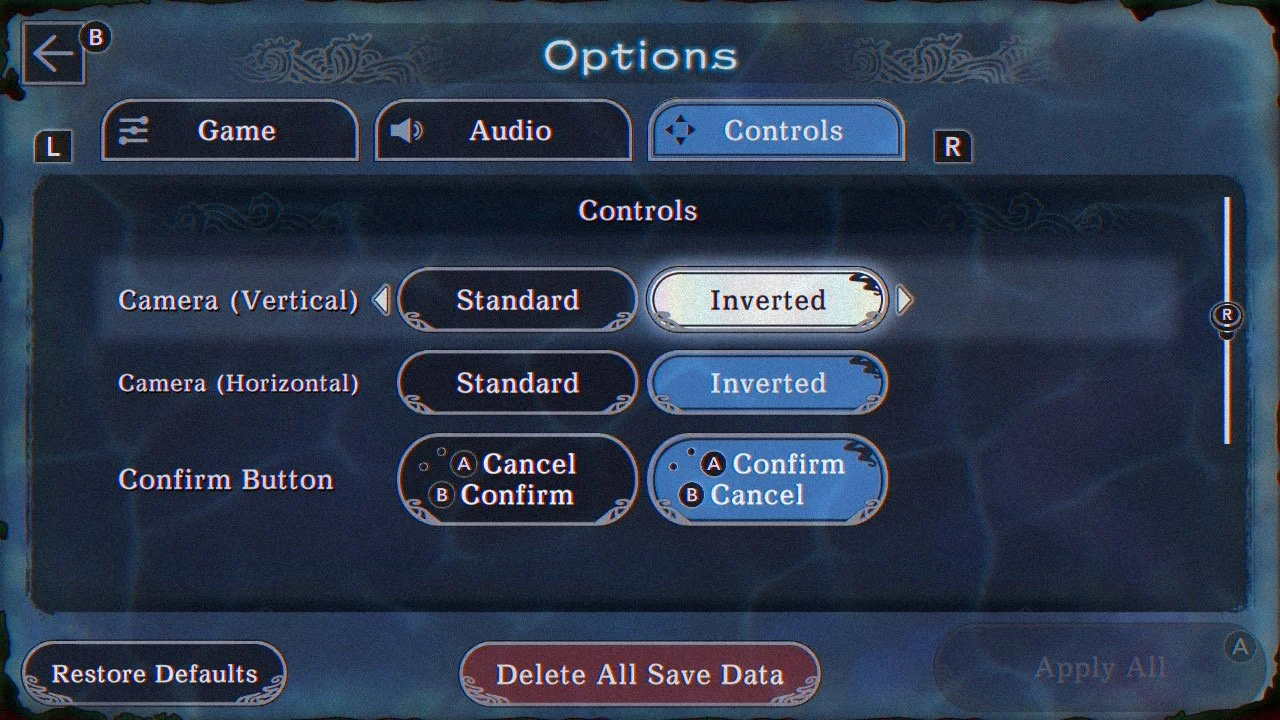
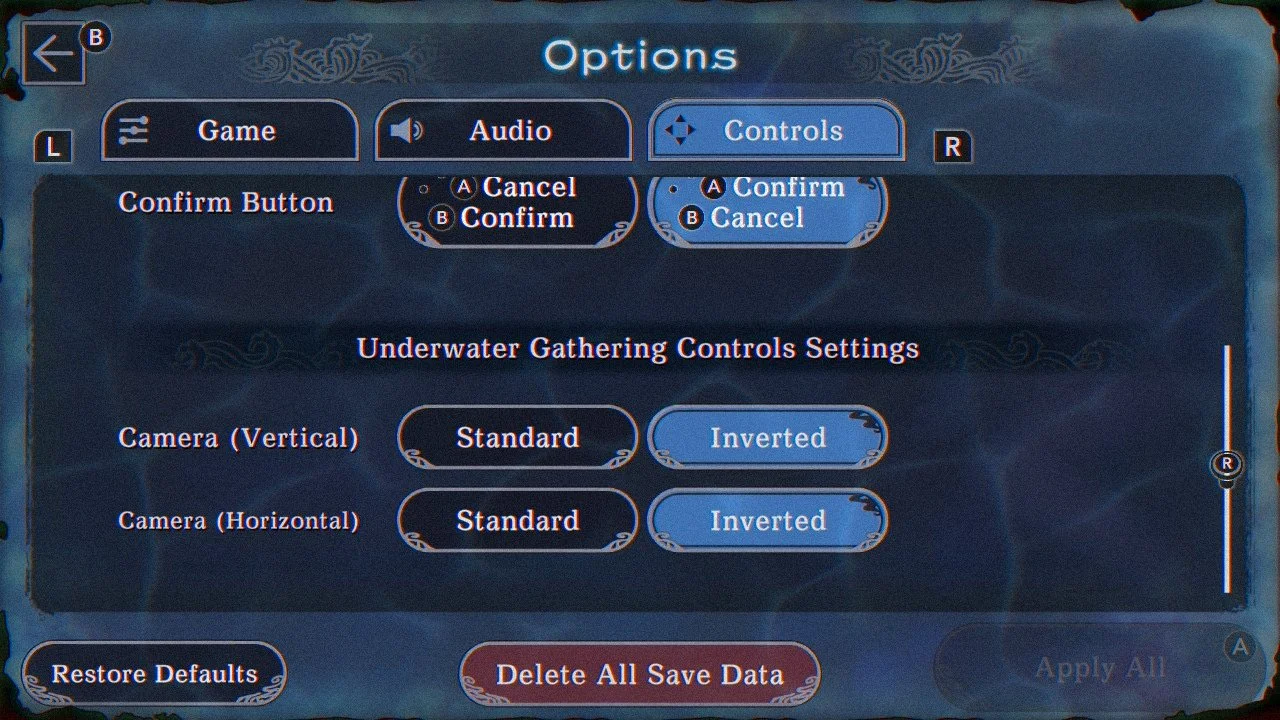
That said, both Switch and PC will have system-level button remap capabilities – but it won’t be specific to Paranormasight since it’s not an in-game option. I’m not sure how all this translates to mobile with touch controls, but I should mention that on Switch in handheld mode the game does support touchscreen as well.
It’s nothing too sophisticated and should be navigable for most players on their system of choice, and the only potential challenge I’d foresee for some players lacking fine motor controls would be gathering in the diving mini-game with the floaty or imprecise swimming mechanics. That said, 90% of the diving is optional and should not impede player progress.
Otherwise, the game has very basic options for things like music and SFX audio sliders, text speed, brightness, chromatic aberration, vibration, etc. Nothing too crazy given the simplicity of the game’s design, but enough to get most players by.
Puzzles, Hints, & Cognitive Hurdles
Okay, up til now Paranormasight has been passing the accessibility checks with mostly flying (albeit somewhat desaturated) colors. But herein lies the first of the two areas for improvement that I mentioned at the top.
However, for the most part I’d say the accessibility of Paranormasight’s puzzles is pretty good – largely because of how readily accessible all the game’s information is. Like I’ve repeatedly said, you can always access the bank of information in the menu files.
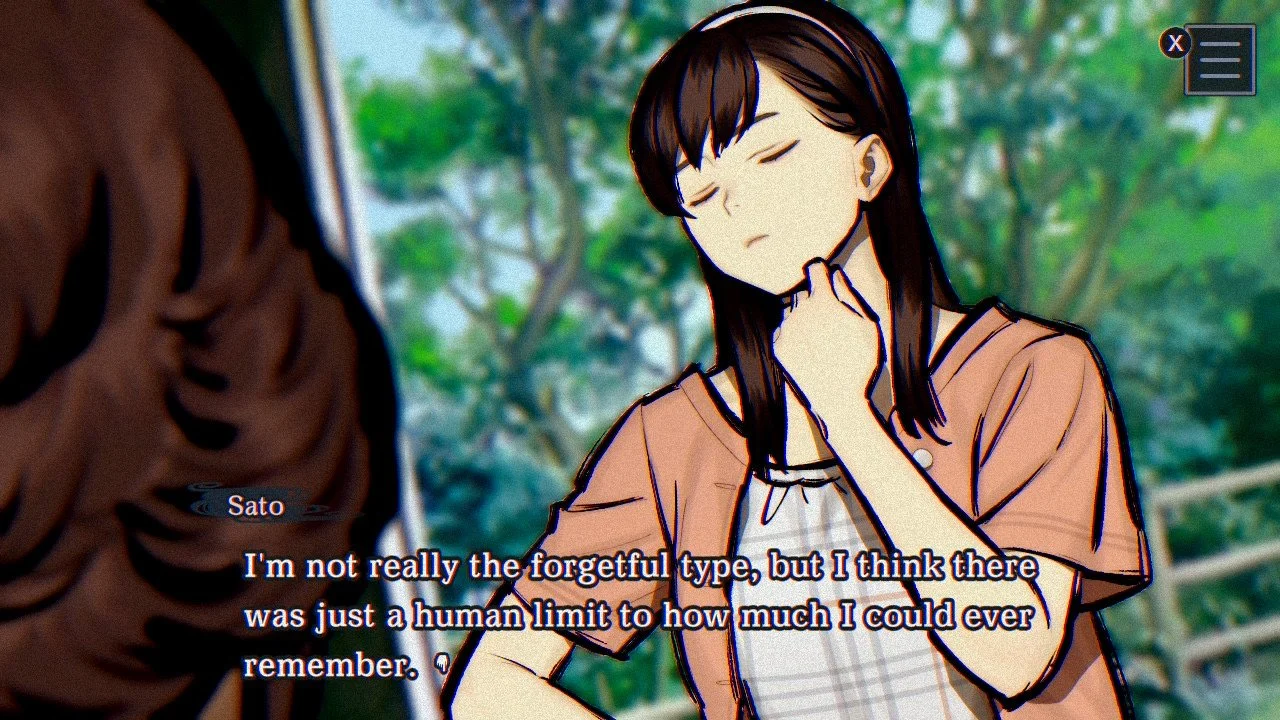
You can peruse character profiles, story events, history and phenomena information to help you figure out what you should be doing at any given time. Key words or phrases are highlighted in an alternative text color to help you sift through the increasing number of files as the game goes on (lasting about 12-15 hours if I had to guess overall).
It can be a lot of reading which may overwhelm or disinterest some players, but it will never wholly rely on you to recall information without any sort of assistance. Tutorials and key files are always in your menu once you discover them, and sometimes the dialogue will further nudge you or give you hints when it’s clear that you’re stuck.
I foresee few insurmountable barriers for most players when it comes to navigating their way to most of the game’s endings. The only major exception would be the puzzle that stands between you and the true ending – which I’ll admit, I ultimately had to turn to the internet for help with. I could see what I was supposed to do, but I missed one key step, so what I was trying wasn’t quite working – even if it was close to being right.
But aside from that one potentially too opaque puzzle, what do I think Paranormasight could do better to increase the accessibility of its logic puzzles and information systems?
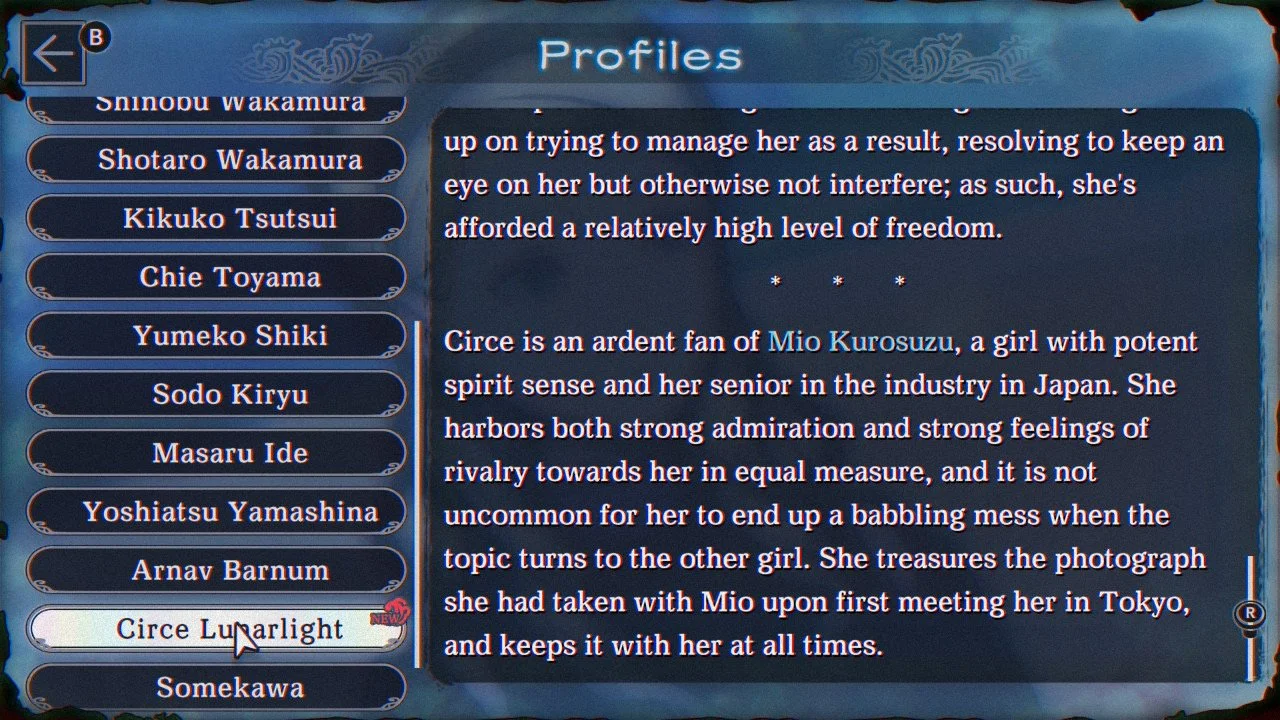
The main thing I think the game could do is offer an additional hints option in the system settings. It would leave the default gameplay as-is, but for players who are stuck or struggle with any number of cognitive disabilities, an extra layer of “hints” could help.
What I’m imaging is a setting you could turn on that would highlight which section of the files you should be looking at to find the answer to the puzzle that’s present in the current scene. If there was a yellow glow on the “Phenomena” tab or even the specific file within that tab that you should review, that could help mitigate the information overload with the sheer number of documents or esoteric nature of some of the solutions.
Voice, Sound, & Audio Cues
And here we are – in the final section of the review… with the second and I’m guessing most surprising “area of improvement” for accessibility in this visual novel.
First of all, I’ve already mentioned that Paranormasight doesn’t have any voice acting – so that’s an obvious gap in the accessibility and therefore wouldn’t be all that surprising. No voice acting means you have to rely solely on reading and can’t fall back on audio to digest all the game’s text (especially since in a title like this, you aren’t going to see the budget or tech to support a full, native screen reader).
But some of Paranormasight’s greatest strengths for its audio presentation are also its greatest weaknesses for its accessibility.
What do I mean by that?
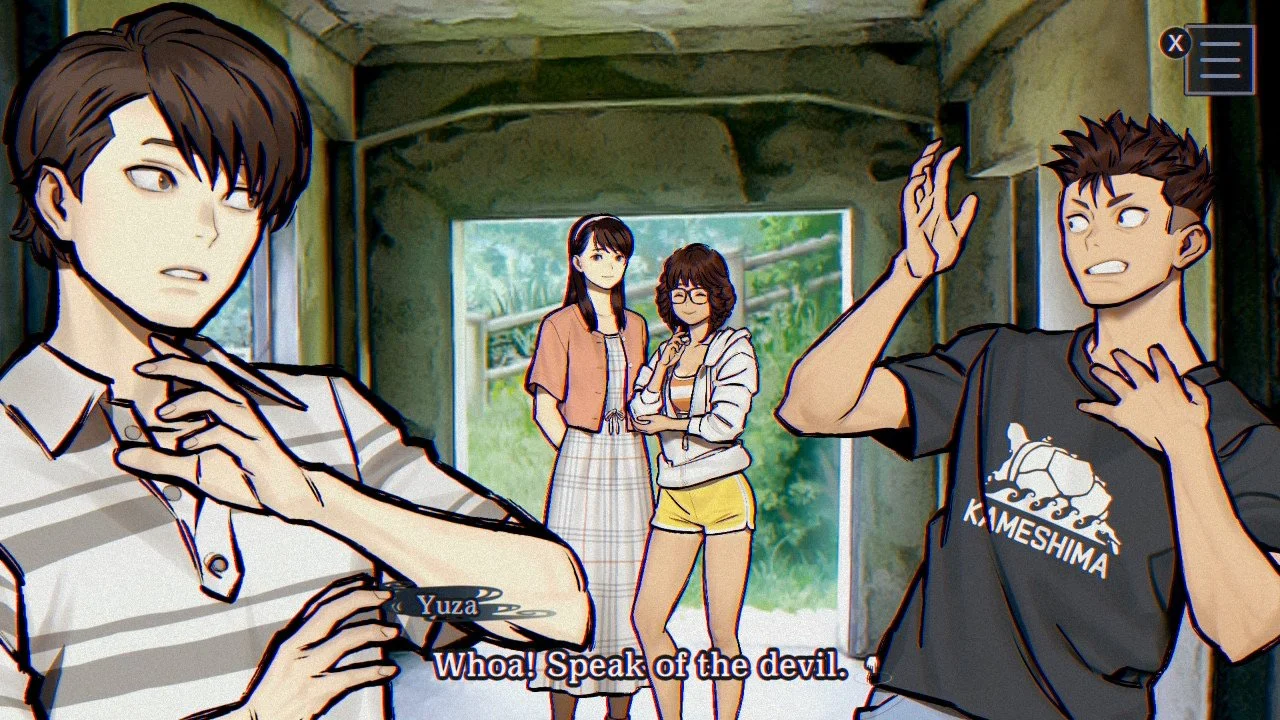
Paranormasight has really engaging audio. The music carries over from the first game and is a great tone setter. It can jump from being a jaunty vibe in one moment to a somber and haunting disruption in the next.
The game also punctuates bombastic character reactions with audible slams that not only emphasize the emotional display but even help engineer tension and potential jump scares that startle the player.
Also, given the minimal animation, oftentimes the only indication that someone is approaching or that there’s a threat in your environment will be the sound of footsteps or something like that (often behind you because, of course, this is a horror game).
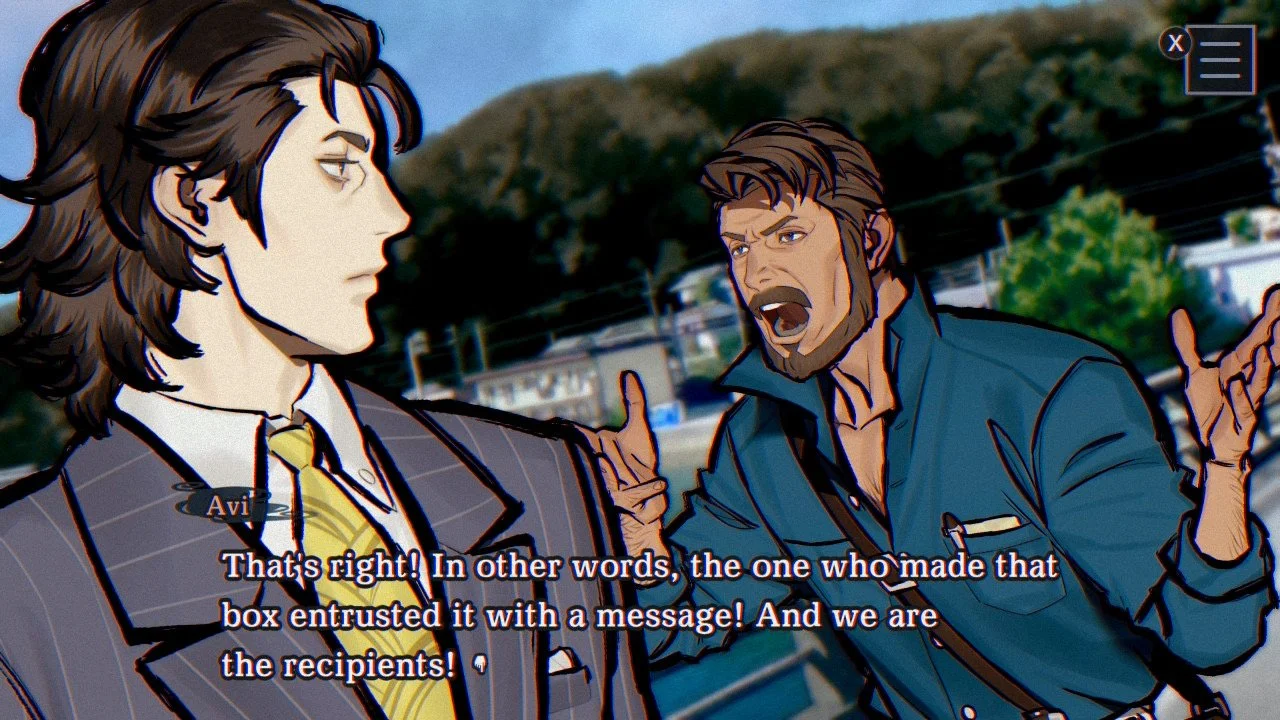
What’s more, the game often indicates whether your choices and actions are on the right track or not with an audio cue, using a high, light tone to indicate success or a flat, negative tone to indicate failure.
For a game with no voice acting, a lot hinges on the audio. It’s a key tool that Paranormasight uses to convey important information to the player – not just tonally and thematically, but sometimes to alert them to danger and even help create some of the scares. I think the experience would be sadly lacking for a player with any sort of hearing impairment, whether chronic or situational.
But what can be done to help mitigate this issue?
Well, first and foremost I think the simplest way forward would be to include some sort of closed captions option in the game’s audio or subtitle settings. This way at least there’d be a textual descriptor on screen for hearing-impaired players.
Something else that comes to mind for me is some sort of visual indicator that players can turn on that would supplement the important cues that the game’s audio is supposed to convey.
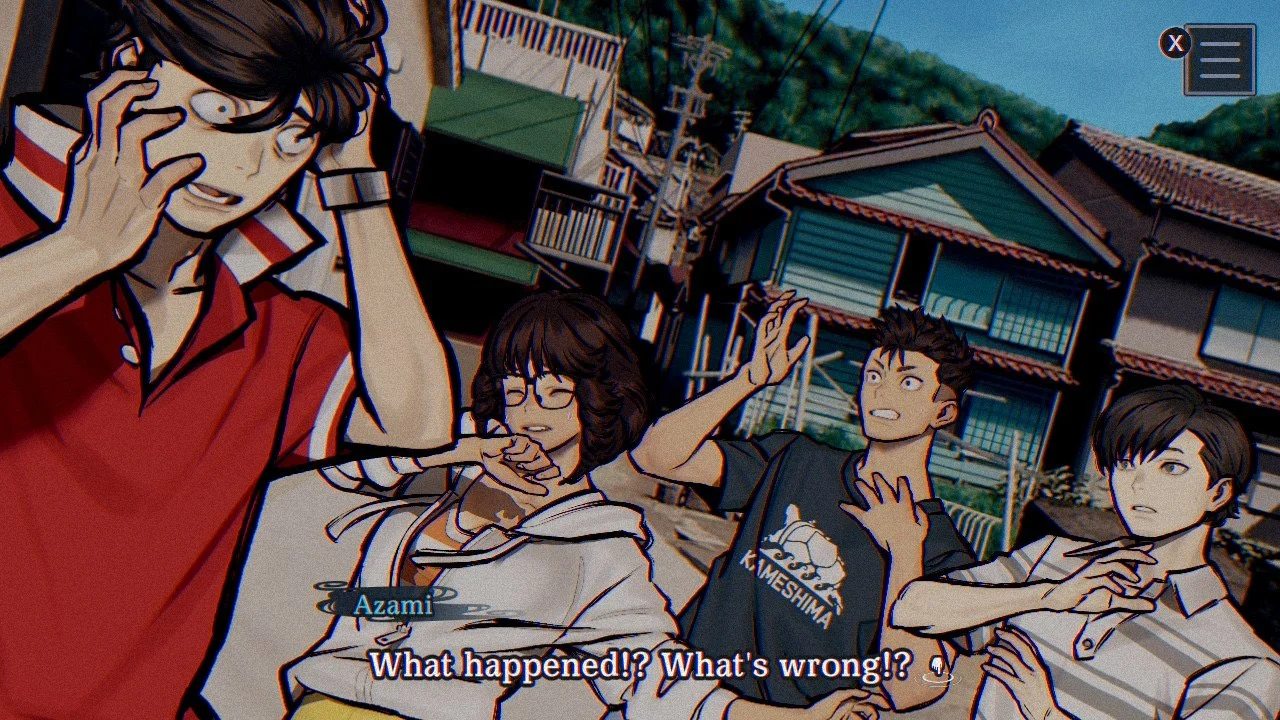
I’m thinking of something like a dimly flashing light or glow in the corner of the screen when there’s supposed to be footsteps behind you, not unlike the enemy indicators in a game like 2018’s God of War that show a directional arrow to let players know when an enemy attack is coming from behind the camera off-screen.
You don’t want to overdo it with the brightness or rapidity of the flash so as to incur epilepsy triggers, but some sort of light indicator as a redundancy for the audio cues could help. Same goes for the tonal indicators that signal if a player’s responses are right or wrong – with maybe something like a red light when players input an incorrect response for example.
Having some sort of option that backs up the would-be audio cues with a visual substitute could help deaf and hard of hearing players get a more comparable experience and recoup some of the information they’d be missing out on due to the game’s design tenets.
Conclusion: Another game I should not have loved… but 100% did
Even with the two areas I highlighted in the puzzles/hints and the audio cues, I’d still highly recommend this game to anyone who’s interested. Of course, it’s a horror game (albeit less scary than the first in my opinion) so if any sort of jump scare or violence is triggering for you, then it may be a pass.
But otherwise, both Paranormasight games are an absolute delight that I wish more people would discover. In a perfect world, my accessibility critiques would be nil – but these games are incredibly unique experiences that I think many players can and should be able to try out.
The writing is a lot of fun – and that’s what matters most, especially in games like these under the visual novel umbrella. The art is captivating, the meta gameplay mechanics are unforgettable, and the endings… well. I’ll leave those for you to discover. It’s well worth going into those as blind as possible.
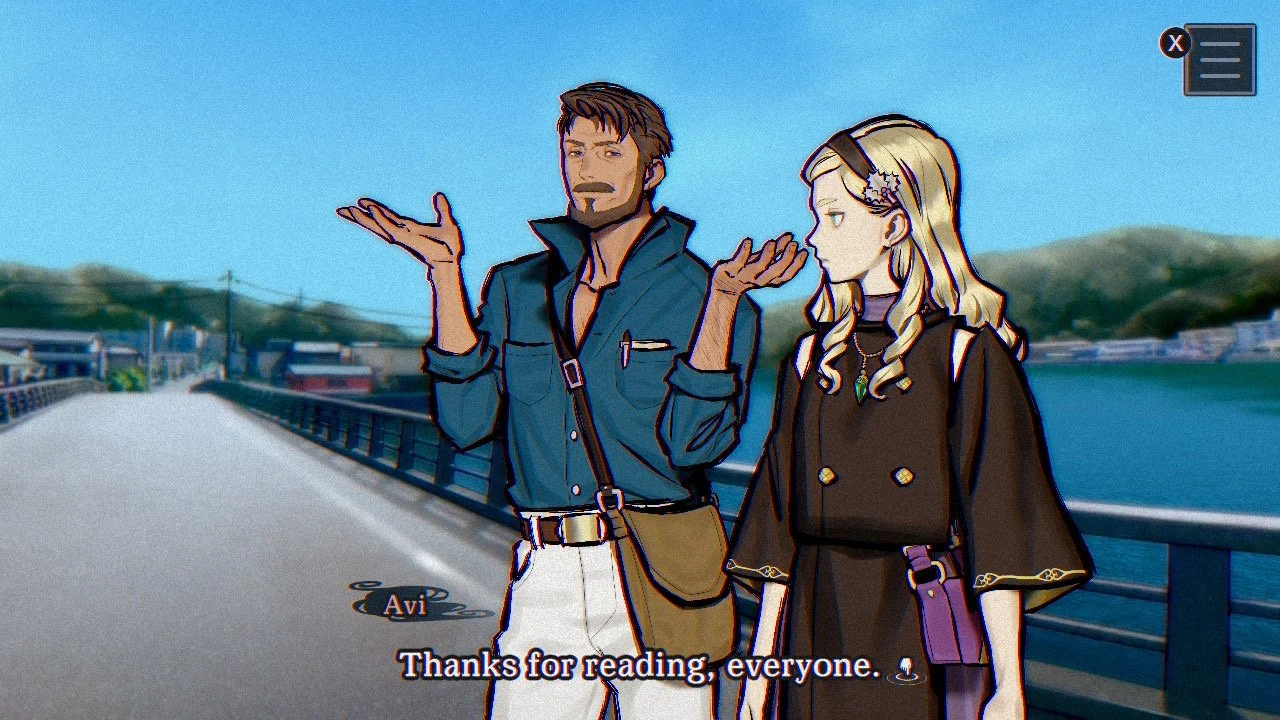
The Mermaid’s Curse managed to reignite the spark I felt when first discovering this series 3 years ago, and I found myself grinning and yelling and having a stupid amount of fun all over again. Now it’s time to return to my ritual of watching Let’s Plays to relive this story vicariously through others, and taking every chance I can to recommend these games to anyone who’ll listen to my mad rantings on socials.
And here’s hoping that someday, maybe a few years from now, we’ll be back here for a third time… with me writing about how I really really REALLY should not have fallen in love with yet another Paranormasight game…