

Resonance: A Plague Tale Legacy Accessibility Review
I had a lot of expectations coming into Resonance: A Plague Tale Legacy. But not all of them were particularly good…
As a fan of the first two Plague Tale games, I was concerned about this new game’s direction. You might expect it was the change in main character – but that wasn’t it. Rather, it was the genre shift that had me feeling unsure. Resonance pivots away from the series’ foundation as stealth-driven adventure games and leans more into action combat.
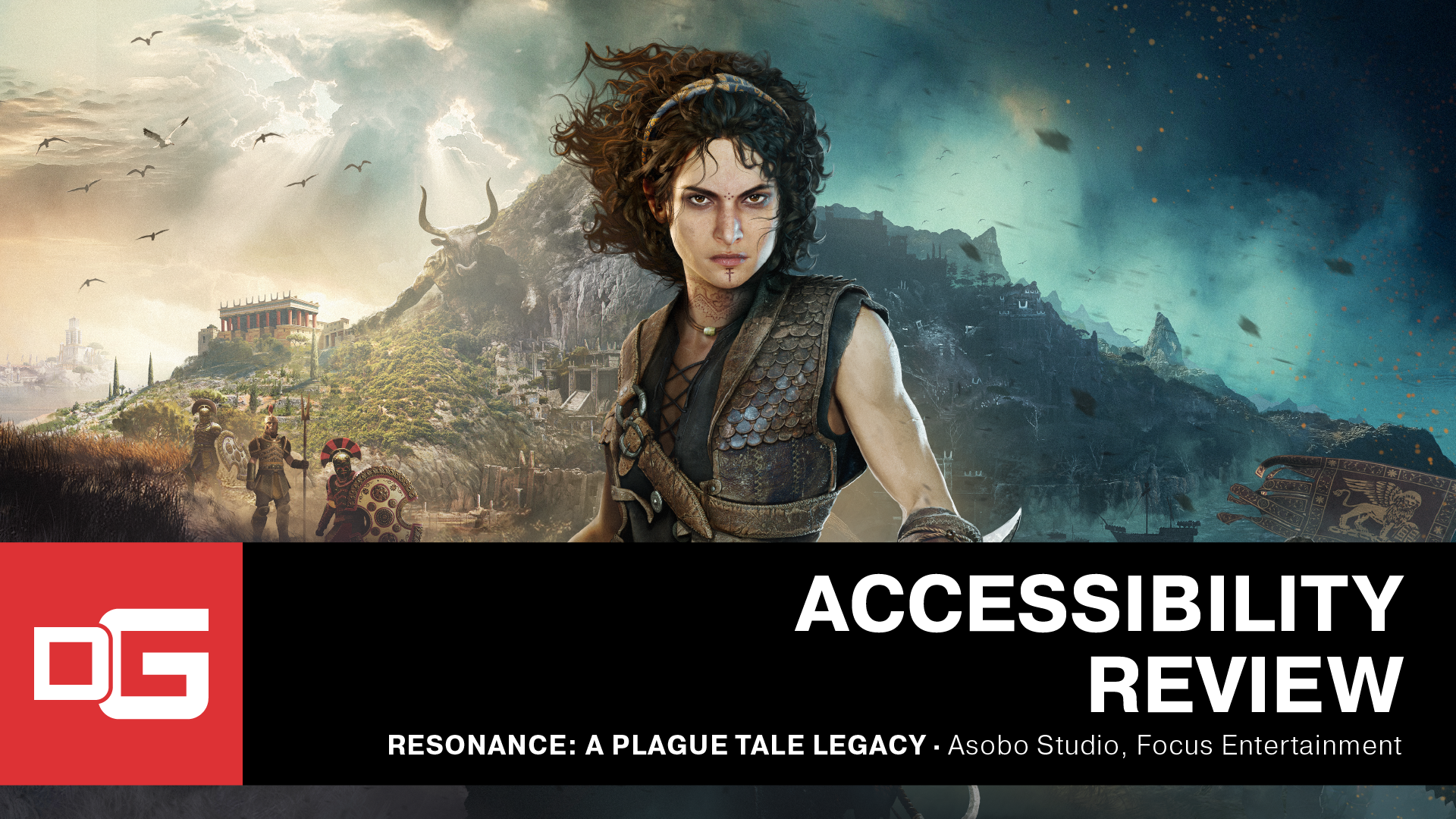
For context, Resonance is a prequel to the previous Plague Tale games from Asobo Studio. Sophia, a woman you meet during the second game (Requiem), steps into the protagonist role this time around instead of the main series’ heroine Amicia.
But while Amicia – especially at the start of Innocence – was an untrained teenager with a slingshot, some rocks, and a whole lot of desperation to protect herself and her brother from the man-eating rat hordes and Inquisition soldiers, Sophia is a very different protagonist. She’s a grown adult with years of training as a warrior, capable of fighting with blades and holding her own against men twice her size.
Narratively, the change from stealth-by-necessity for Amicia to full combat action for Sophia more than makes sense.

But trailers didn’t convince me that the gameplay wouldn’t feel… generic, for lack of a better word. We’ve seen countless games where you have a 3 or 4-hit, one-button melee combo with a blade. When an enemy’s attack flashes yellow, you hit the parry button. When it flashes red, you dodge the unblockable blow.
Put five dudes in a designated combat arena, poke at them til they do one of the above colored-coded attacks, respond with the correctly timed action, aaaaand rinse and repeat until the next wave of same-y enemies comes to slowly and repetitiously get whittled away by your dance of attack, wait, counter, wait again, so on and so forth.
It feels less like free-flowing action and more like following a script. The different colored parry or dodge actions are like prompts for what are essentially QTEs and there’s little room for true player expression since there’s more or less a “right” answer to the combat puzzle.
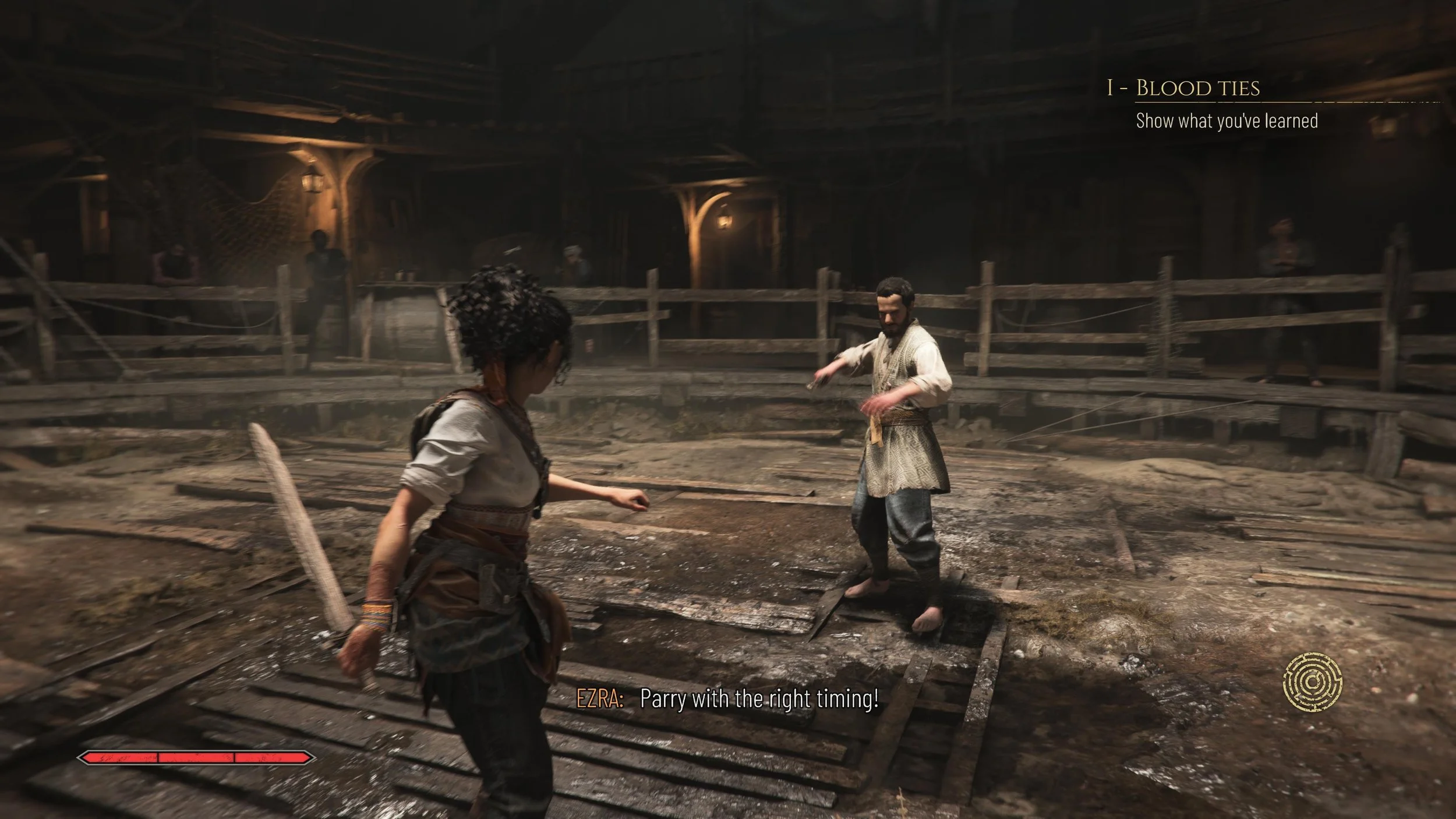
That said, this combat formula is so homogenous and widespread nowadays because plenty of players do enjoy it. The easily telegraphed attacks that scratch the parry itch. The streamlined, simple combat focus that (on standard or easy difficulties) enables a power-fantasy well suited to a 12-15 hour Uncharted or Tomb Raider-like adventure experience.
But as someone who fatigues easily on this sort of generic action system, I wasn’t thrilled at the gameplay prospects. The two previous Plague Tale games stood out with their approach to stealth and item crafting for different throwables. So while Sophia may be more powerful, she also feels more limited in her kit and options for approaching encounters.
As a result, the gameplay paradigm shift didn’t read particularly like an upgrade to me on paper. It dampened my hype right up to the moment of release, despite my love for these stories and the eerily mysterious world in which they’re set.

At this point in the review, if you’re hoping for a plot twist where I go, “But actually, the gameplay convinced me!”
…I’m sorry to report that it didn’t. The combat ticked every box I was concerned about with very rote, slow, repetitious melee where you’re responding to prompts more than you’re finding your own signature style.
BUT
While Resonance’s combat never won me over, the rest of the experience did. Everything else – from characters to story to art direction to voice performances to music (ESPECIALLY the music) – at least met or exceeded my expectations.
And the whole reason I’m sat here writing this review is because the most notable thing that surpassed my expectations was in fact: the accessibility.
HOWEVER
There is one glaring omission within the game’s accessibility that would take it all the way over the top… one that I’m hopeful could be remedied in a future update.
How’s that for plot twists and teases in this overly long intro to a review?
I’ll stop with the theatrics now and get down to business – let’s unpack what Resonance has to offer in its accessibility options, as well as that one big hitch in its design that could be holding it back for some players.
For this review, I’ll break it down like this:
Options & Settings
Exploration & Puzzles
Combat
“The Creature”
IMPORTANT NOTE: I’ll avoid any specific story spoilers, but if you want as blind of an experience as possible while still getting some accessibility highlights, maybe skip the final section of the review (aka what I’m calling “The Creature”).
Options & Settings
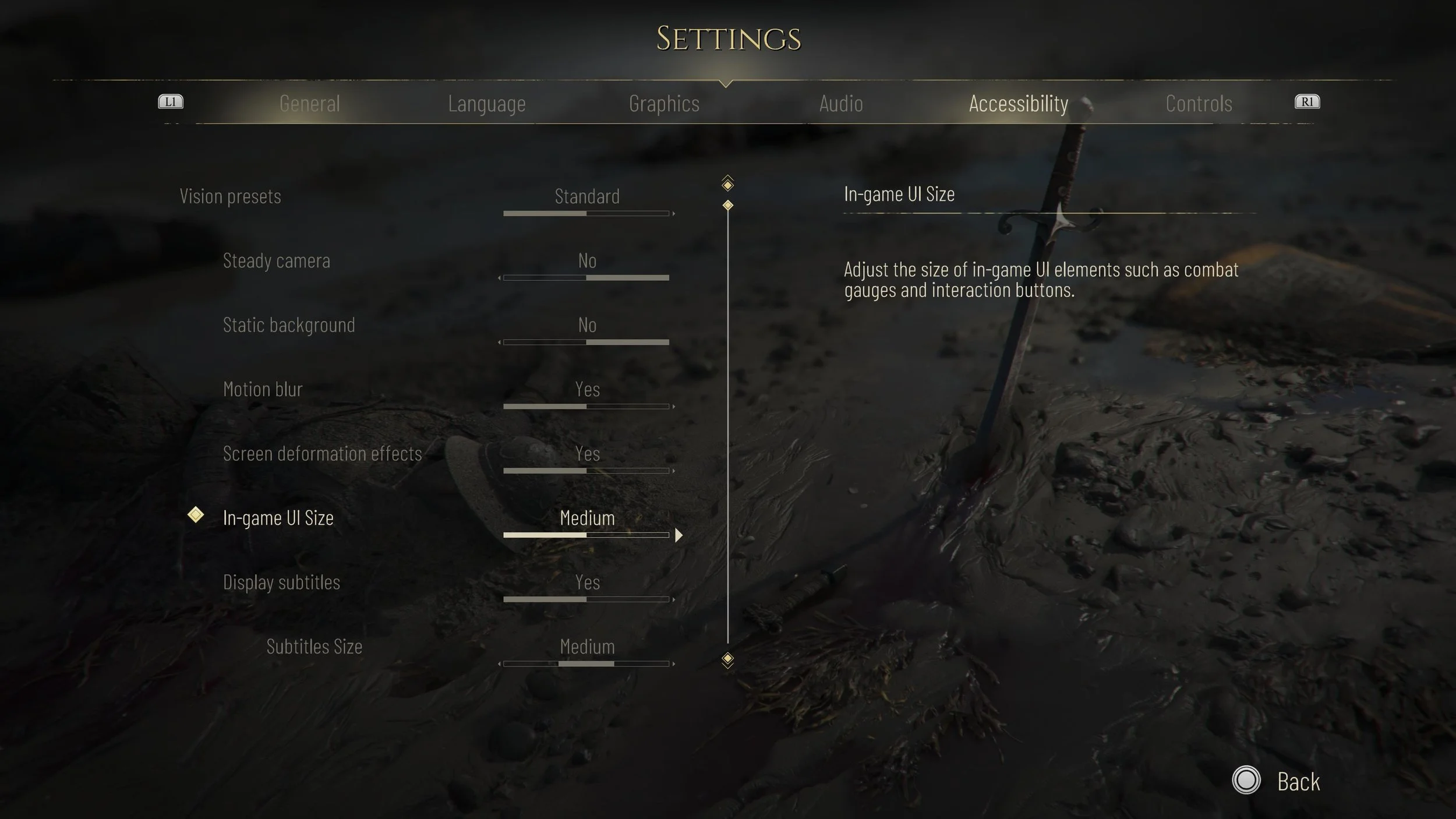
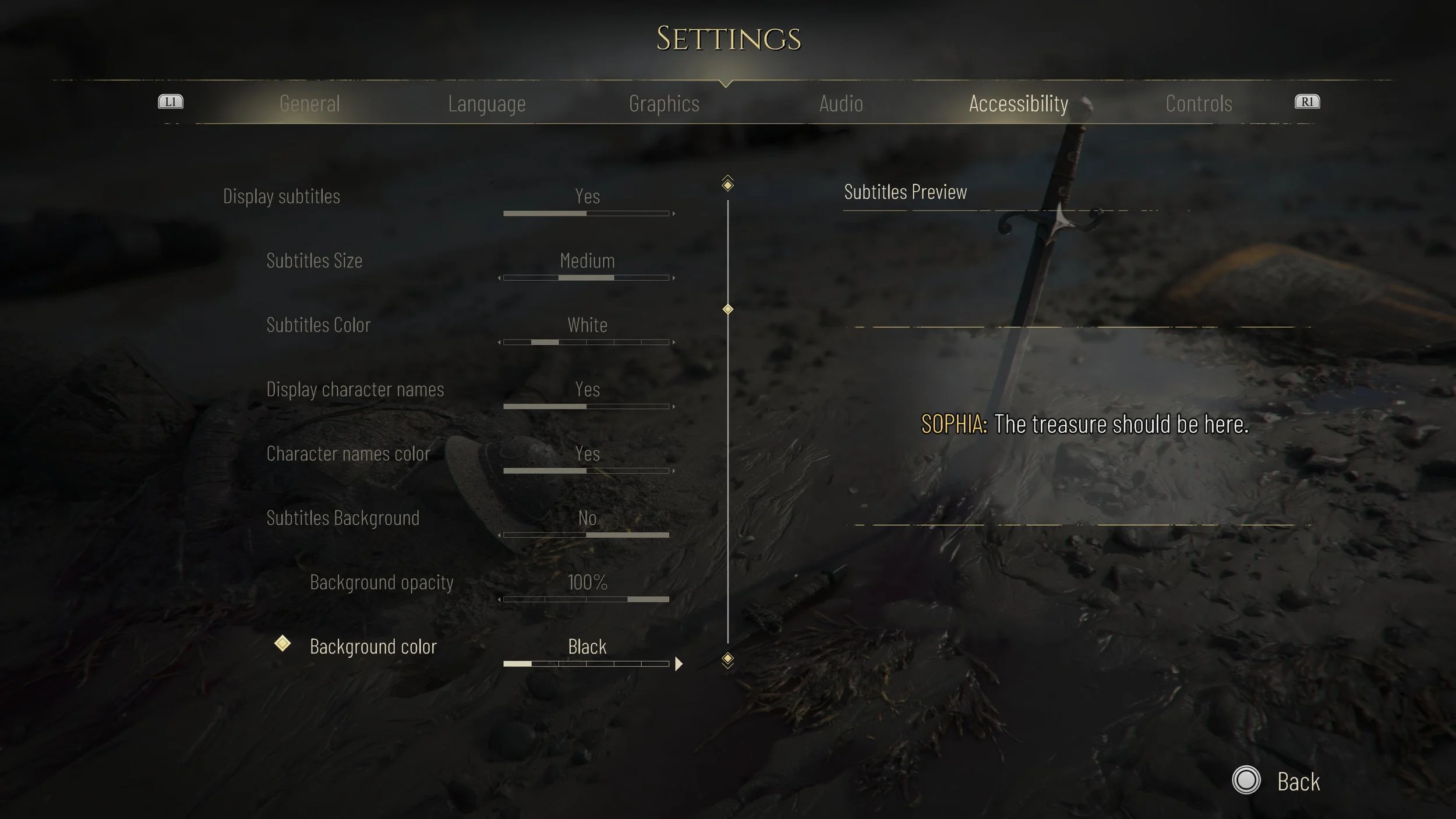
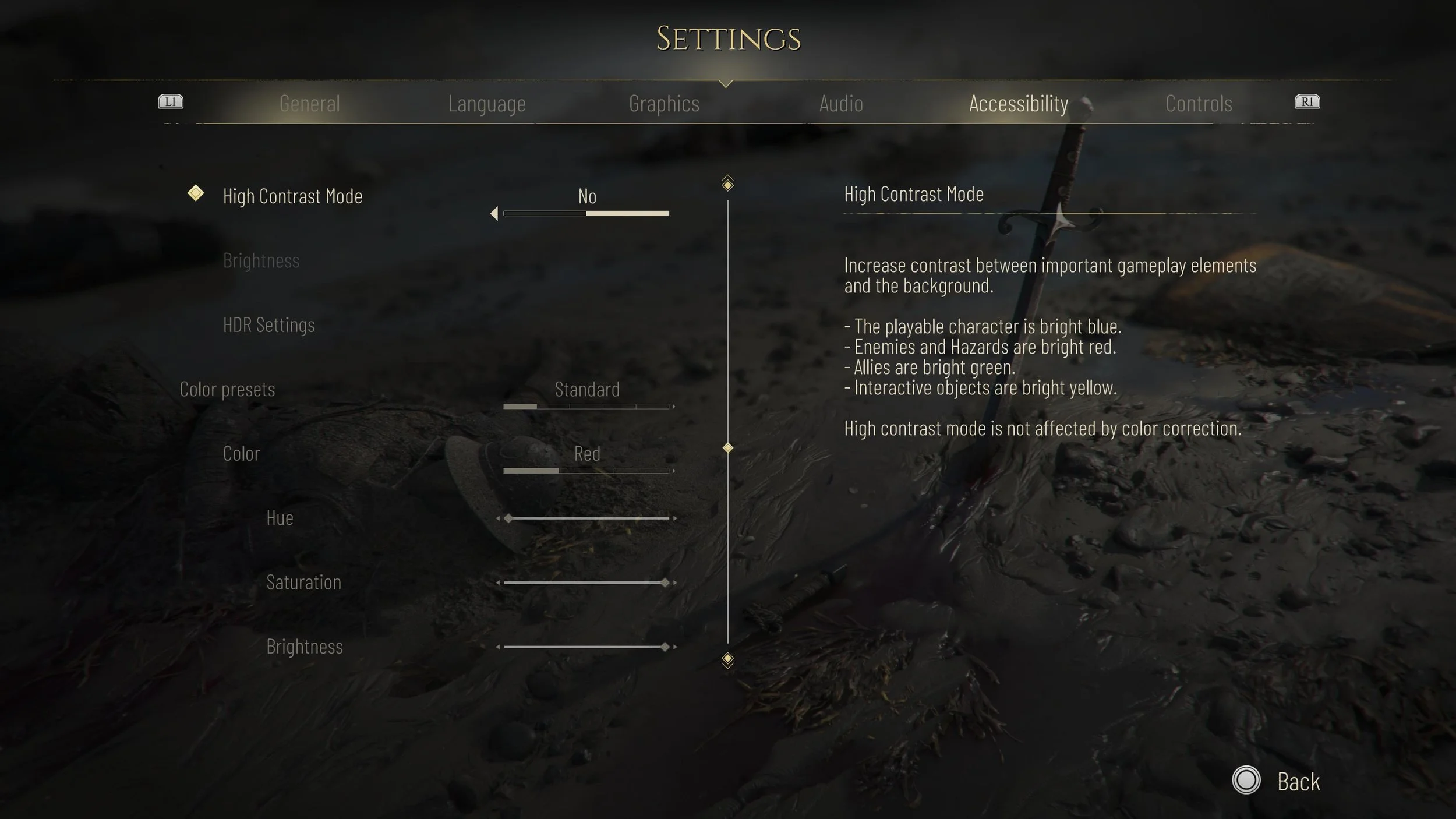
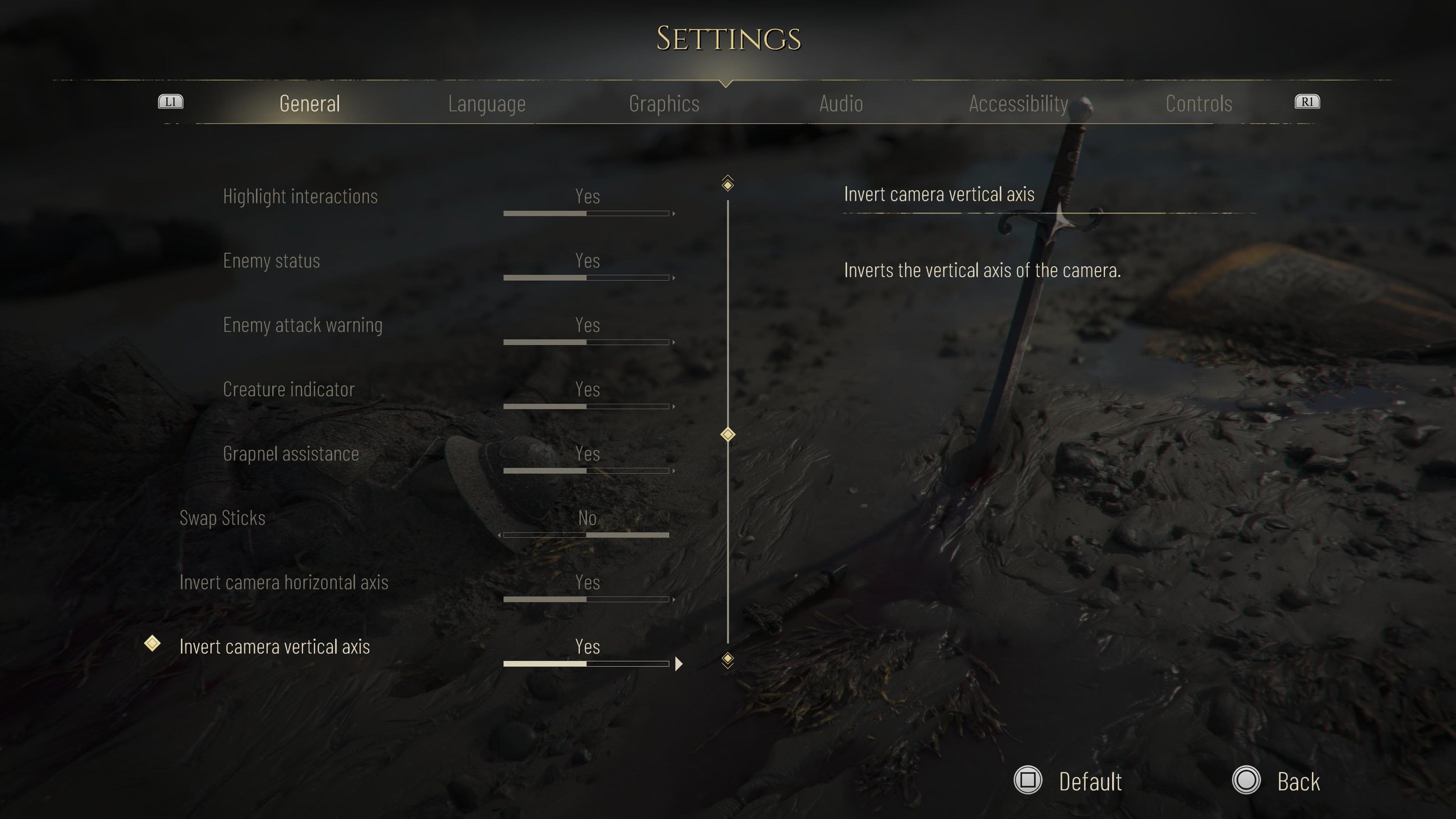
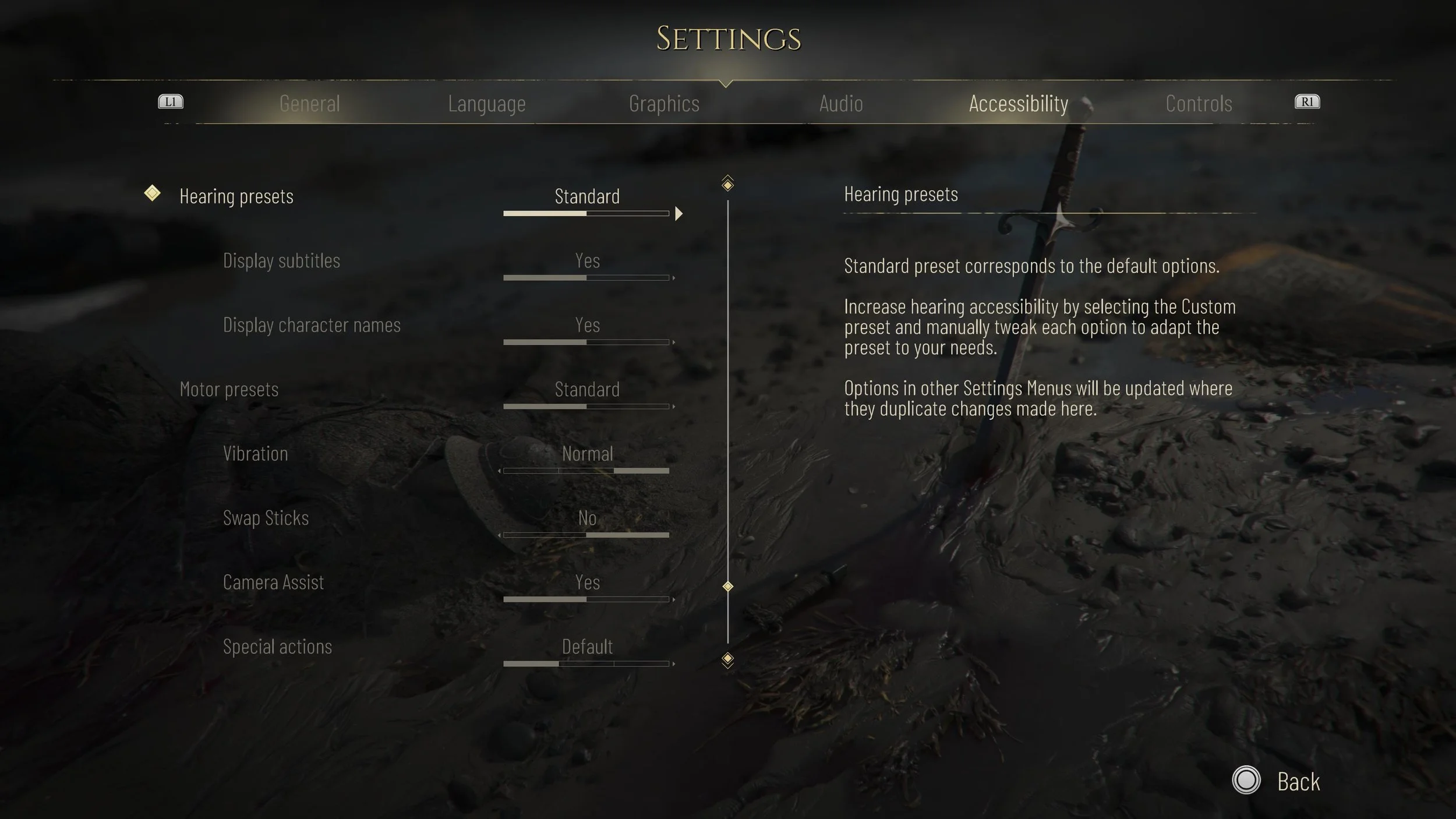
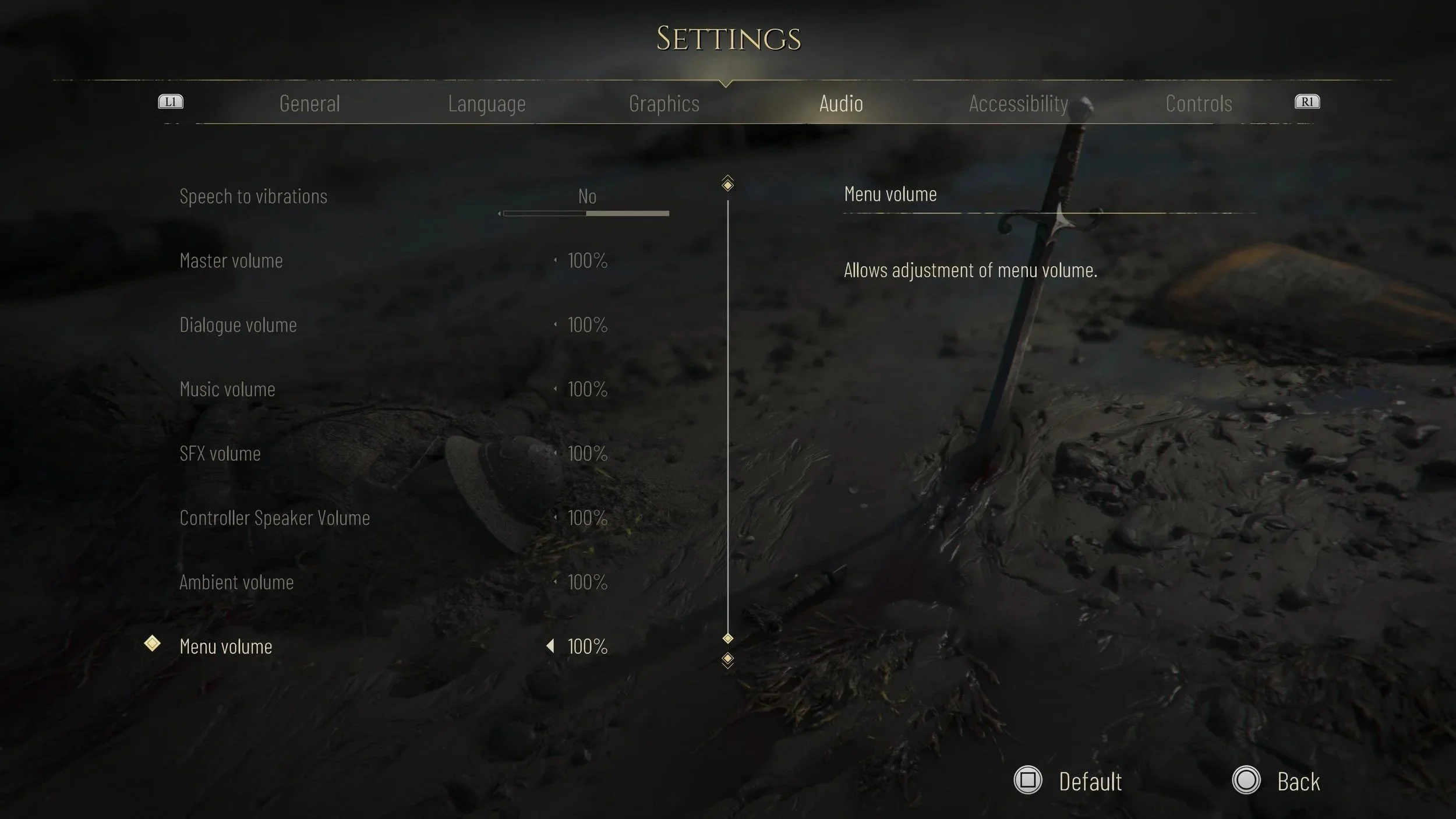
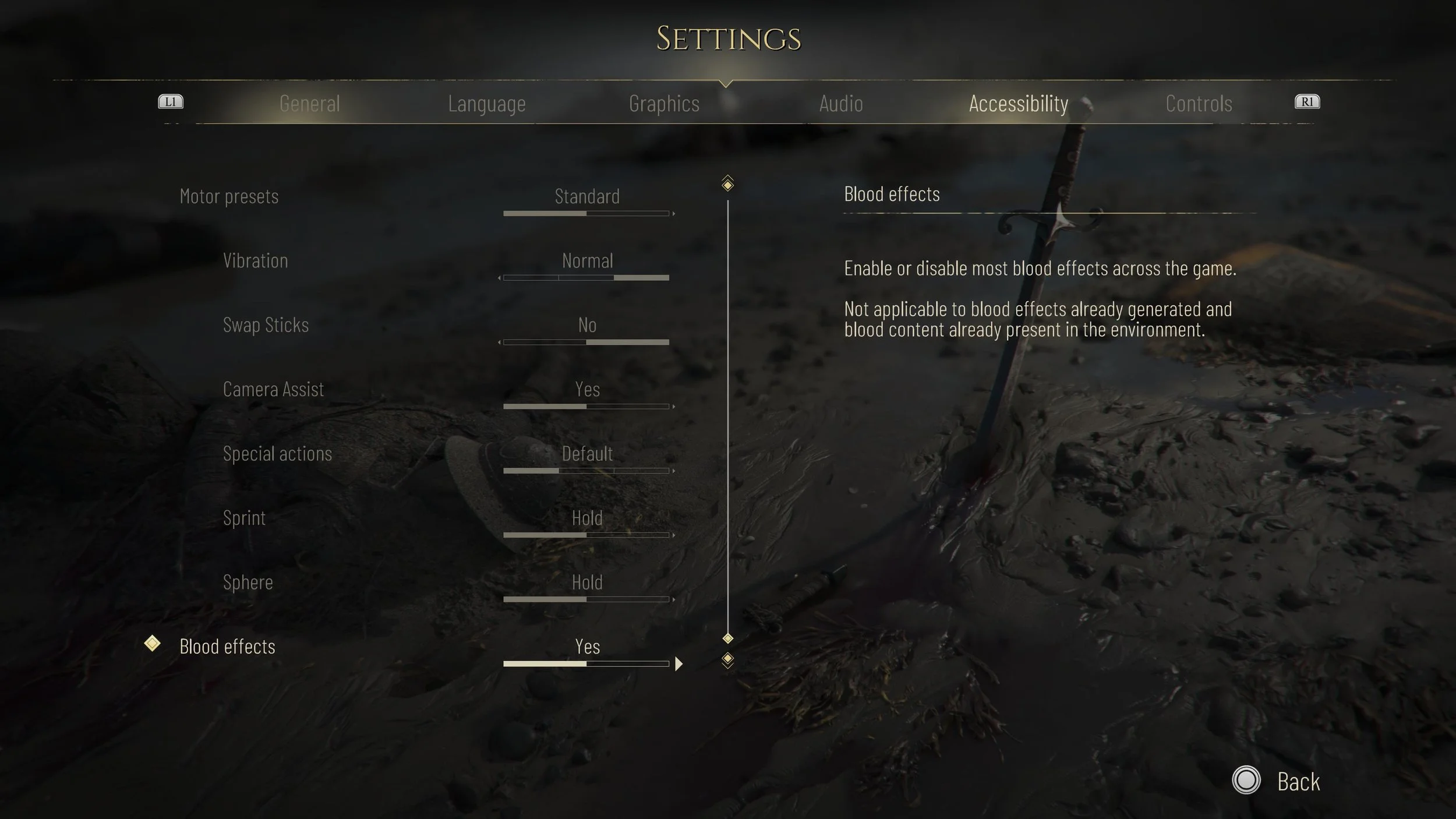
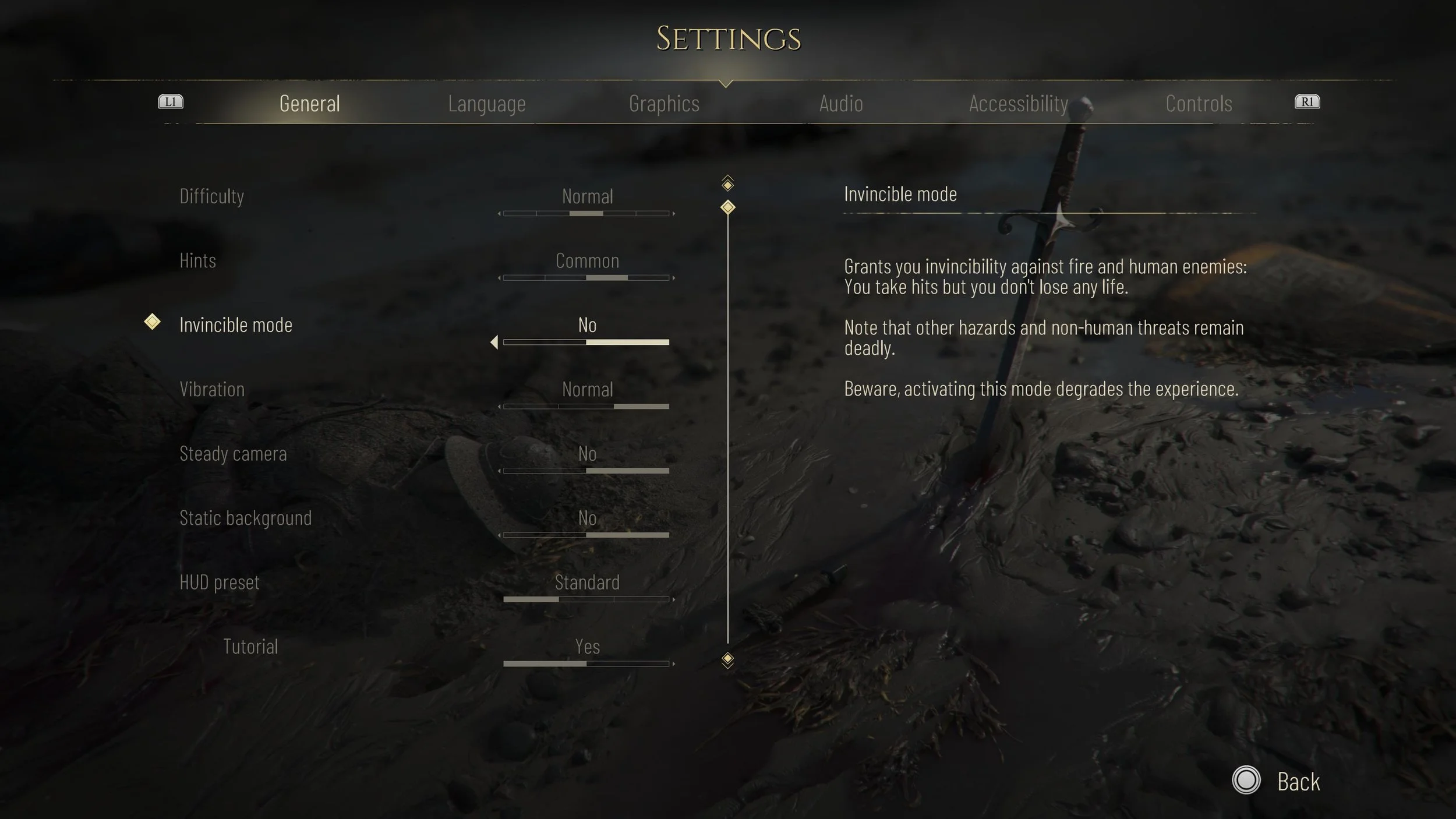
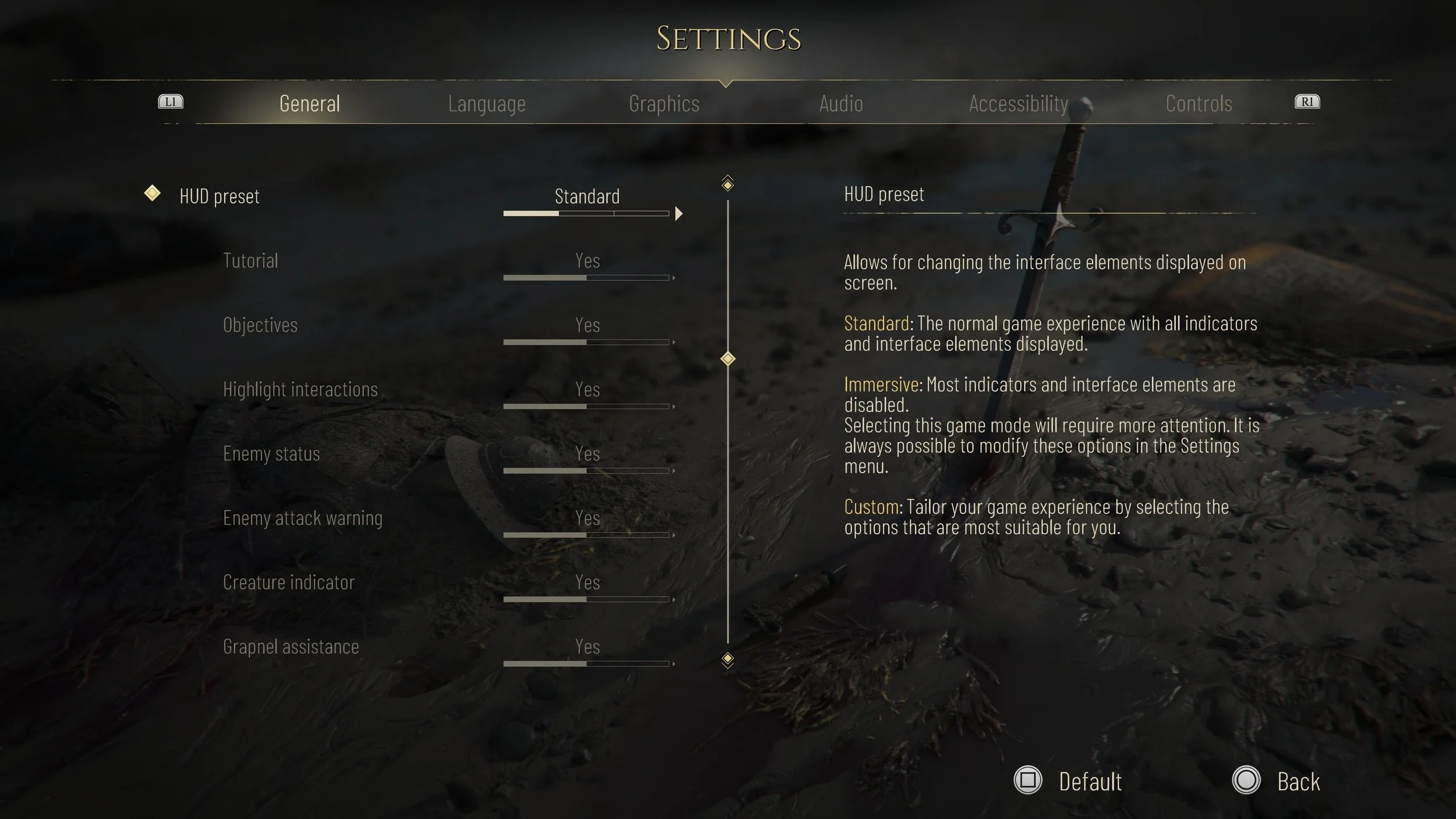
Resonance immediately impressed me with much more extensive accessibility options than I was expecting. Between the “Accessibility” tab itself and the rest of the settings menu in general, my initial impressions were pleasantly surprised to say the least.
The game offers different presets broken out by Vision, Hearing, and Motor.
Under Vision accessibility, there are options for steady cam, static background, motion blur, chromatic aberration, and screen deformation effects. You can also increase the UI size and alter camera sensitivity. You can enable subtitles as well as tweak their size and color. You can have the subs include character names (with color code options) and backgrounds with an opacity slider and different color options as well.
The game even includes a High Contrast mode which is fantastic to see. The player character turns blue, enemies/hazards are red, allies are green, and interactive elements are yellow. Resonance also includes various color presets that players can customize rather than a flat attempt at a “color blind mode.”
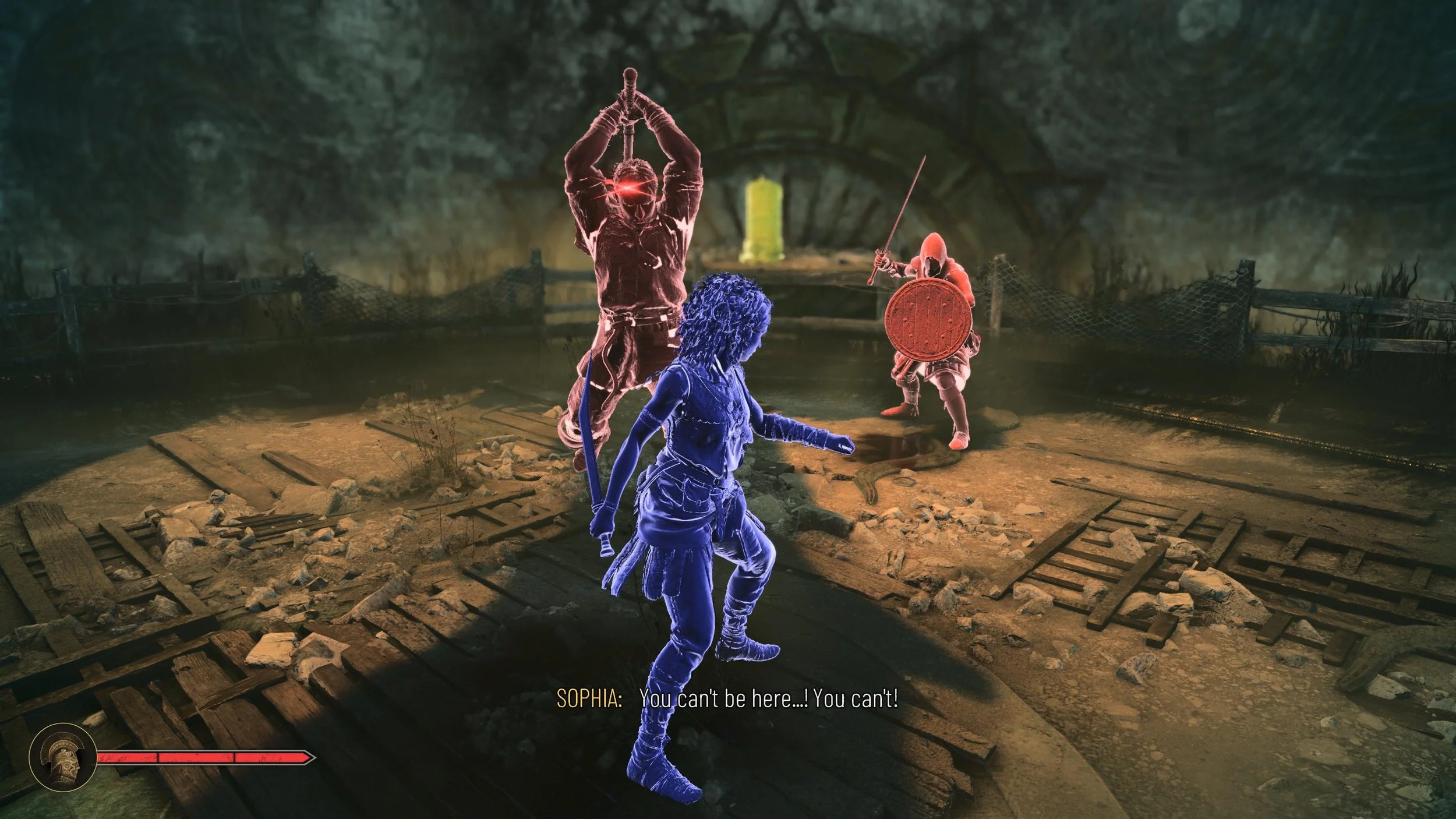
One potential caution I’d give here is that having the enemies color-coded red while also using a red glint for unblockable attacks could cause some incidental legibility issues.
Under Hearing and Audio, you can customize the master volume as well as tweak independent sliders for dialogue, music, SFX, controller speaker, ambient, and menu volumes. Resonance also features an option for speech to vibrations.
And as for languages, the game currently supports 17 different languages for text and 5 for voice. I can’t speak to the localization quality across all of them, but that’s an impressive amount to launch with.
Under Motor accessibility, you can customize vibration, swap the sticks, enable camera assist, get help with special actions (simplifying button inputs), and toggle sprint and certain puzzle elements from a button hold to a button press. Additionally, there’s both X and Y axis camera invert.
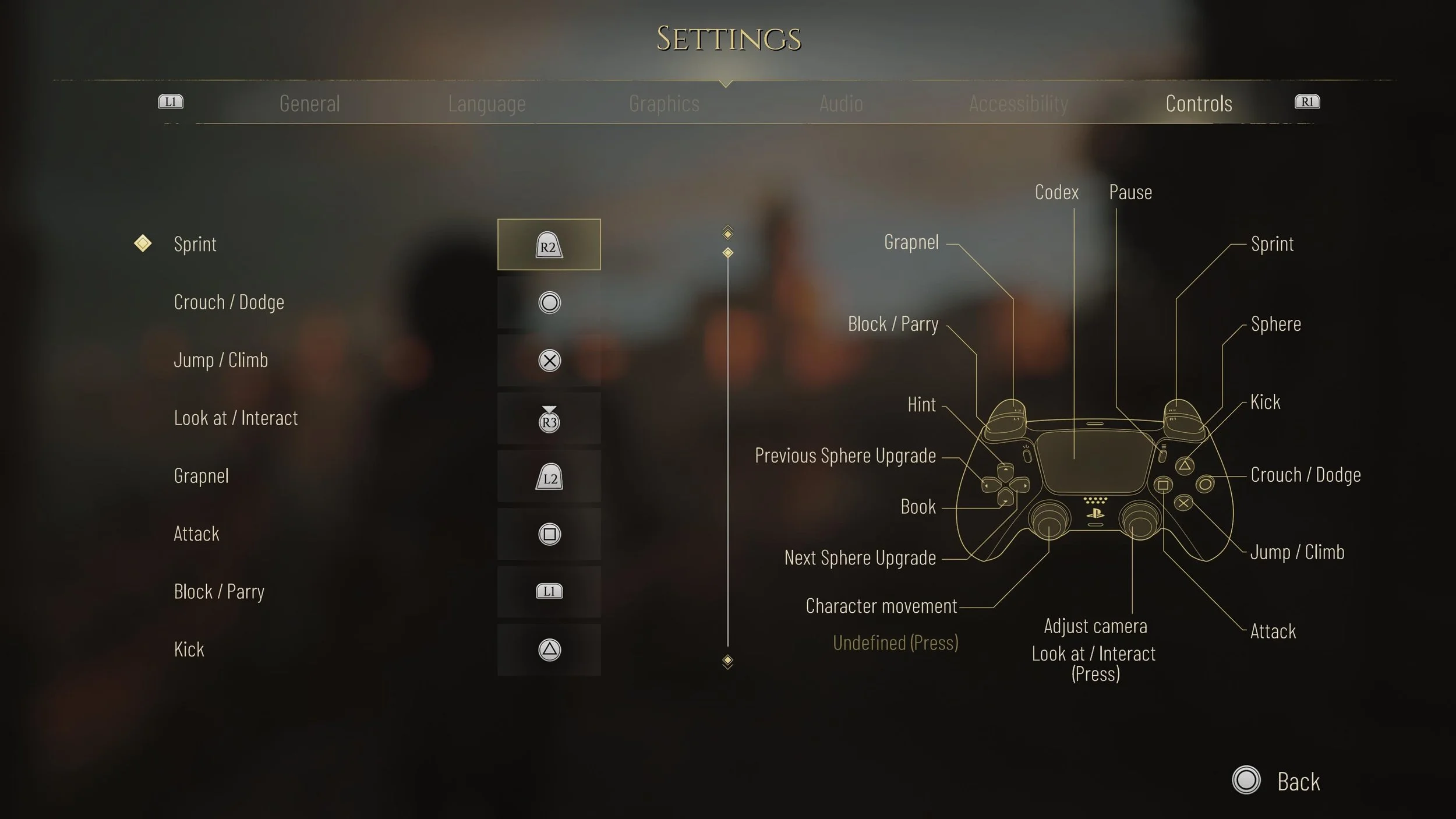
Resonance natively offers fully customizable button remap in the control settings. However, the available options don’t distinguish between in vs. out of combat. So for instance, if you wanted to change the “interact” command from an R3 click to the Triangle button on PS5, you wouldn’t also still be able to use Triangle for the kick action in combat. Having these hard-coded regardless of gameplay scenario does limit the finite number of mappings.
The game also has 5 difficulty settings. There are more gradients than just the usual easy, normal, hard and on the lowest setting parrying and dodging are automatic for players who need the maximum level of assistance to survive encounters. There’s even an independent option to turn on invincibility mode to disable damage from enemies in combat.
You can customize HUD presets to show more vs. less information, including in-game tutorials, objectives, interactions, enemy status, enemy attack warnings, grapple assistance, and off-screen enemy indicators for “the Creature” (more on that later). One final setting I’ll mention is that the game includes custom options for blood effects.
While in-game, you can pause anytime but something to note is that there is no manual save. There are fairly frequent auto-saves and the pause menu will let you restart a section or quit to the title screen anytime, but it will only save when you trigger an auto-save.
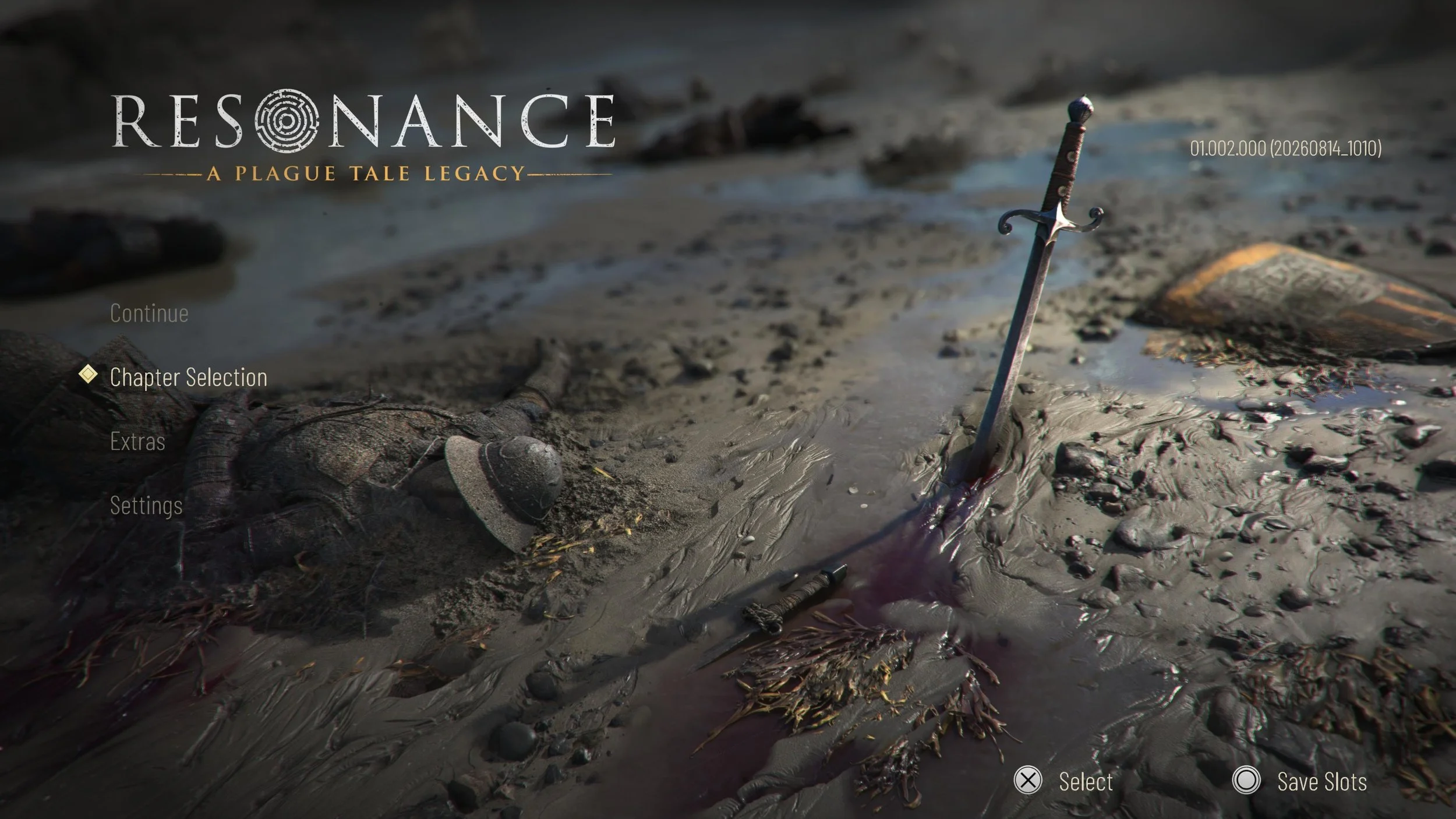
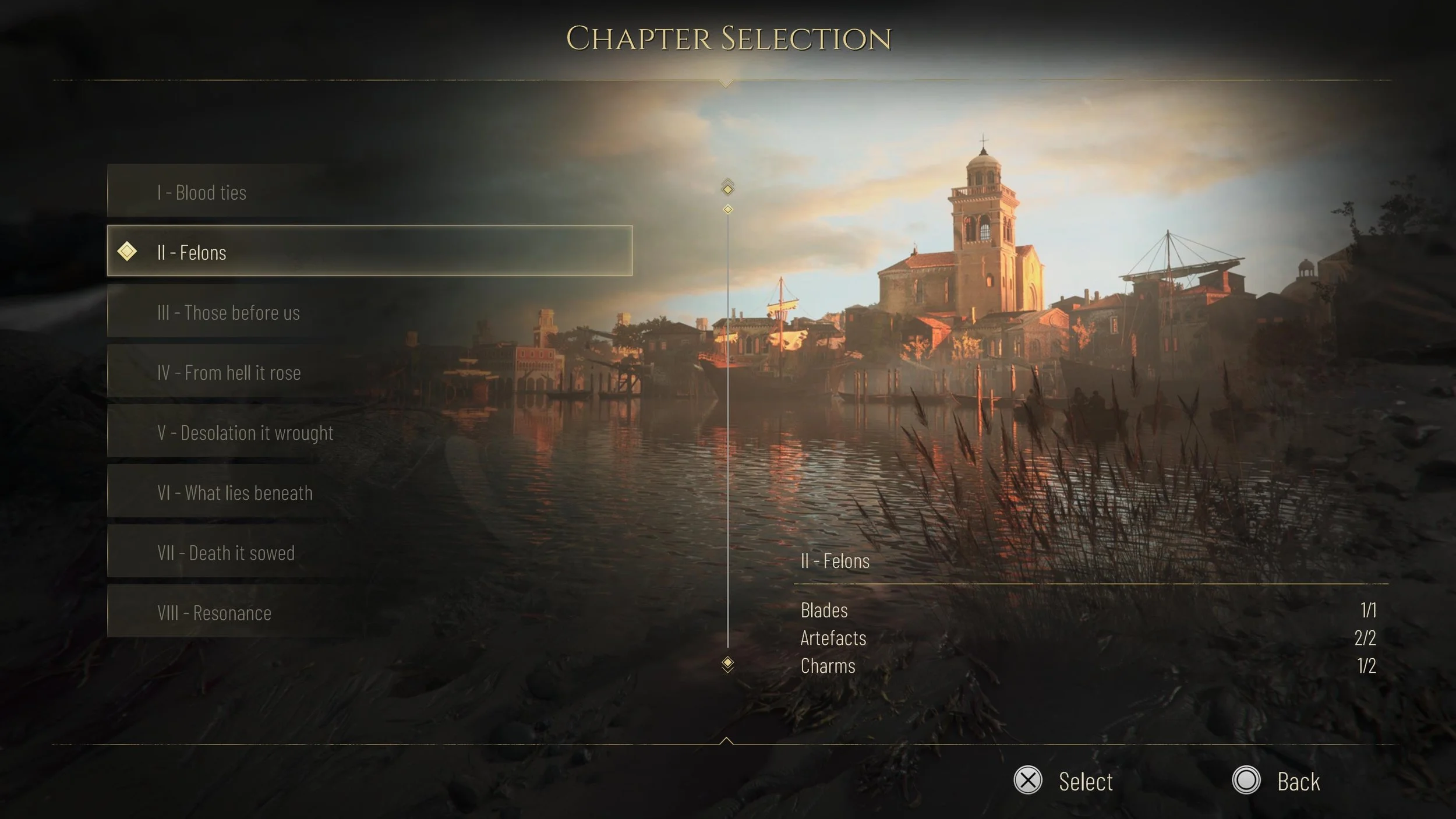
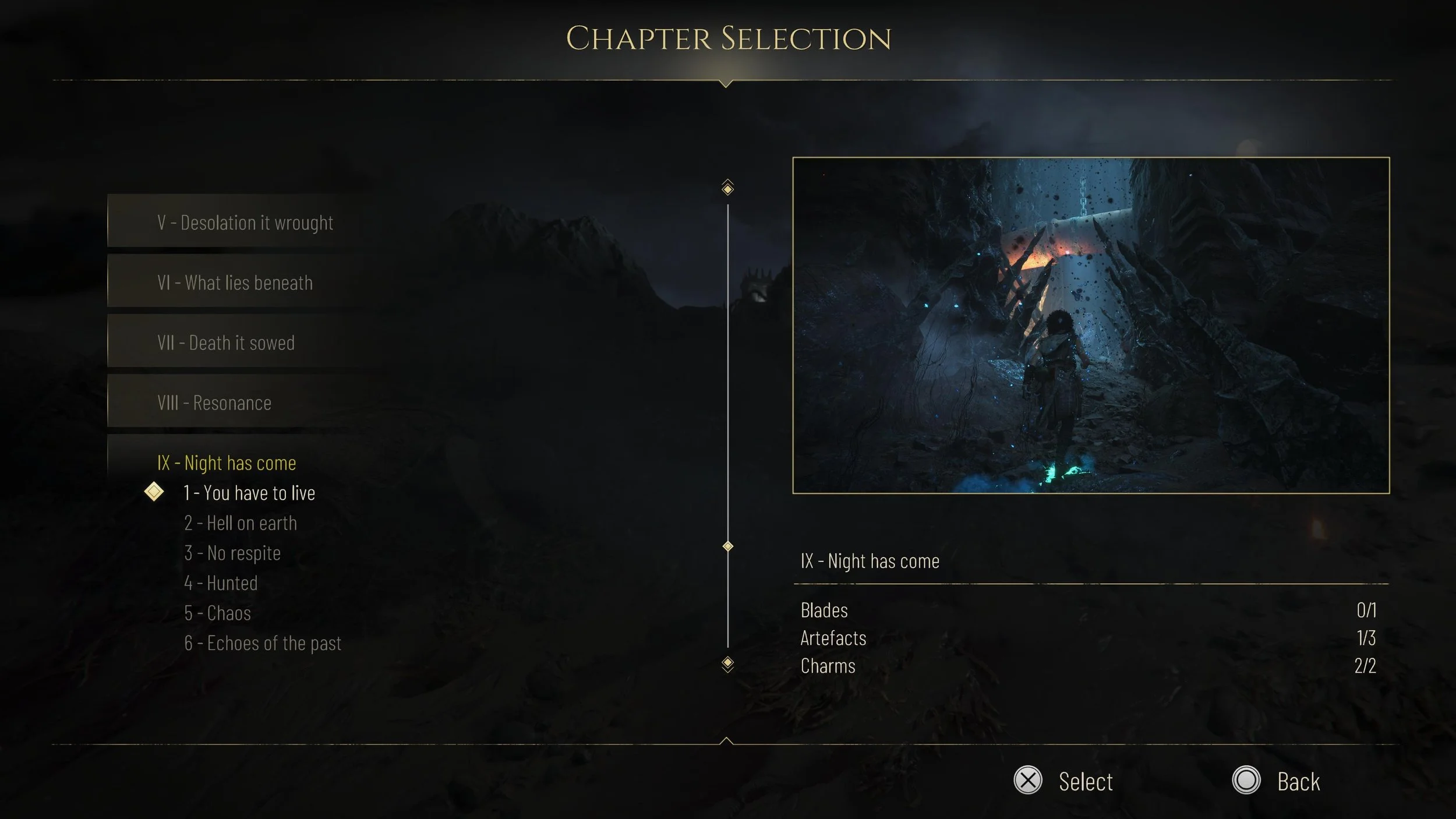
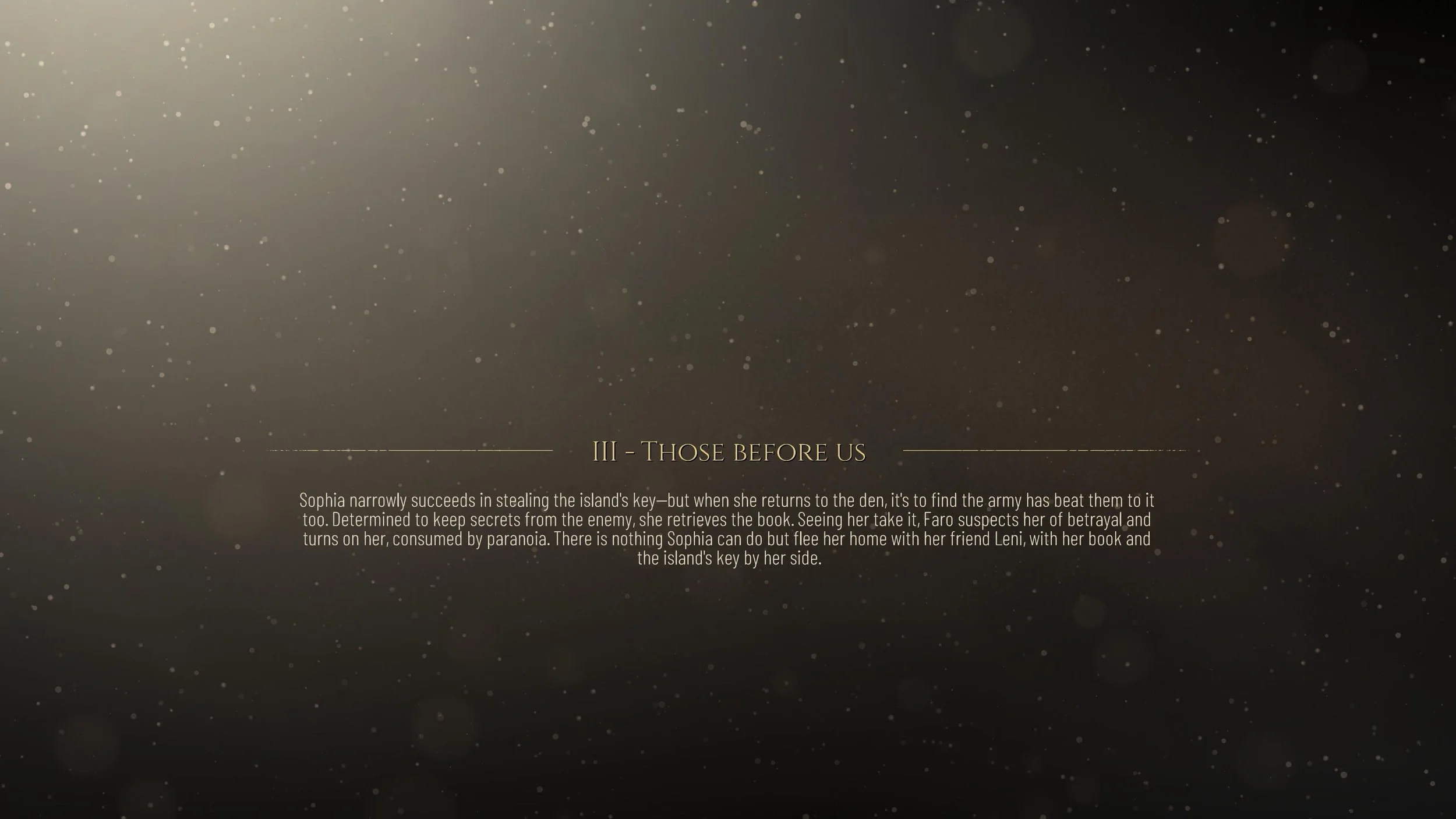
That said, checkpoints are frequent enough that dying shouldn’t set you back too far, and nothing is permanently missable. The title screen has a chapter select with sub-sections for major checkpoints to navigate each scenario you’ve completed. Chapters will also show how many of each collectible type you’ve found vs. missed so far.
Needless to say, the developers have done a very thorough job with the settings in Resonance. Short of having some of the more complex things like a screen reader, they’ve just about covered every main base in the options – with one very notable exception that I’ll get to later in the combat section.
Exploration & Puzzles
While I’ve already explained how combat in Resonance differs from its predecessors, what I haven’t mentioned is how the rest of the game is structured outside of battles.
This is where the gameplay follows the series’ formula more closely. The Plague Tale games are linear, narrative-driven adventures with some great tension and climactic blockbuster moments.
Between the high-octane peaks are exploration segments that focus on solving puzzles, finding collectibles, and light platforming. The environments are linear, although some are wide enough that you could get turned around and, in many instances, collectibles are well hidden enough that most players won’t find them all on a first pass without a guide.
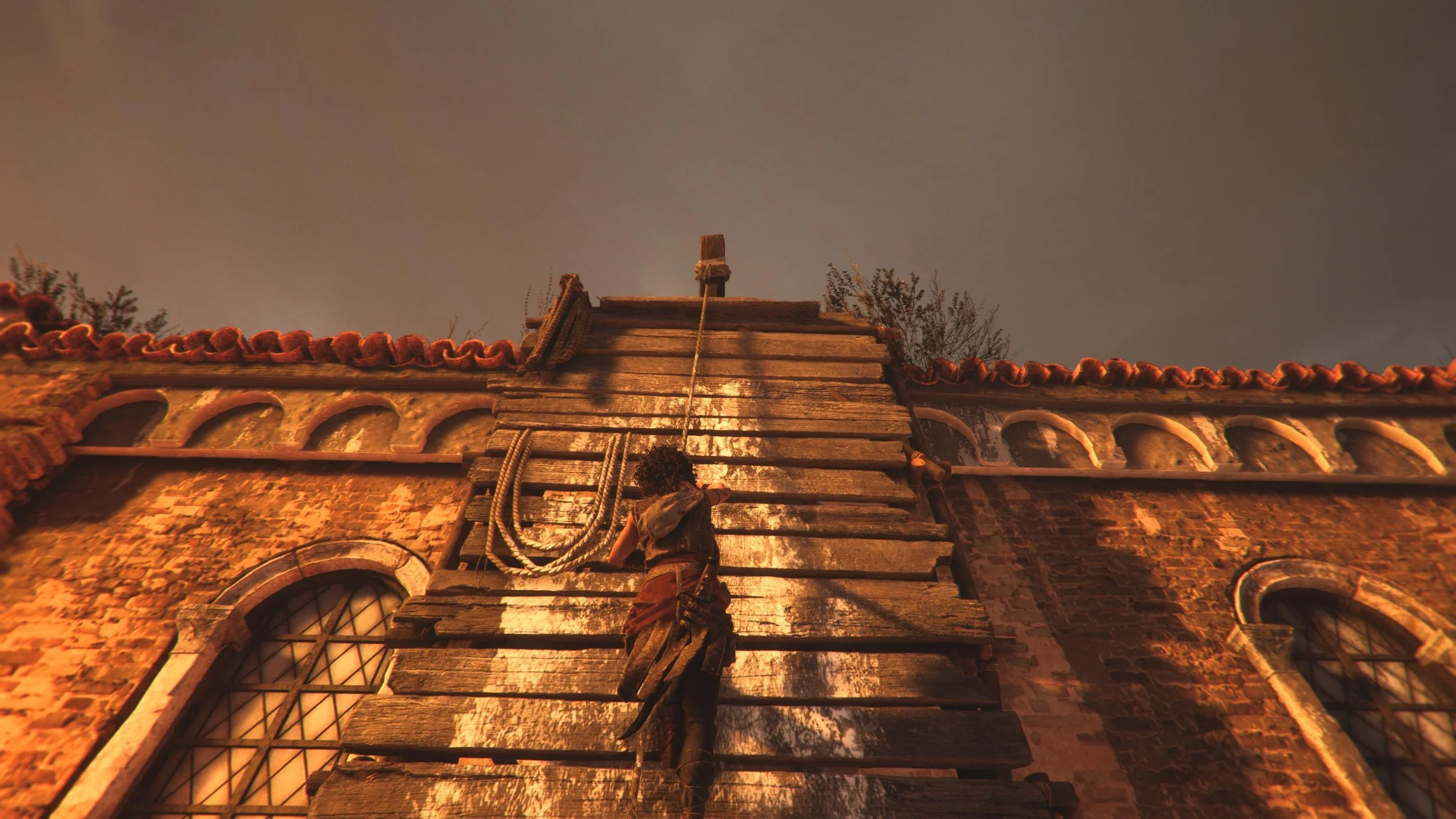
Certain sections use things like white flags to indicate where you should go to progress, and throughout the game there’s the usual “yellow paint” (or in this case, white paint or scratches on rock surfaces or platforms) along with the more diegetic elements to point the player in the right direction.
There are some dark sections and stealth/chase sequence areas where some players with various vision or cognitive disabilities may struggle, but while not a full “hallway simulator” game, most chapters are linear enough that getting lost shouldn’t be a sizable issue with some trial and error.
In terms of the platforming, ledges and platforms you need to jump to are generally wide enough that they’re manageable to land on. However, Sohpia isn’t very “sticky,” so she won’t help you stop her momentum from carrying her forward once she lands. There are also grappling points throughout the game, but even during chase sequences time slows down and the window to latch on is fairly generous.
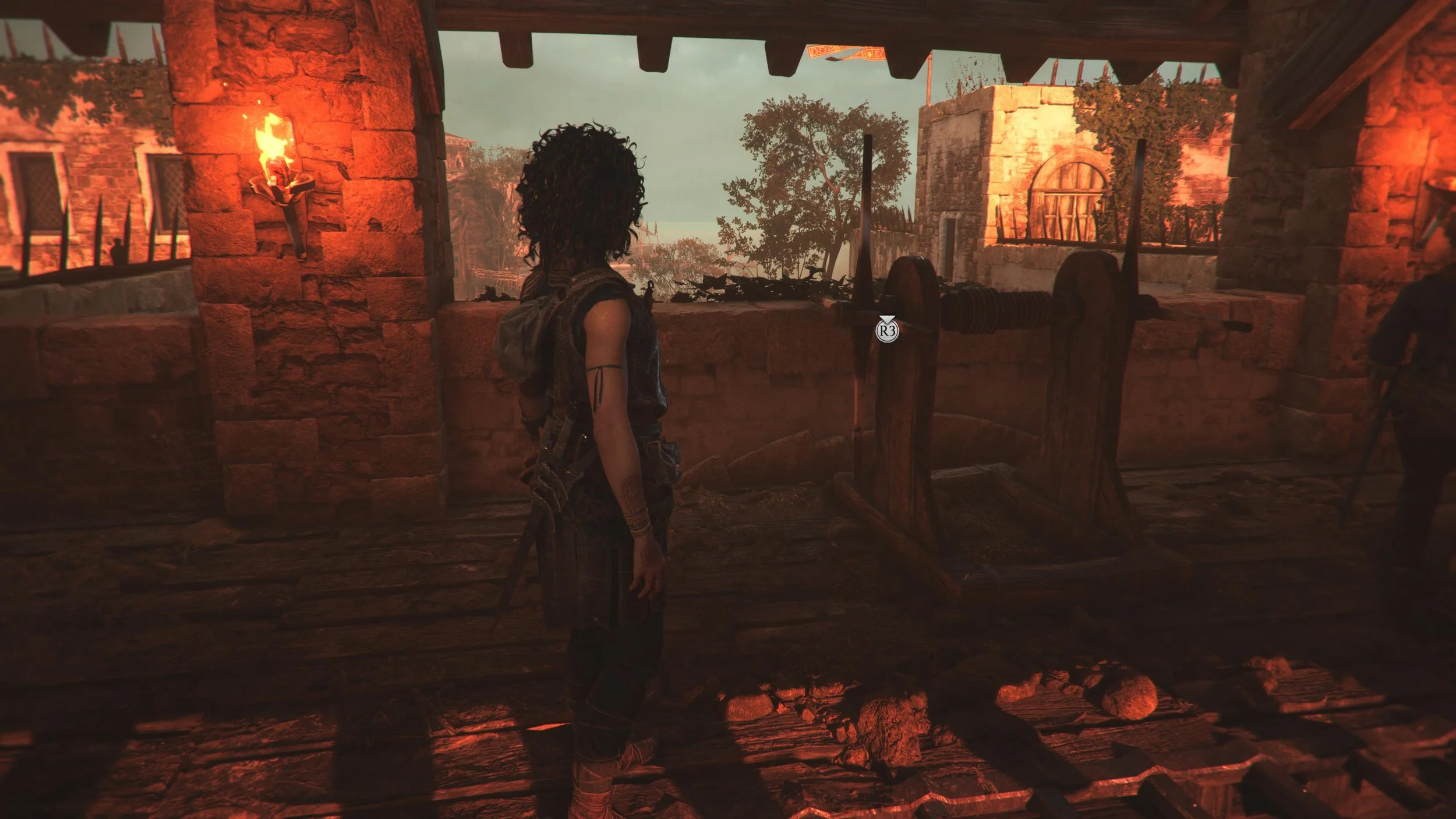
As for collectibles and interactive elements in the environment (mostly for puzzles), this is one area where I think there could be a slight improvement. Same as in the previous Plague Tale games, things the player can pick up or interact with are indicated by a glinting light that shimmers across objects. This can be easy to miss, especially for vision-impaired players.
The game’s high contrast mode mitigates this since interactive elements turn solid yellow – but I’d love to see an option outside of turning on full high contrast to help highlight just these objects (so as not to affect the player character, allies, and enemies too).
Having one or two more options to help players detect interactable objects would be great, especially something like proximity-based audio or vibration cues rather than just visual aids.
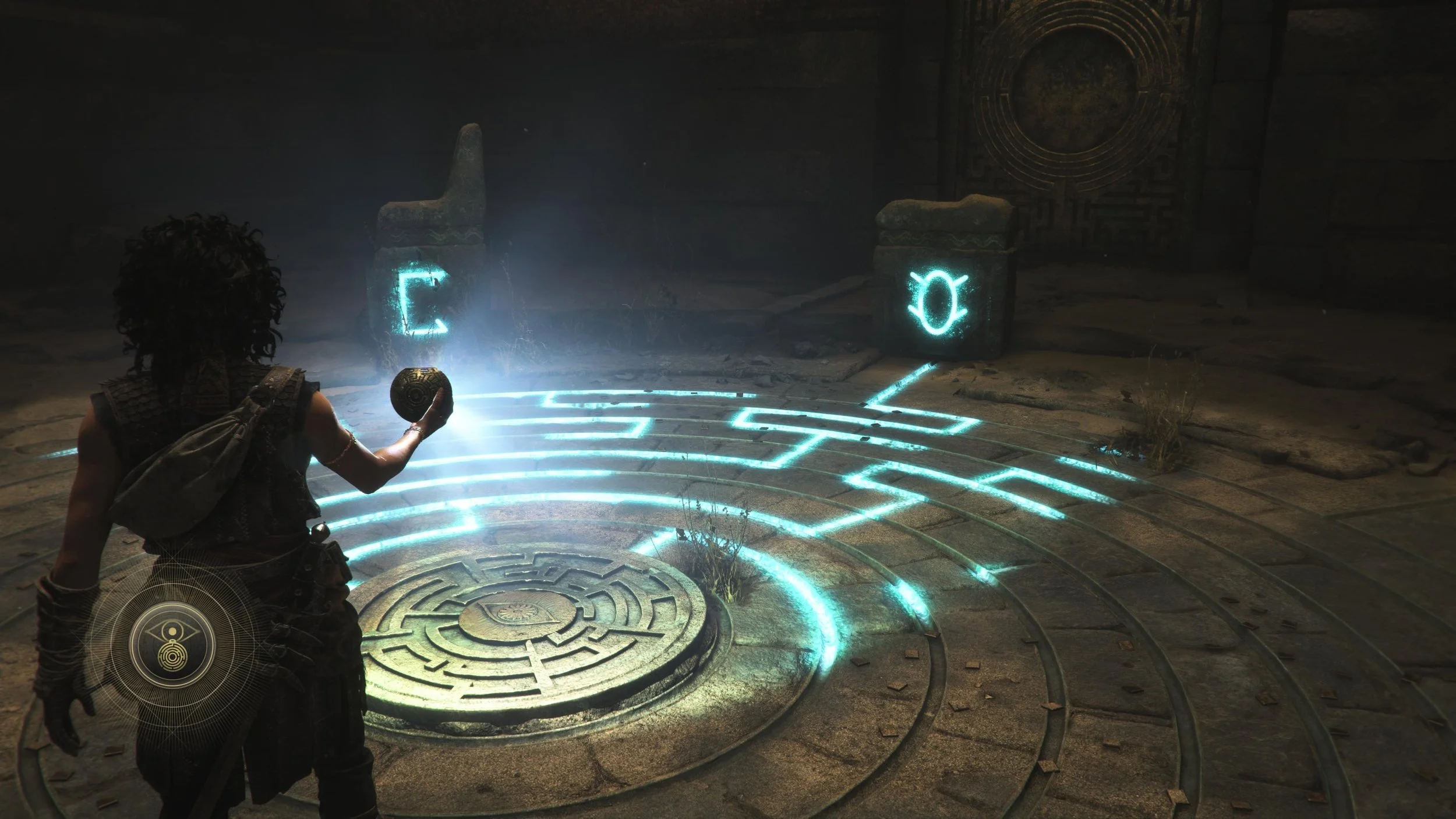
Now, as for the puzzles themselves – for the most part none of these were too obscure for me to figure out even without using the built-in hints system. A lot of the puzzles revolve around lining up light sources or rotating other things in the environment. Sometimes you’ll need to uncover, record, and match certain symbols too.
To help keep track, Sophia carries a journal with her for most of the story. You can open it by pressing down on the D-pad. It will naturally open to the most relevant page, but you can flip through and press X on highlighted areas. Sophia will mull over the contents, giving various hints that relate to exploration and puzzles. She’ll also automatically record updates like symbols you’ve found and will need later.
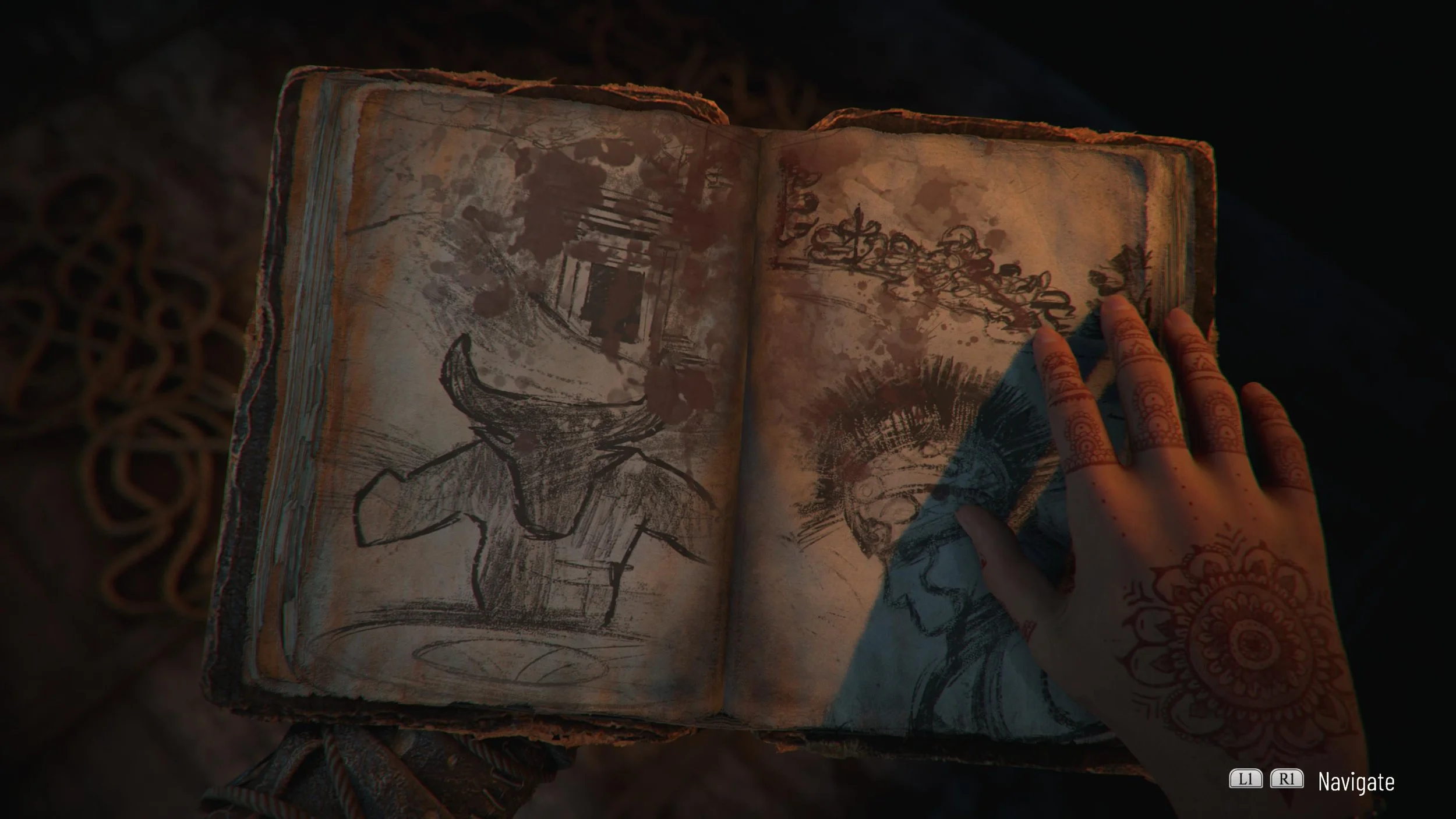
Sophia and her companions can also give verbal hints while exploring. The menu settings let you turn the frequency of these vocal cues up or down. Additionally, while in areas with a puzzle you’ll see an indicator to hold up on the D-pad should you want to prompt hints from Sophia in case you’re stuck.
The one thing that the game really won’t give you much guidance for is finding the collectibles. The chapter select menu will indicate how many you’ve found vs. how many are still missing in that specific chapter, but otherwise you’re on your own to find them.
And these aren’t all just collectibles for collectibles’ sake – while some artifacts are just for lore and flavor-text, many of the things you find will benefit Sophia’s gameplay. It’s not the most robust upgrade system since we’re not delving into full RPG territory, but Sophia equips the trinkets she finds to gain various RNG-based stat boosts.
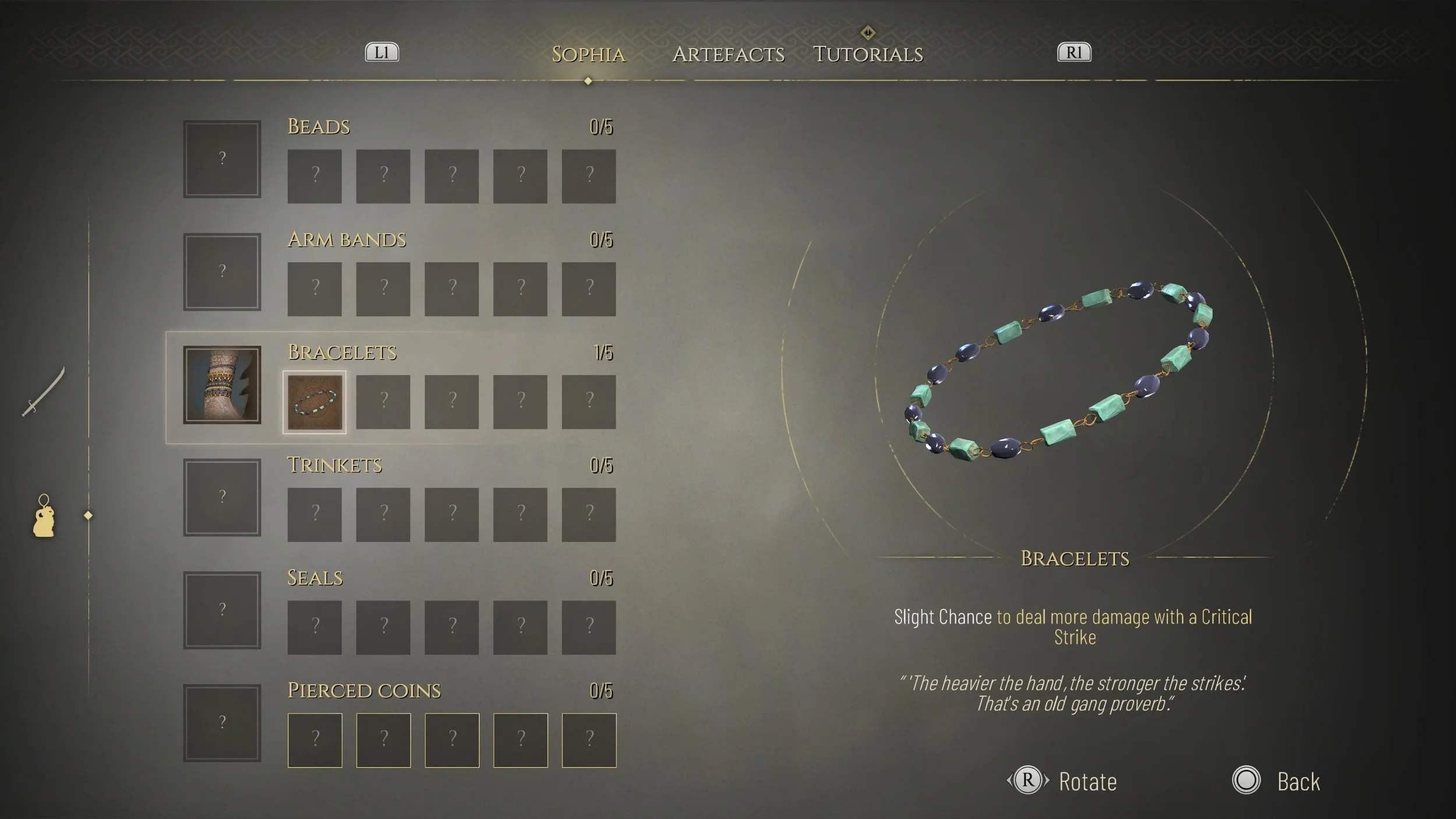
This could mean something as simple as archers being more likely to miss you, or as life-saving as a chance to avoid death upon an otherwise lethal blow. There are also eight swords for you to find, and each weapon has a different special effect that can prove advantageous. As a result, I’d highly encourage players to put some effort into exploring thoroughly before progressing the story.
There are also upwards of 200 “resonance” points for players to collect. Some drop from combat encounters, but most are collectibles gathered through exploration. You can spend these points to unlock abilities from Sophia’s skill tree. It’s nothing too extensive, but the abilities will help you dodge or counter enemies more effectively in combat so again, very worthwhile to seek out, especially if you find yourself struggling.
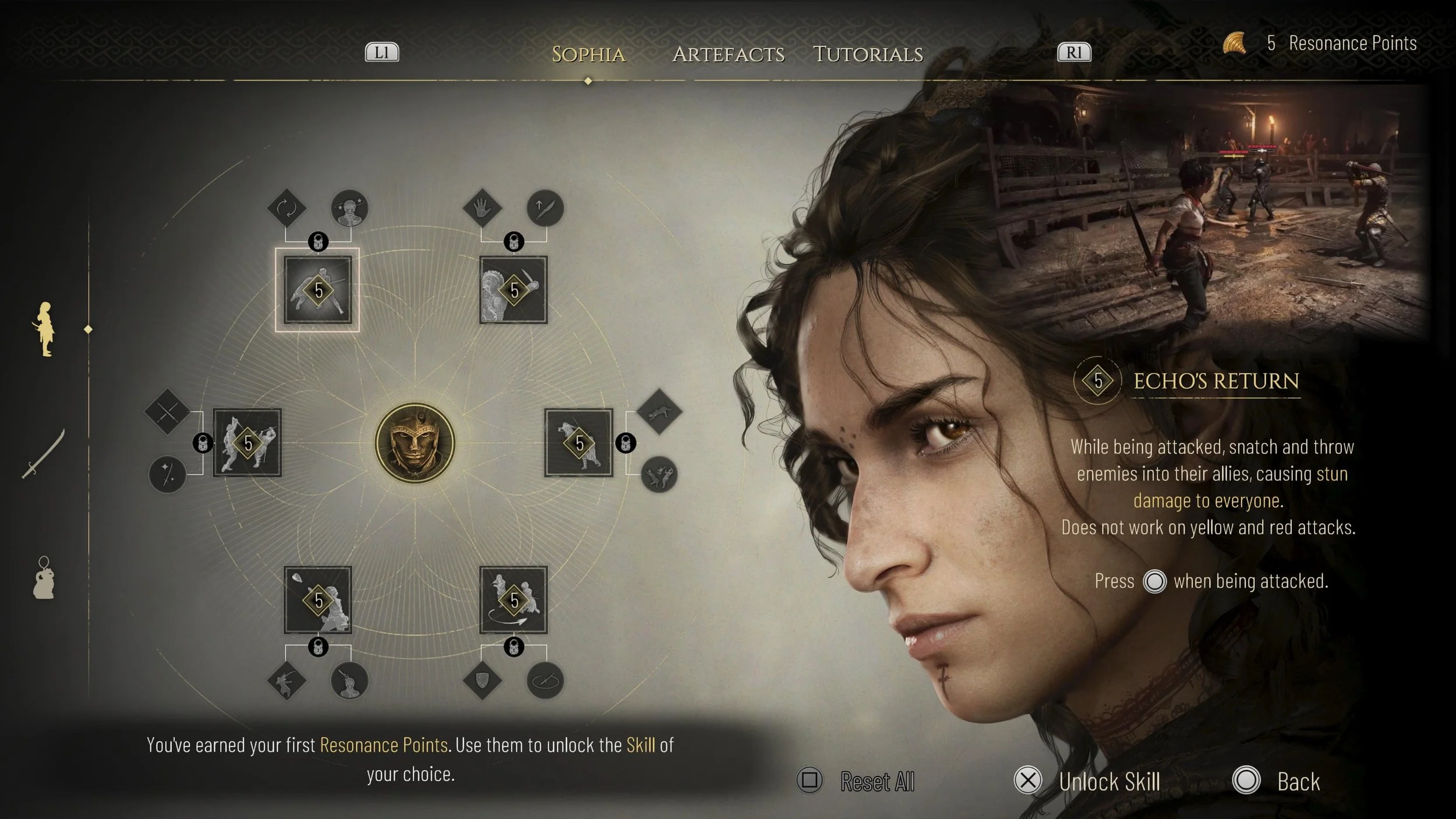
One final note before I wrap up this section: even if you’re having trouble finding enough resonance to unlock and upgrade multiple abilities for Sophia, you have the option to reset the points you’ve spent at any time. This should help players feel free to experiment and see what works best for them in different combat scenarios.
Combat
I won’t fully recap everything I already covered in the intro about combat. But just in case anyone skips down to this section, here are the basics:
Sophia equips blades and mostly relies on melee in bespoke combat arenas that feature a finite number of enemies, although sometimes there are multiple waves. You have a melee attack as well as a kick that increases enemy stagger and causes them to be temporarily stunned if their meter maxes out.
Additionally, if you hold instead of press the melee attack, you can perform a critical strike for more damage. And eventually, Sophia will unlock a “special attack” that requires you to fill up a meter to use and unleash significant damage.
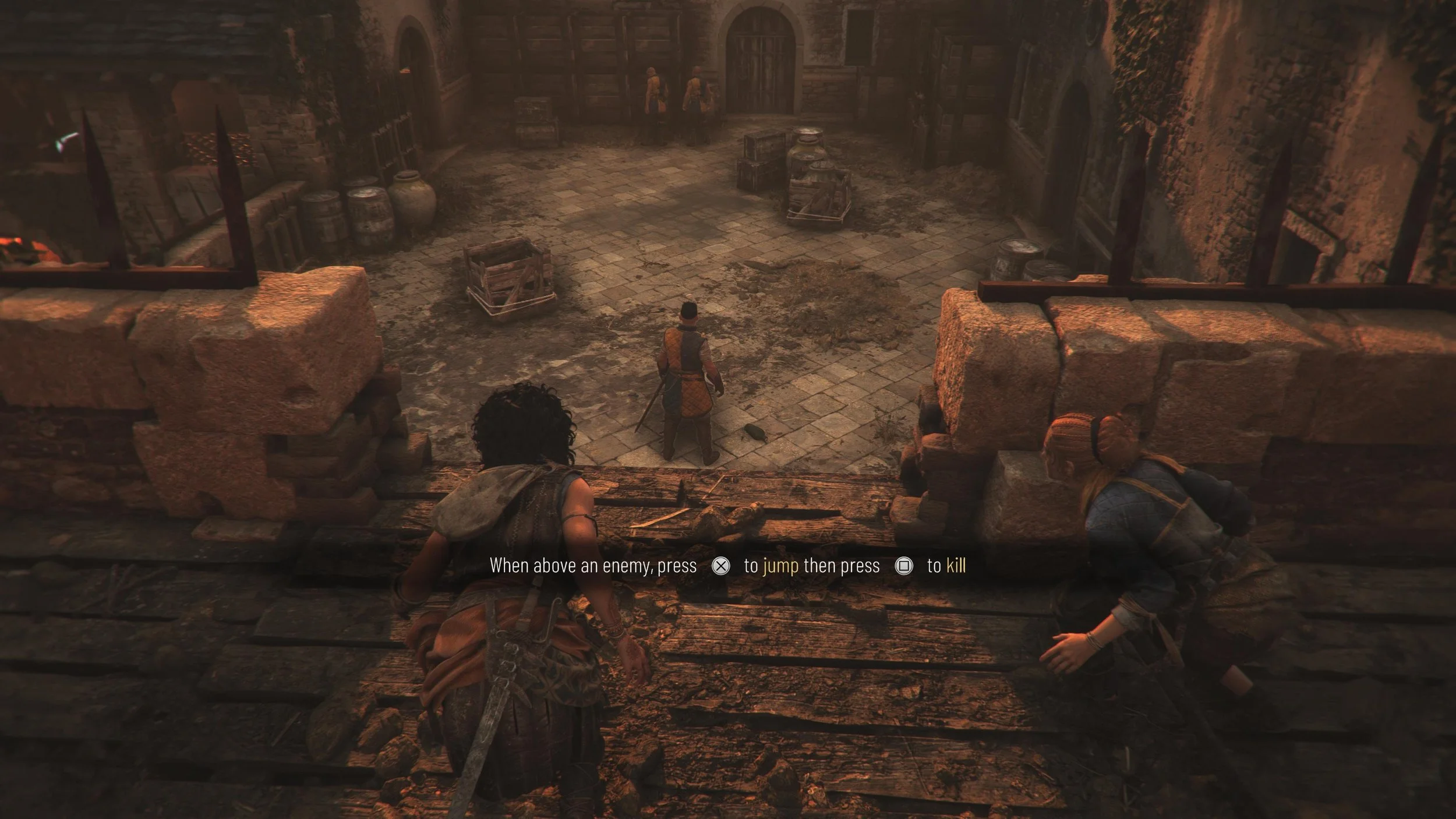
As for how combat starts, usually you enter an area with enemies and they’ll notice you to start the encounter. However, there is just the lightest bit of “stealth” if you can call it that. Sometimes Sophia can get the advantage to take down one enemy before everyone else alerts, usually by jumping down from above to trigger a QTE prompt for a melee attack. Otherwise, you can’t use stealth to your advantage and pick enemies off one by one.
Enemies will deploy either standard, parryable, or unblockable attacks (with the latter two indicated by yellow or red lights respectively). There are also some ranged attacks from archers (which you’ll be alerted to with a red target indicator if the enemy is currently off-screen).
Sophia has a fixed health bar that allows players to take up to three hits before KO. There are no healing items, but you heal one segment of your health bar each time you defeat an enemy.
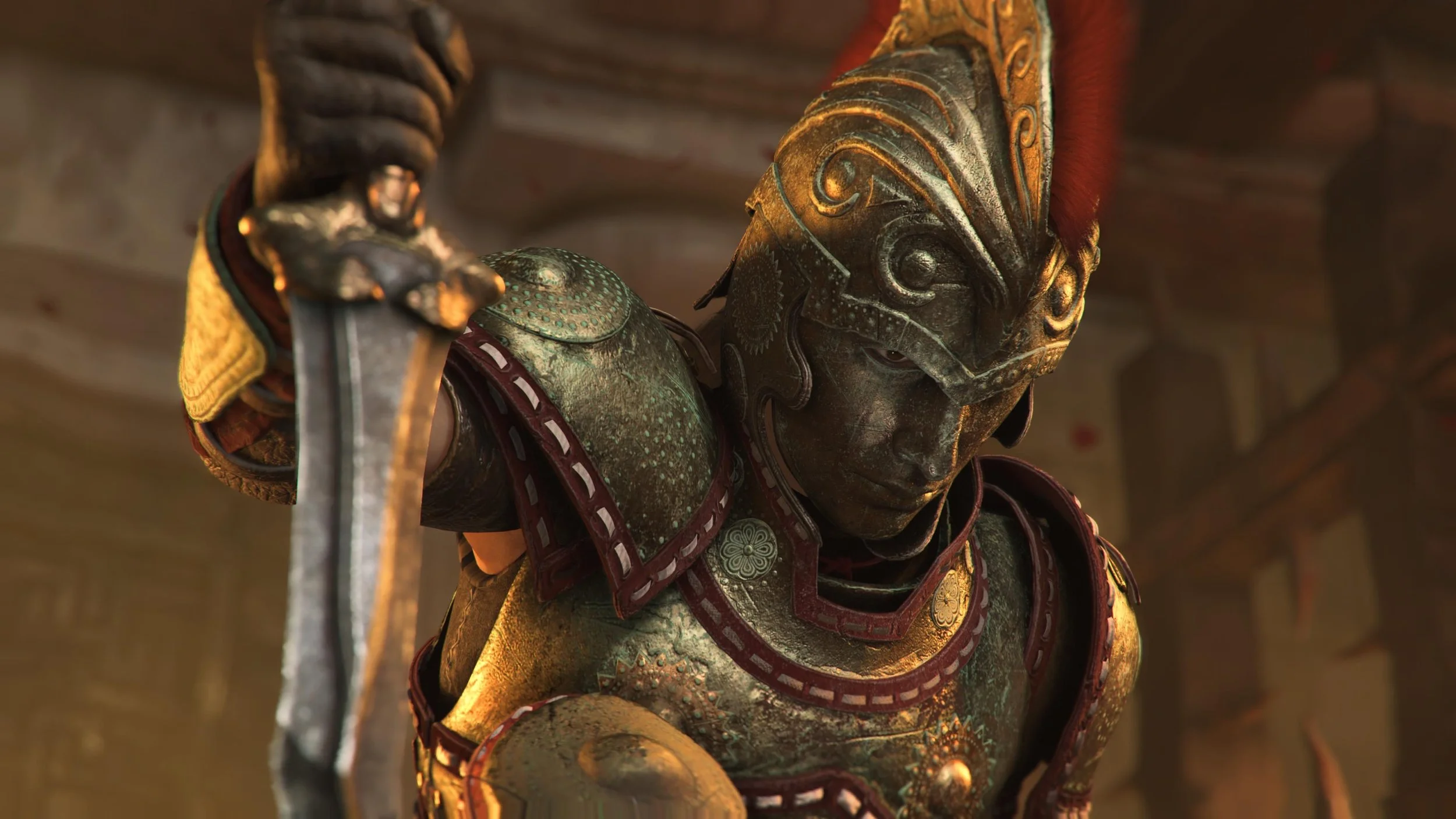
Besides melee, parrying, and dodging, Sophia also has a grapple hook that can be used to pull (most) enemies towards her. Heavy enemies will resist this though and even those you do manage to hook won’t all necessarily become vulnerable – some will come flying at you ready to counterattack.
Unlike in previous Plague Tale games, there is no crafting so you won’t unlock and accrue an arsenal of traps or throwables. However, combat arenas usually have some throwable objects lying around and enemies can drop their blades too. These one-time-use objects can be used to harm or stun enemies and are aimed automatically when thrown.
Now, that “aimed automatically” phrase might be a good segue to talk about the main critique I have for the game’s accessibility.
The single largest gap in Resonance’s accessibility is the lack of a lock-on in combat.
Instead of being able to toggle a lock-on, the game has a “soft lock-on” system that will automatically target a nearby enemy. For the most part this is fine at best and annoying at worst.
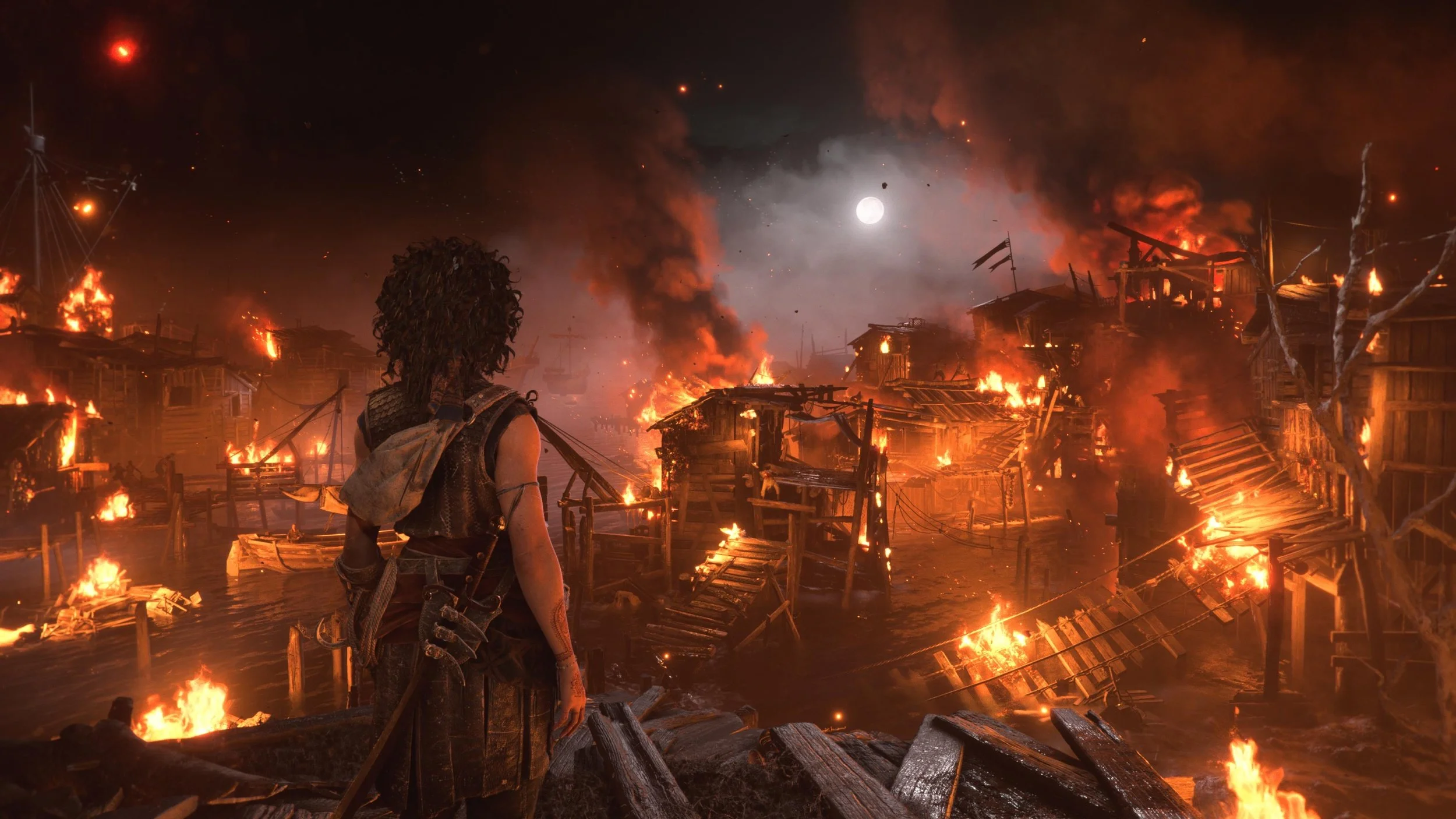
Since you’re often in a ~5 vs. 1 situation, enemies can clump together and it can be hard to make sure you kick the right guy with the shield or attack the enemy you’ve managed to stagger while the others are still on the attack.
You can try to aim Sophia towards the enemy you want to keep attacking, but it’s an imprecise science and you’ll need to manipulate both sticks to do it. This could prove challenging for some players who’d normally rely on a lock-on to help take care of the camera movement in combat so that they can focus simply on manipulating the character.
It’s a bizarre omission in an otherwise comprehensive suite of gameplay options, but not one that’s entirely unheard of. Ghost of Tsushima had a similar issue at launch but would later go on to remedy the lack of a lock-on.
It’s all well and good for developers to have an intended experience for their game, but offering certain standard options for players who want or need assistance doesn’t have to detract from the default setting.
And this is a lesson that I know Asobo already knows since the menu description for the Invincibility Mode says as much – the setting is there for those who choose to use it, even if it isn’t their original vision for the gameplay.
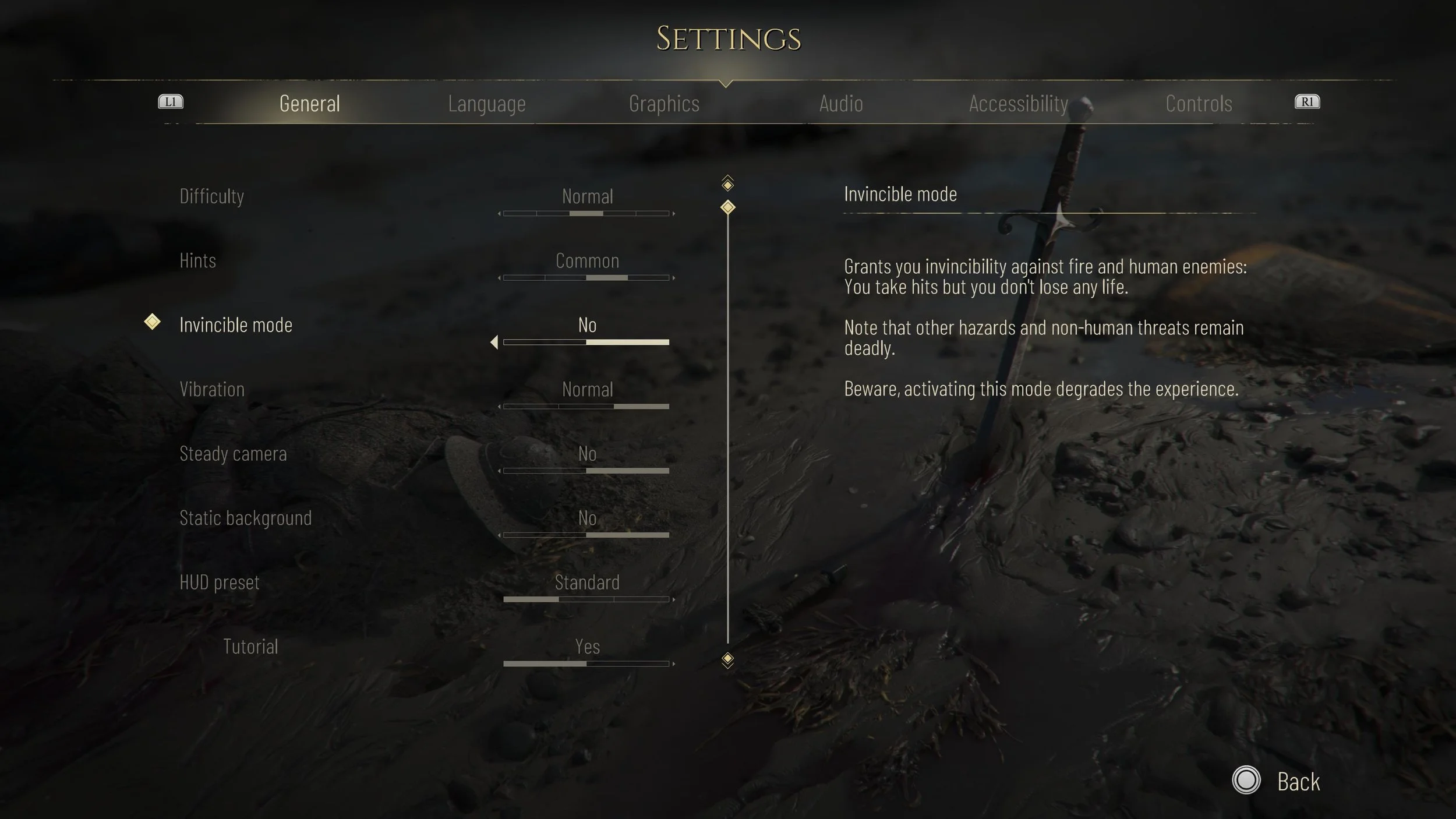
It’s great that Resonance has so many difficulty settings and the invincibility option so that players can survive combat if they’re struggling with it or simply don’t crave the challenge.
But for those who do want to overcome the challenge without resorting to turning off enemy damage or auto-completing parries/dodges, having this last essential tool to help with the camera and motor controls would be a fantastic addition if it’s at all possible to patch in a lock-on with a future update.
“The Creature”
For this section I’m going to be careful with the images I show – as I said at the top, I won’t delve into any story spoilers, but there is one more gameplay section I haven’t really discussed up until now.
The reason I’m being careful is that as far as I can tell, in the reveal, gameplay, and story trailers, Asobo and Focus Entertainment made it a point not to show this directly. They show things adjacent to it, but not a full reveal of what we’ll call “the Creature.”
The only place I ever saw this thing prior to launch was actually in other reviews… so I’m trying to take a more cautious approach.
However, I want to talk about it since it does relate to the mechanical accessibility and it also acts as the source of Resonance’s “horror” elements. I put horror in quotes because the Plague Tale games are more horror-adjacent, being more on the creepy and thriller side than delving into true horror.
But everyone’s tolerance is different. Mine is generally low – so Plague Tale is about as far as I can push it personally. Someone else may not be able to though – whether due to trauma or anxiety or heart conditions, so I want to put the warning here for those that want to read about it.
Starting after the first handful of chapters, Resonance has sections where the player will have to evade the Creature. You’ll know you’re in a vulnerable zone when there’s a bunch of dust particles in the air and characters leave behind a glowing blue trail on the ground.
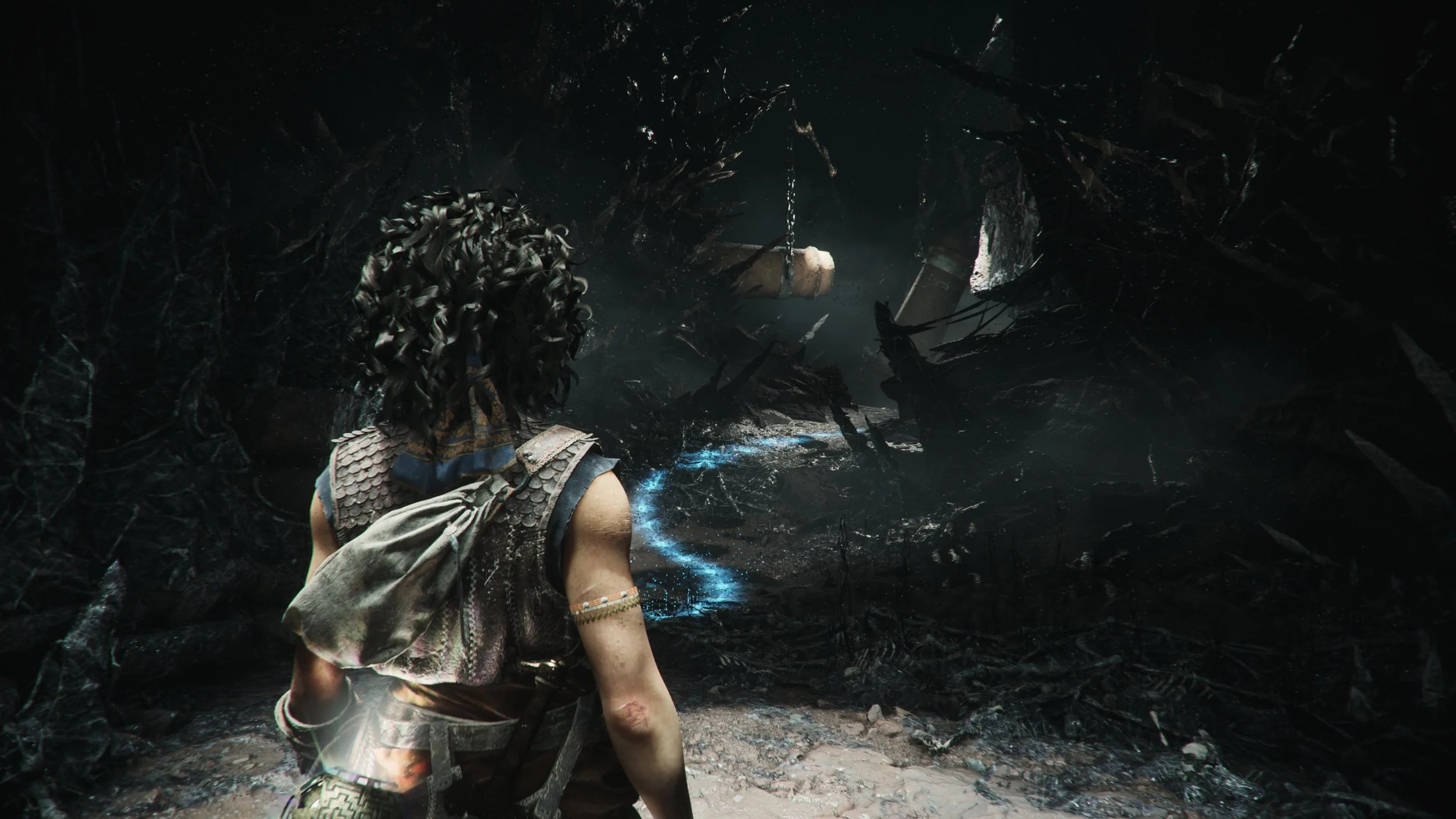
These areas tend to be dark and underground. You can mitigate most visibility issues with the various settings for lighting, high contrast, color presets, etc.
Generally speaking, the only gameplay here is to find your way out. There are still some collectibles hidden throughout, but for the most part these are sneaking, platforming, and survival chase sequences.
If the Creature spots you, you’ll have a certain amount of time to get away. Platforming puts distance between you and it, and you can hide behind cover. It’s also vulnerable to light so standing next to a brazier will keep it at bay.
However, it’ll periodically suck up all the particles in the air and follow blue trails you leave behind, so safety is never permanent. Once it catches up to you, it’s an instant game over – there is no fighting it off.
Checkpoints are modest so I never found it frustrating with how far it’ll set you back, but getting caught is (unsurprisingly) unpleasant. I wouldn’t call it a jump scare since it’s not sudden or unexpected, but it can still startle you or get your heart going when the thing finally grabs you for the kill animation.
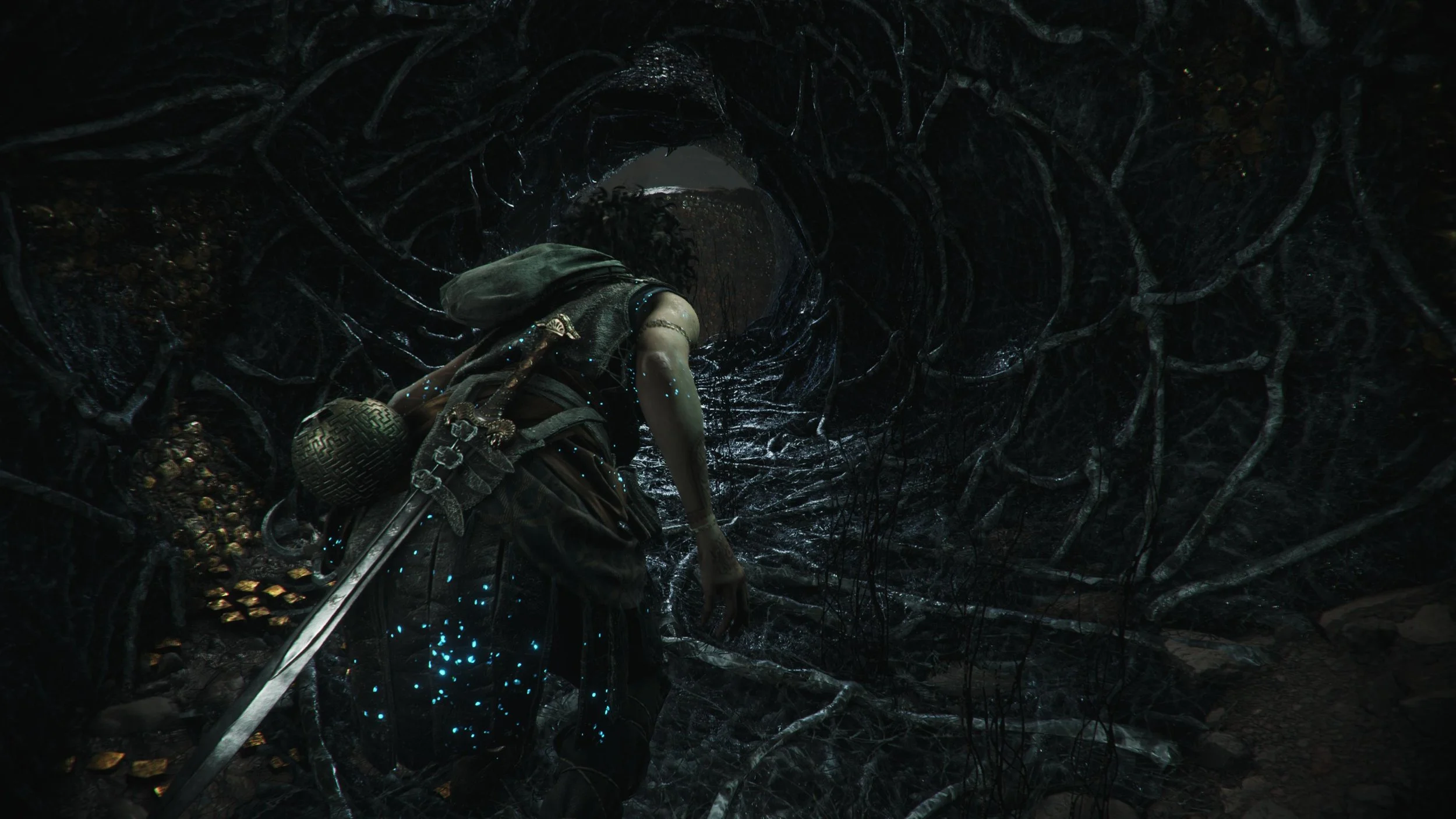
While you’ll generally be able to see it on-screen when the threat is greatest, sometimes it’ll meander in areas off-screen. When this happens, the default setting causes a white glowing indicator light to show the general direction of where the Creature is in relation to the player.
Also, slow-walking or crouching won’t cause the blue trails to appear and will help you sneak past it when it’s not inhaling. The ability to crouch while walking is helpful for players who don’t have the motor control or sensitivity to toggle the stick lightly enough without having to worry about accidentally moving too fast.
All in all, the Creature shouldn’t pose too great an issue for most players who are interested in a Plague Tale-style game. But just in case, I wanted to cover it in this review before wrapping up.
Conclusion
As a Plague Tale fan, I came into this new game more trepidatious than hyped. But while the combat didn’t end up exciting me personally, the rest of Resonance more than answered my question of, “Is this still a Plague Tale game?” with a resounding yes.
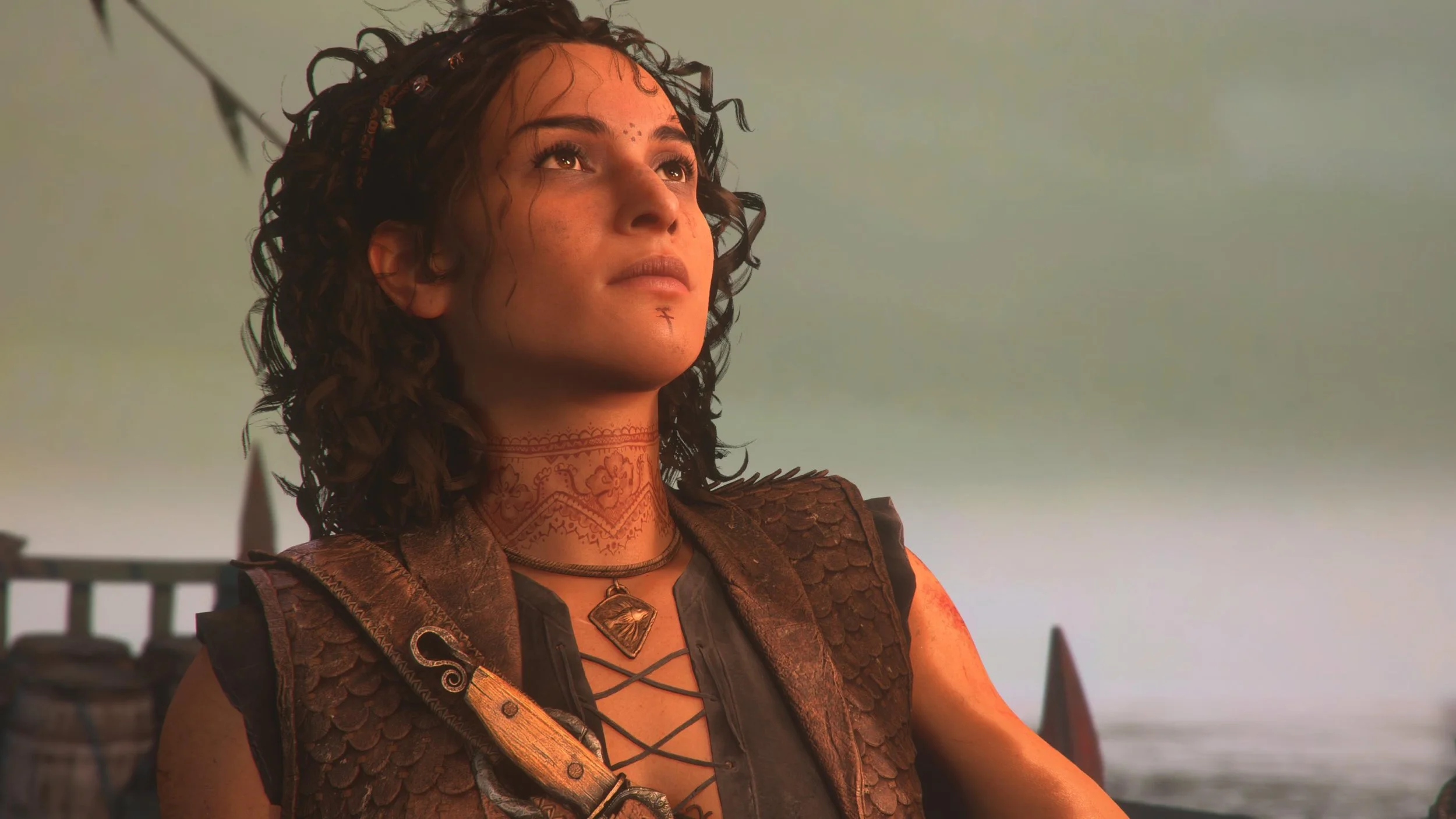
The characters, story, art direction, environments, and music… especially for certain moments in the final chapters – I’ll remember this game fondly and be glad that I gave it a fair chance. The spirit of what I initially fell in love with back in 2019 is still here.
I’m also going to remember Resonance as a game that exceeded my expectations for accessibility. Games with much bigger teams and budgets struggle to offer a suite of options this comprehensive – so even with the notable lack of a lock-on for combat, I’m still walking away both pleasantly surprised and thoroughly impressed with the work that the developers have done.
Hopefully this review achieves two things:
It helps players decide if Resonance is a game they want to and will be able to play
It shows a strong example of what can be achieved with accessible game design in this genre and beyond