Arms of God Early Access Review
Like most things in gaming, genres have evolved over the years. They started relatively simple: platformers, racers, fighters, FPS, and role-playing, to name a few. Presently, on Steam, there are forty-eight (48) genres and themes you can search through to select a game. Now, we have genres named after games like Roguelike (after 1980s Rogue - roguelite followed), Soulslike (made popular by FromSoftware’s titles), and Metroidvania (named for Metroid and Castlevania; fun fact - the concept predates both games with Below the Root in 1984). Another genre that recently exploded is survivor-likes named after Vampire Survivors. Survivor-likes generally follow this formula: collect weapons, upgrade said weapons, and survive as long as possible. So how do you set yourself apart from the thousands of similar games?
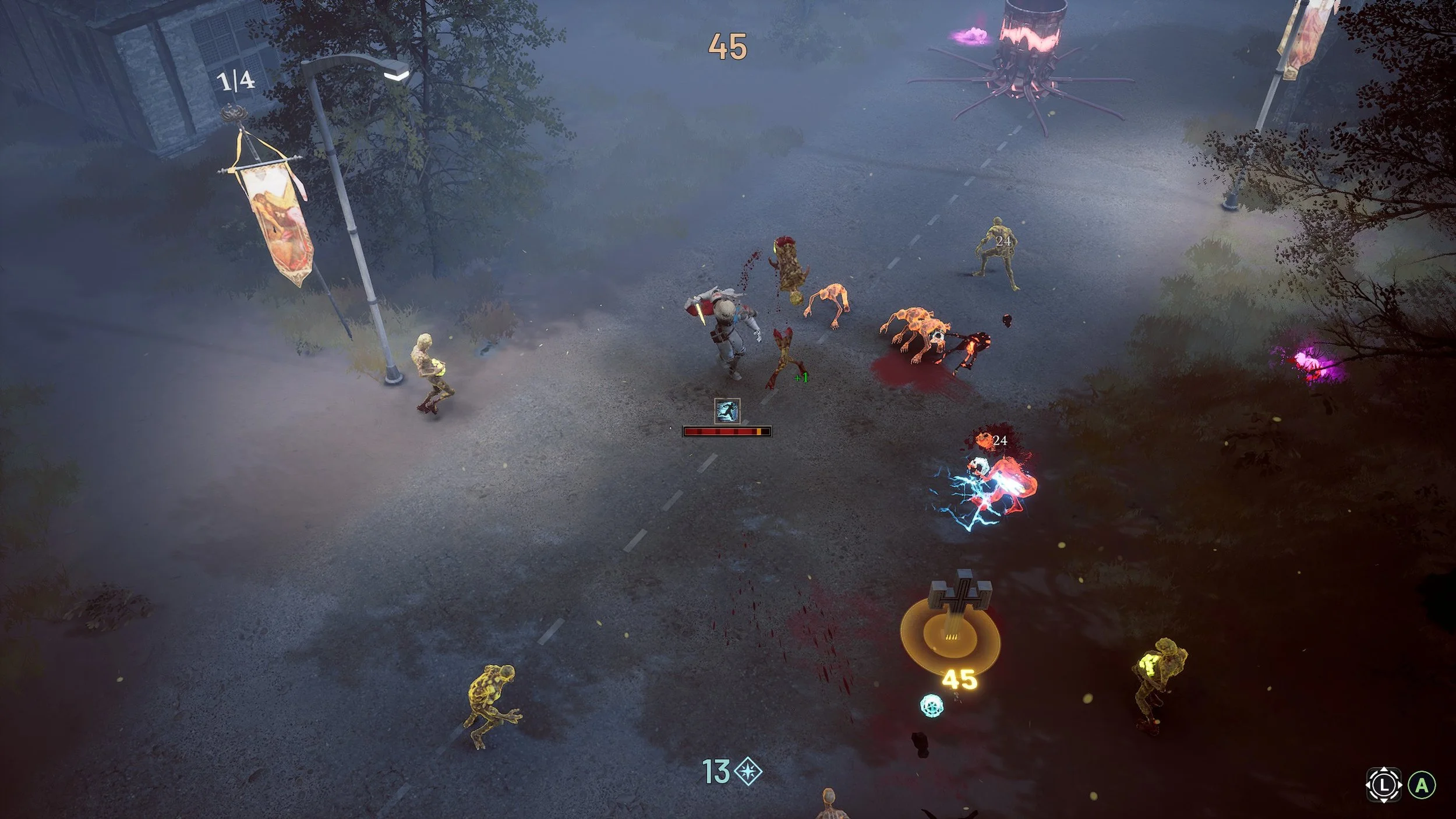
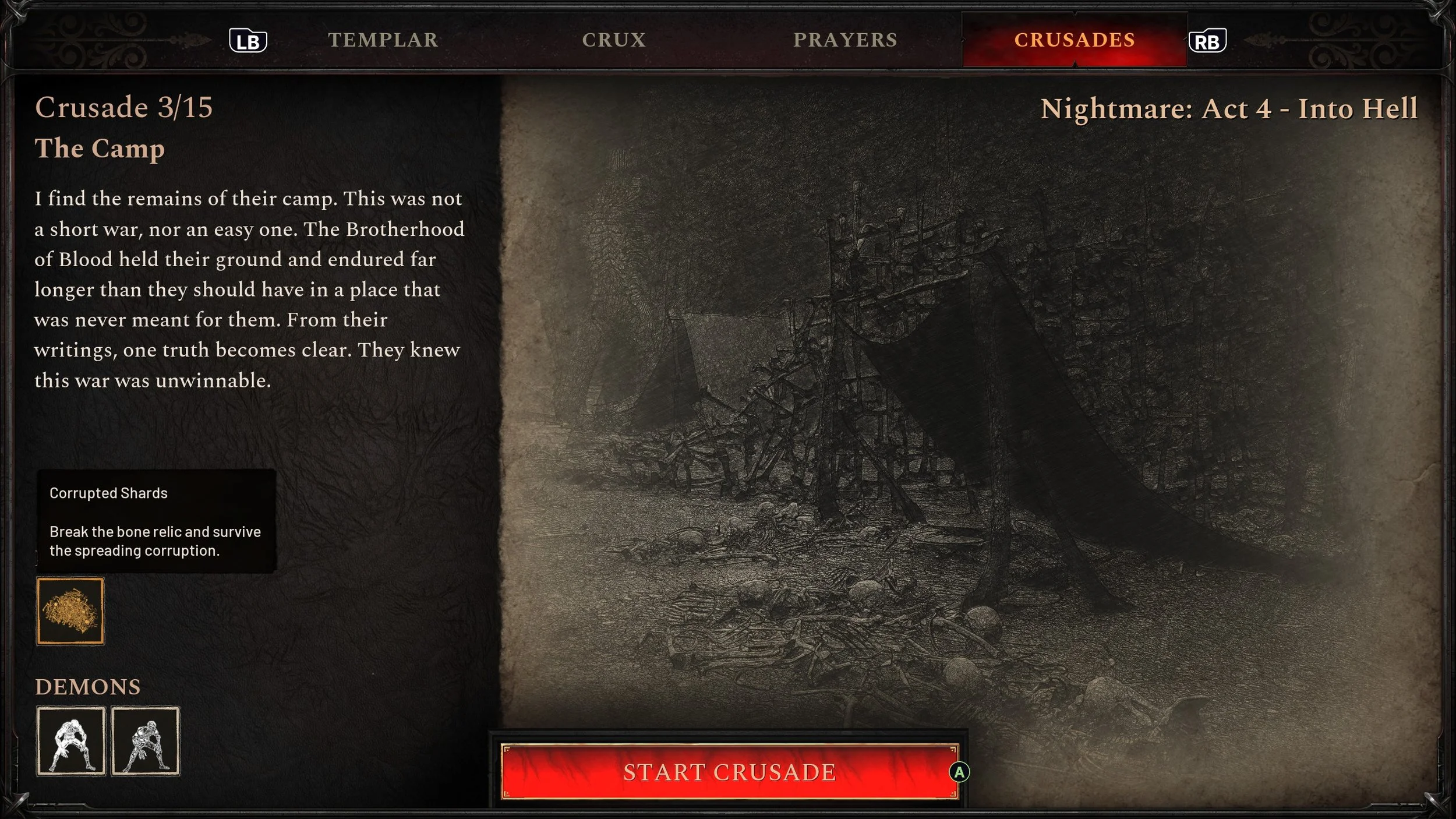
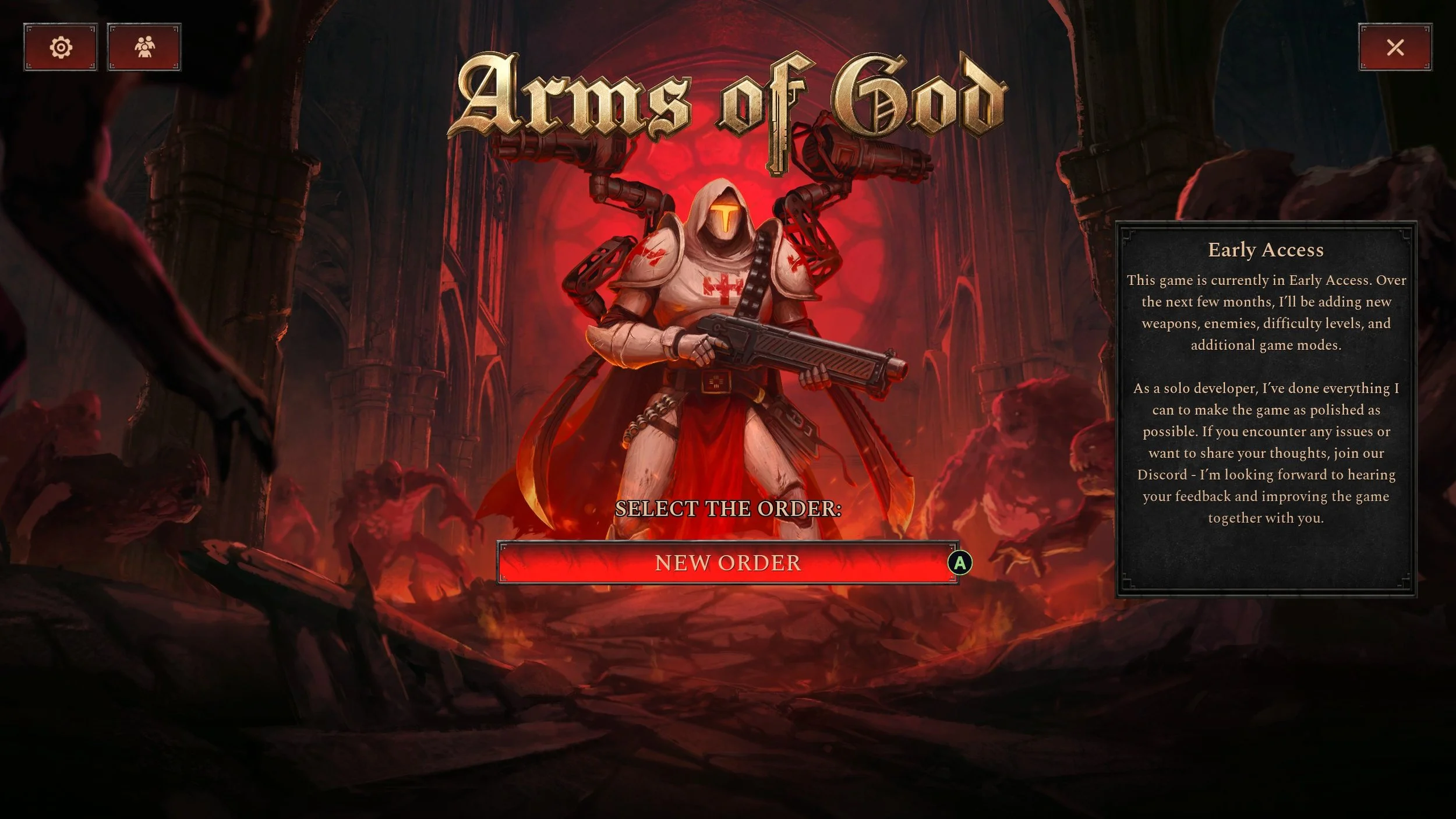
Developed by Dark Jay Studio (a husband-and-wife duo), Arms of God is a roguelite, bullet-heaven, arena shooter, and survivor-like game. Side note: bullet heaven is when you create chaos with bullets, whereas bullet hell is when you have to avoid them. You control a Templar of the Order as you fight through 60 levels over 4 acts.* Who wants to wield just one weapon as you descend to the gates of hell when you can use up to 5 when equipped with your ‘sacred arms’? Have you ever seen the movie Priest with Paul Bettany? Take that concept, slap a full set of Warhammer-esque armor on, and a full arsenal- guns and melee- strapped to your back, and rock out to a Doom-inspired soundtrack as you mow down hordes of demons.
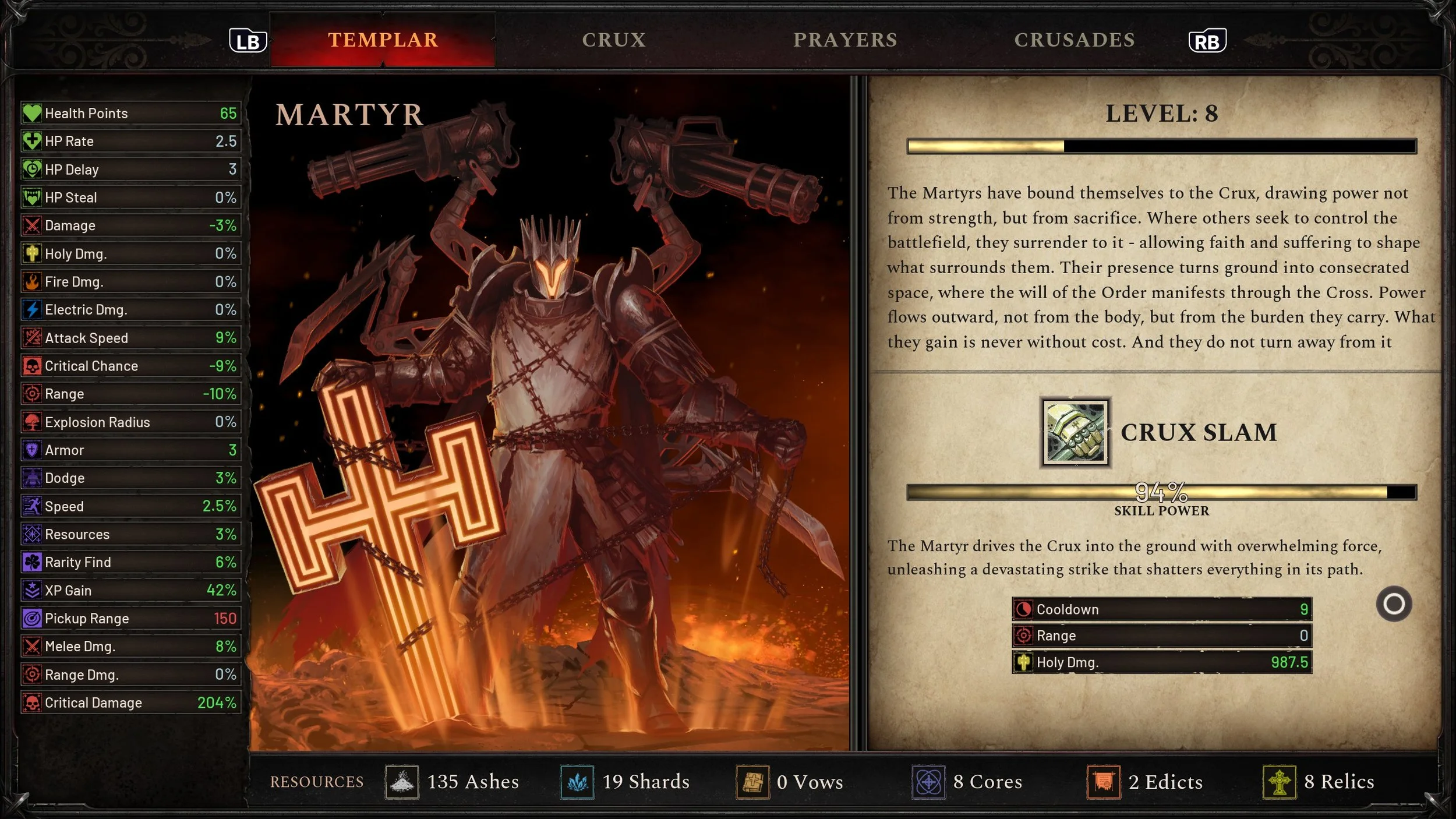
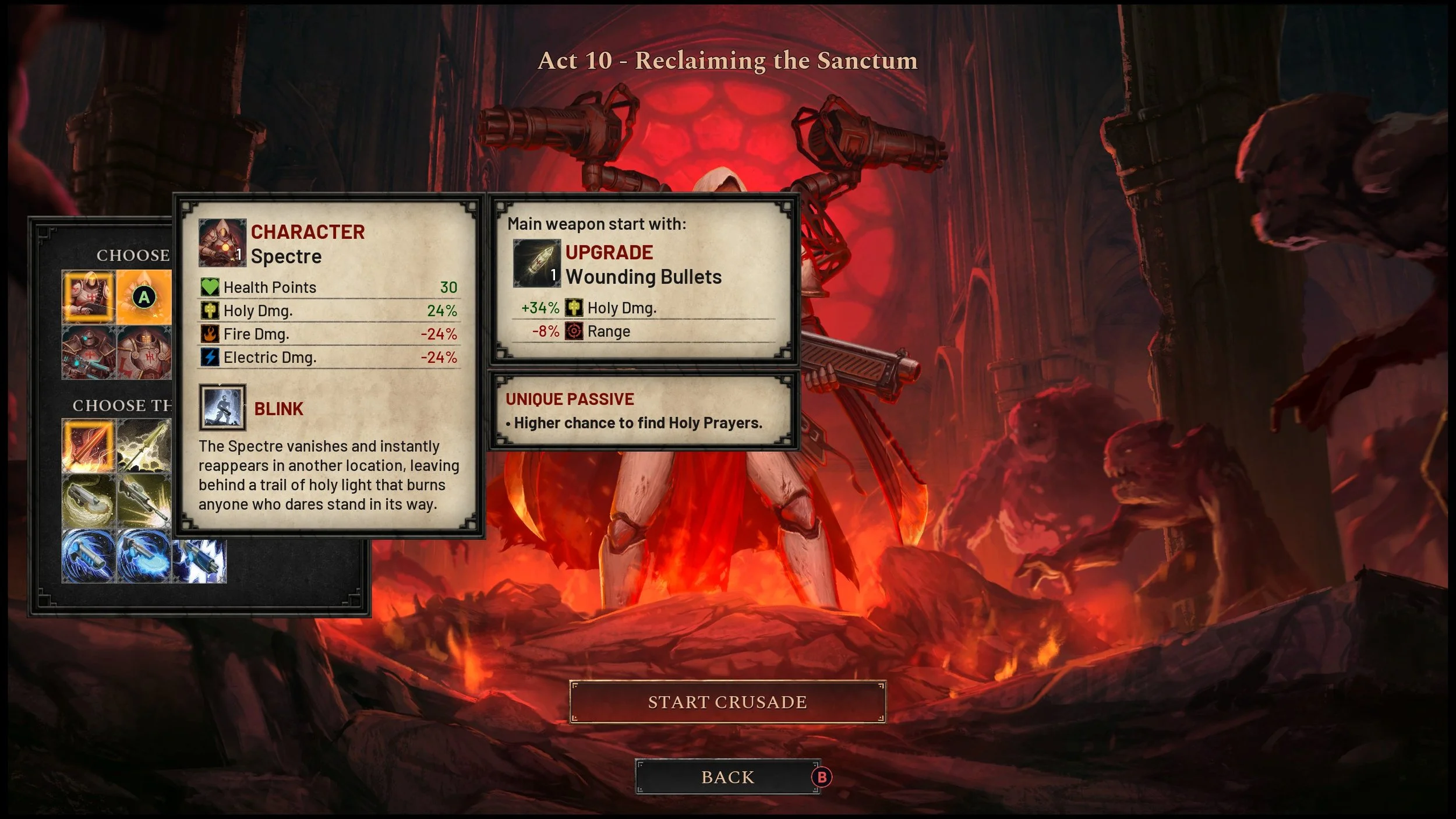
The game begins with you in control of Warden, one of the Templars of the Order. Each Templar has their own unique skill in the form of a dash ability. Some Templar also favor certain types of weapons or damage types that will affect how you play them. The Warden has a basic dodge and begins the game with his main weapon equipped with an upgrade that can boost his damage with repeated use of the dodge. It is the bare minimum. Another Templar, the Spectre, can “blink” instead of dodging, leaving a trail of damaging holy light, is equipped with an upgrade that boosts holy damage, and will passively find more holy prayers.

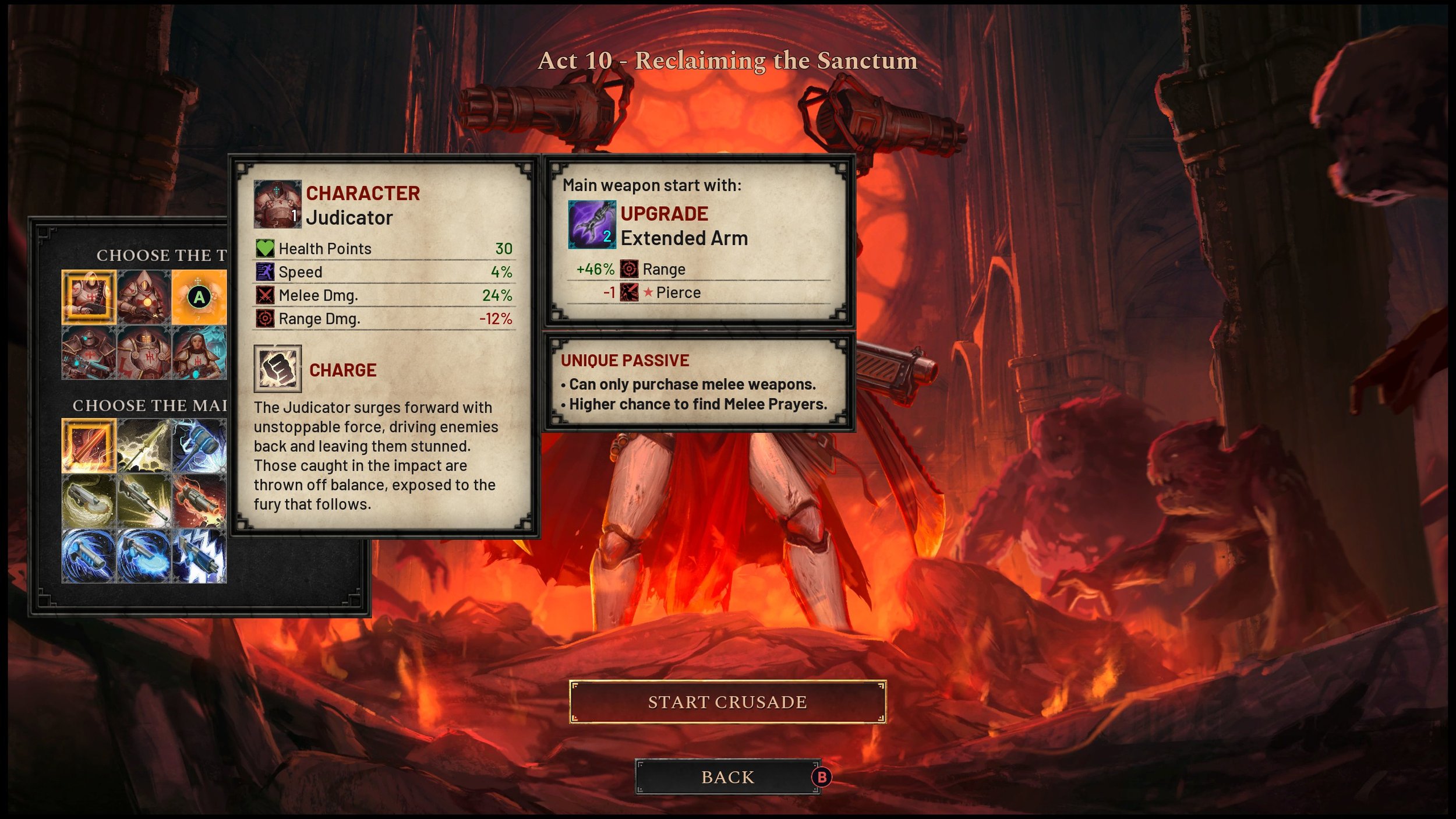
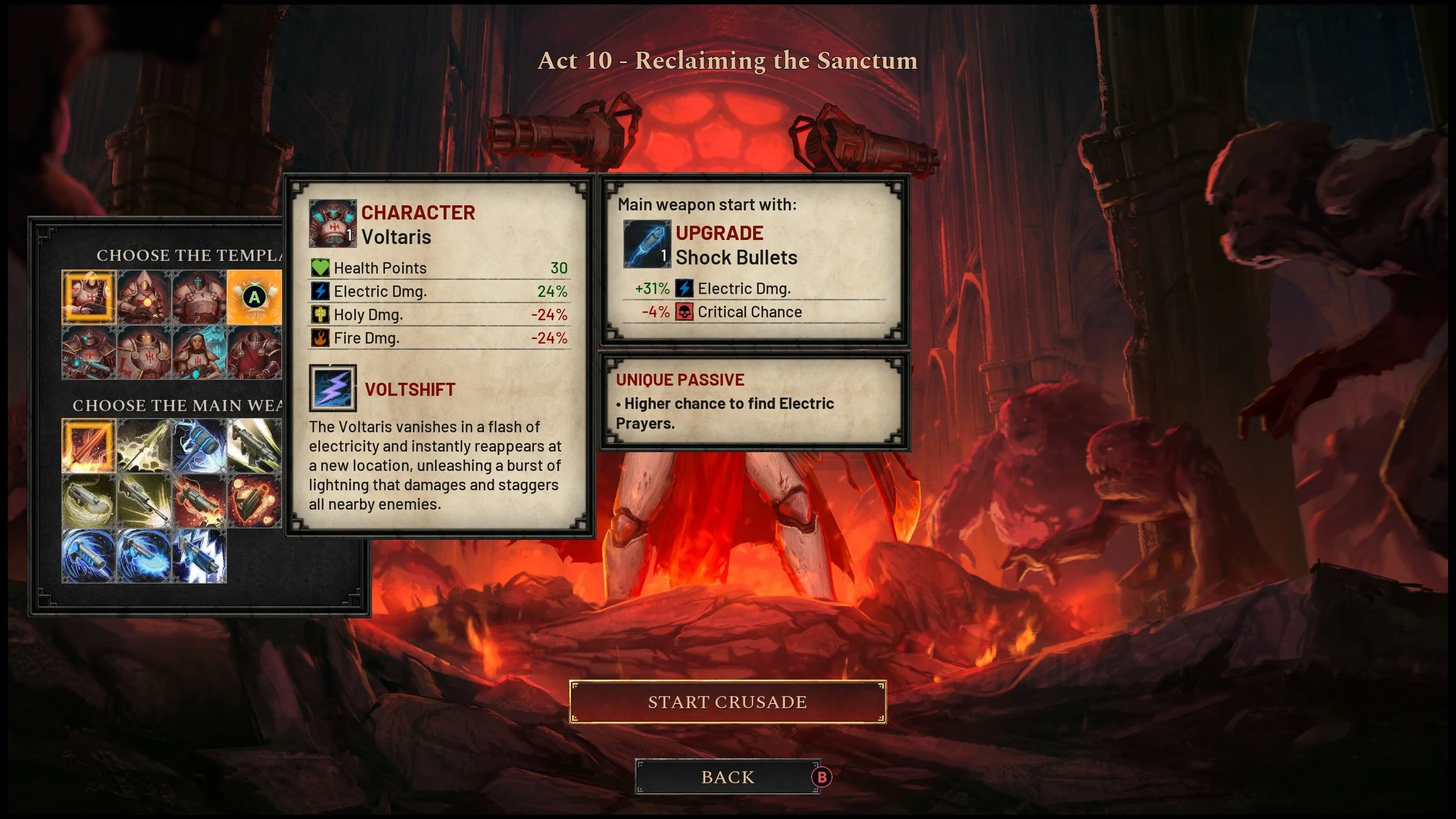

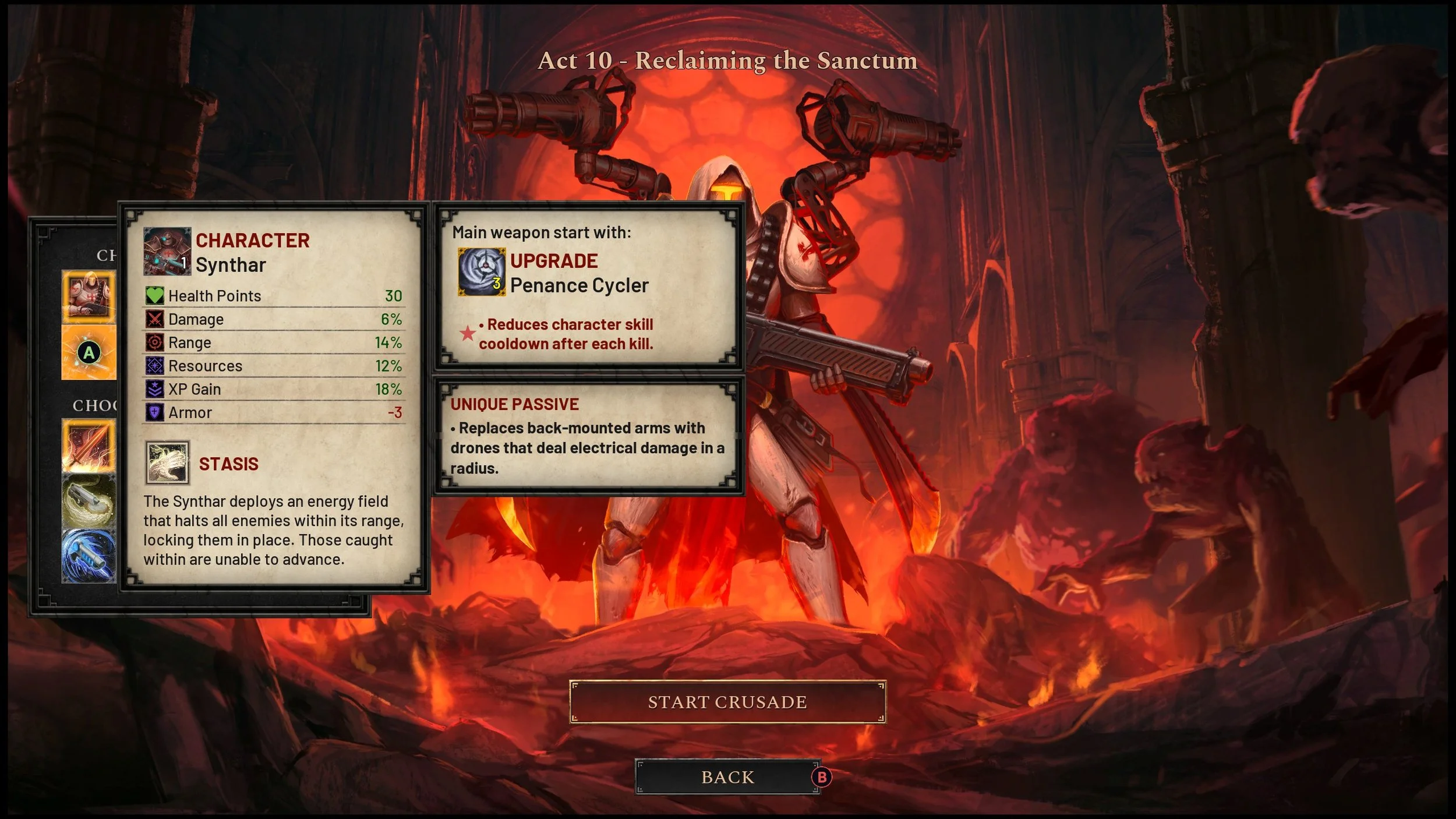
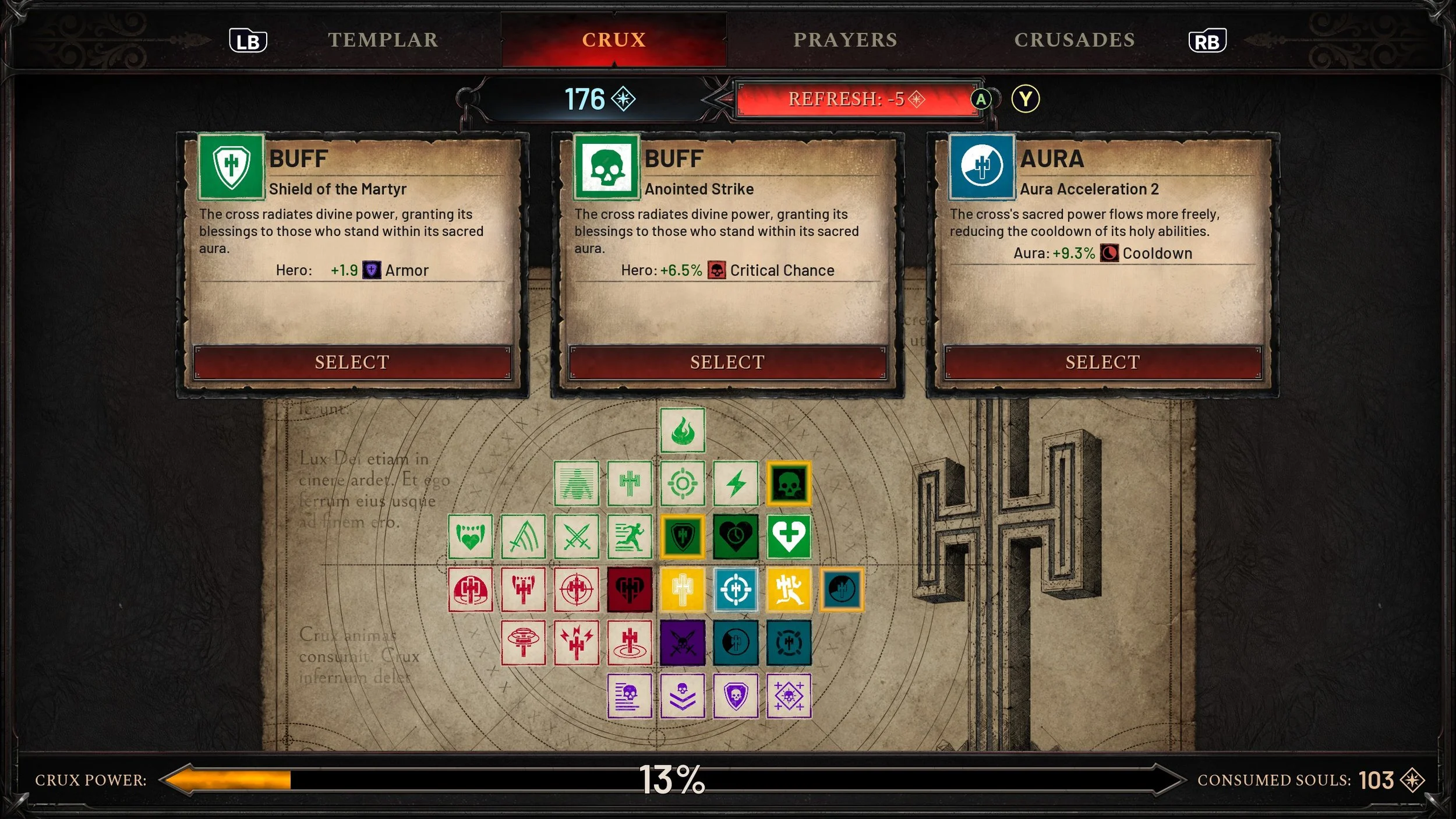
Unlike other survivor-likes, you only have to survive the round, which can last as long as 90 seconds. If you do manage to survive, several things happen. You may have noticed that when starting the first stage, your Templar plants a pulsating cross right into the ground. This is the Crux. If you leveled up during the previous stage, you can choose an ability for the Crux. Abilities range from providing a heal to the Templar, smiting enemies, increasing your armor, or granting increased speed. As long as you stand within the pulsing ring of light, you benefit from the abilities chosen. The further into the Act you progress, the stronger the Crux becomes, increasing the effect of those chosen abilities. You can even elect to make the Crux mobile. You sacrifice a bit of speed as you hold it, but you benefit from all those effects moving with you around the arena. You may not level up every stage, though, but you will always have a chance to purchase upgrades.
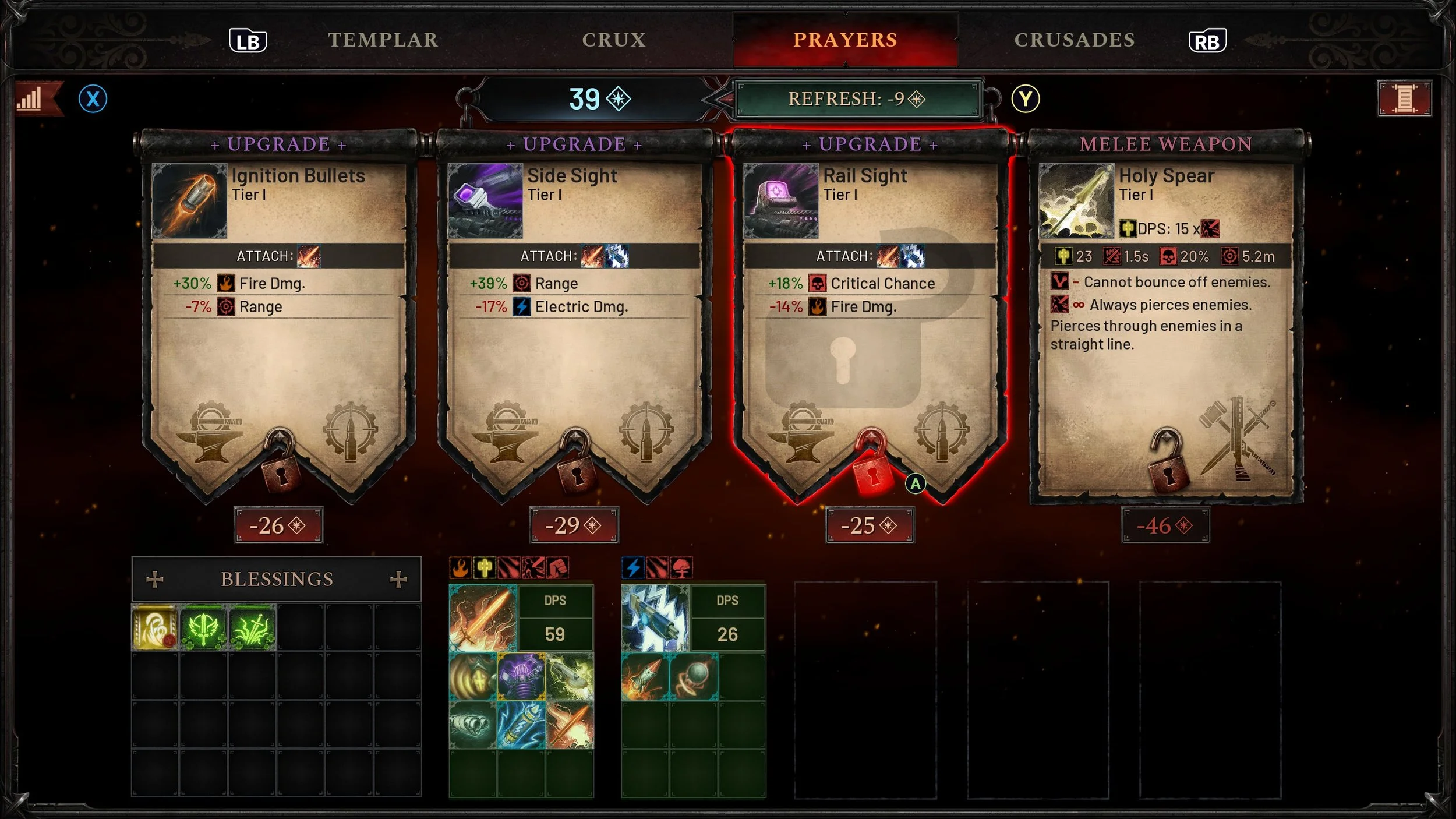
Unless you chose a Templar with a weapon restriction (there are 3 that I am aware of in this build), you can purchase four (4) additional weapons, provided you have the Souls to do so. You can also purchase weapon upgrades (9 per weapon), and blessings, which provide universal buffs to both the Templar and all the weapons, if applicable. Saving the best for last, you can combine your weapons to create new weapons. Perhaps you chose the Shock Maul as your primary weapon. I mean, it is a giant hammer that does electric damage. That is badass on its own. After Stage 1, one could purchase another Shock Maul and wield two (or three, or four, or five) Shock Mauls. Did I mention that would be badass? How about you take the second Shock Maul, merge it with your primary, and make an Electrohammer?
Fine. Grab two more Shock Mauls and make another Electrohammer. Now, merge that with the first one to make a Stormbreaker (no, not Thor’s weapon after Mjolnir broke). This can be done with all 13 base weapons you have access to during each Crusade. Two of the same Tier 1 weapons (the base choices) combine to form a Tier 2 weapon, and two Tier 2 weapons combine to form a Tier 3 weapon. Tier 3 is the current limit, but there are a few hidden evolutions as well as unlockable weapons that are just found randomly between stages. You can also merge two different weapons, but this will just add the damage of one weapon to the other weapon without any bonuses. Merging also removes any upgrades from the sacrificed weapon, so it is best to merge first and then upgrade the new weapon. Upgrades range from buffing the damage type (fire, electric, or holy), increasing attack speed, or adding projectiles or bounces. Blessings remain for the duration of the run, regardless if you merge weapons or sell them. You can only equip 23 unique blessings, but the same ones can stack. These range from flat damage type increases that will apply to all applicable weapons, increased armor or speed, or boosts to resource and experience gains. All weapons, upgrades, and blessings cost a random amount of Souls. If you do not like your choices, you can refresh them for an increasing amount of souls each time (this does reset between stages). If you find yourself with something out of your price range, you can lock it for however long it takes you to afford it.
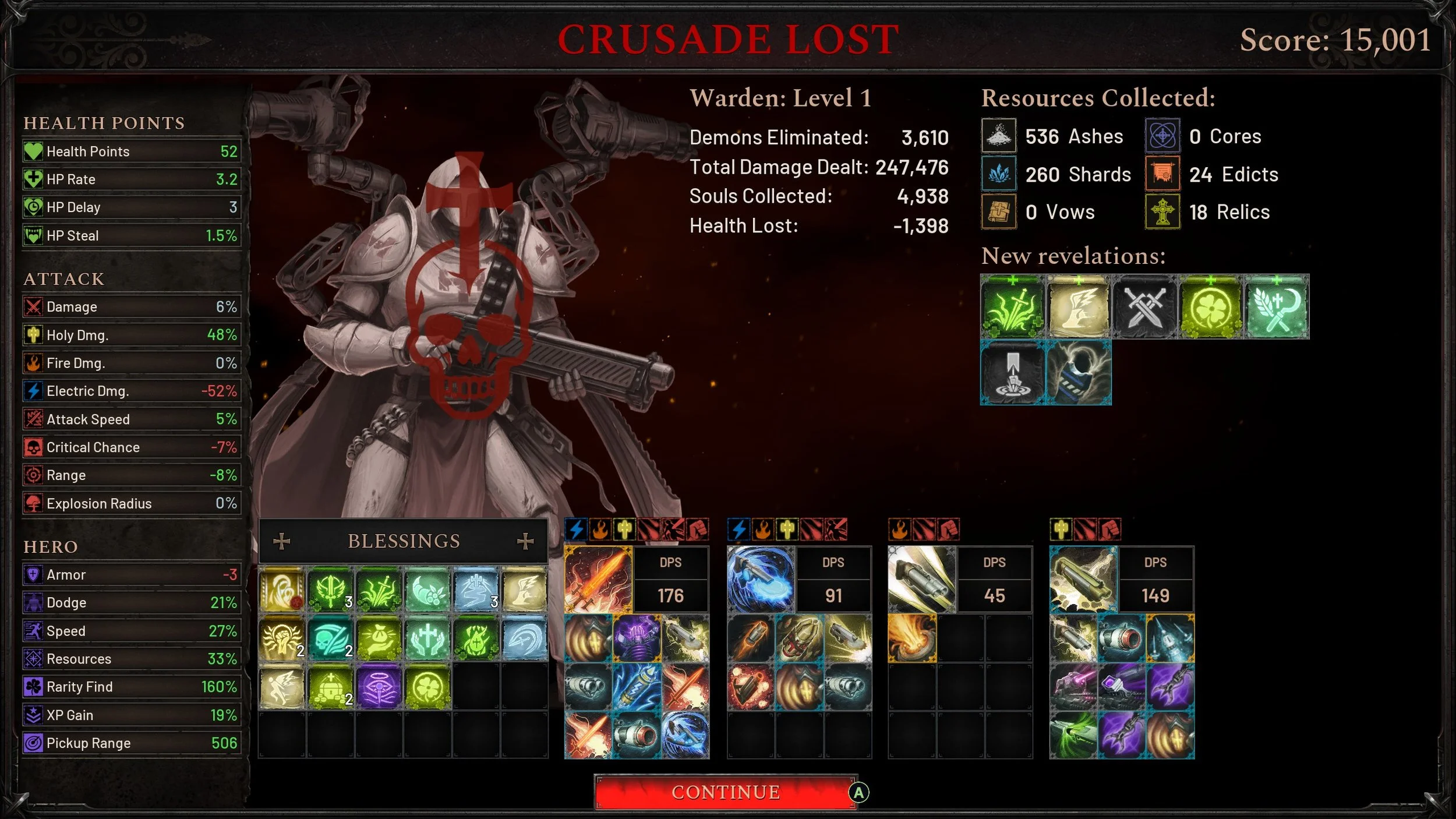
During each Crusade, you will collect seven different types of currencies: Souls, Ashes, Shards, Vows, Cores, Edicts, and Relics. The only one you should concern yourself with is Souls. Souls drop from defeated enemies and are used to purchase weapons, upgrades, and blessings. They are also gone when you finish the Act, dead or alive. Souls are picked up when walking over them or within range (the pickup range can be improved through blessings). Souls not picked up are consumed by the Crux. The more Souls the Crux consumes, the more effective the abilities you chose become. The problem is, how do you choose where the Souls go? It seems like a no-brainer to collect them so you can purchase new weapons and upgrades. For starters, you can see how the weapons perform. The effectiveness of the Crux only becomes apparent when the Crux consumes a substantial amount of Souls. Also, and maybe this was just me, but it is hard to fight the urge to collect the Souls that were just lying around. After experimenting on several runs, I can say that focusing on weapons and upgrades definitely felt safer over an entire Act, but maxing out the Crux made the later stages a joke, despite the numerous close calls in the early goings. Hopefully, the developers can add abilities or upgrades that allow for the allocation of Souls, as the current system is too much of a toss-up.
As for the other six currencies, they can be spent in the main hub between Crusades. To earn each, you must complete random events that spawn in each stage. The hub does need rebuilding, but once done, you will have access to the following: the Statue, the Shrine, the Forge, the Gunsmith, the Bell Tower, and the Confessional. Each structure takes a combination of the currencies earned to permanently upgrade your templars.
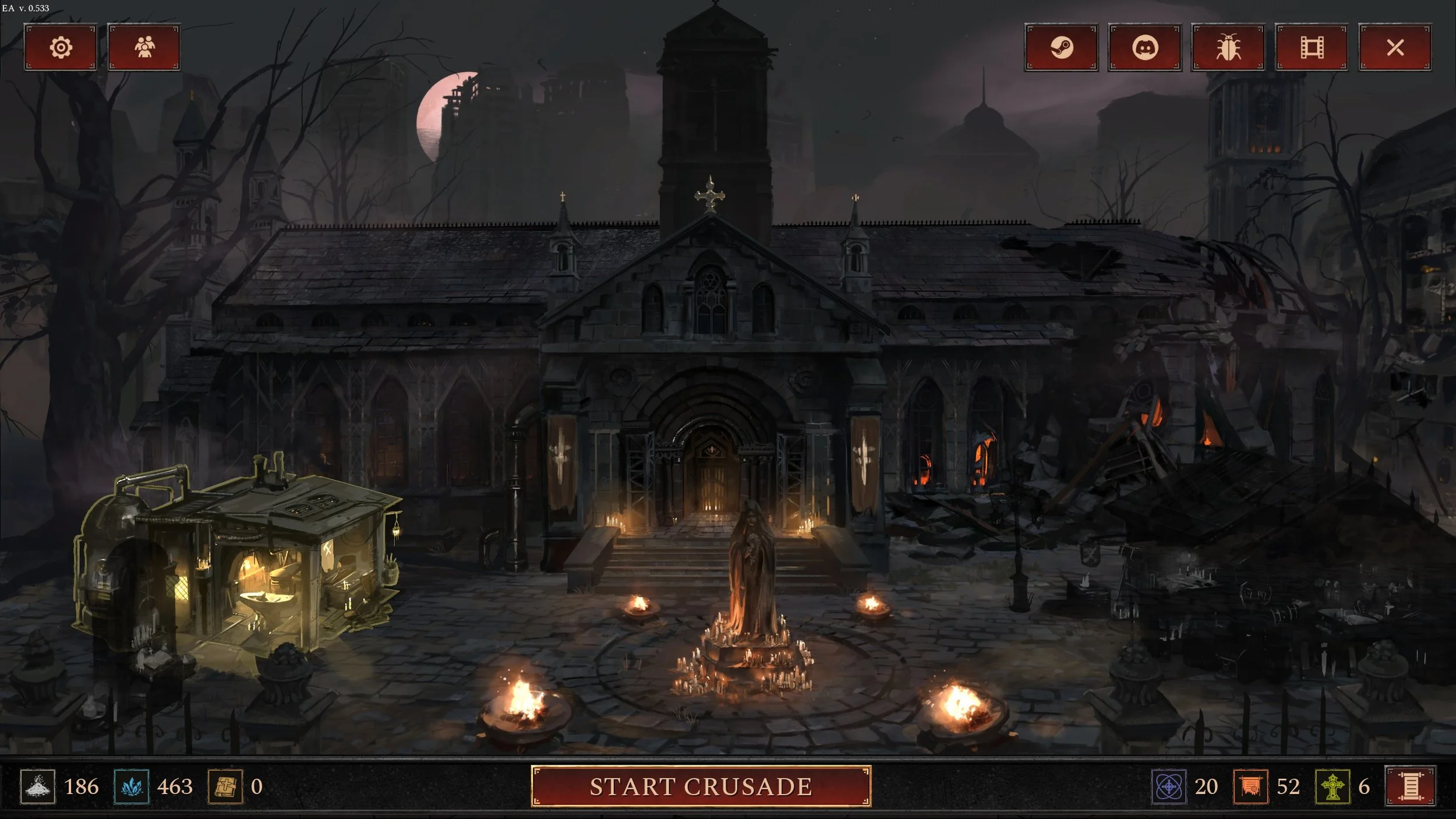
A real fixer-upper
The Statue provides permanent upgrades in the form of base-stat improvements; the Shrine unlocks new Blessings; the Forge unlocks new Upgrades; the Gunsmith unlocks new weapons; and the Bell Tower unlocks new Templars. Anything purchased can be refunded for the full cost, allowing you to pick and choose what is needed. Eventually, you will be able to afford everything on the menu. Lucky for you, there is the Confessional, which permits the blocking of weapons, upgrades, and blessings. Additionally, you can create specific loadouts. For example, the Templar Judicator can only use melee weapons. Now, you do not need to block out guns, as they will not appear, but you can create a build that focuses on a certain damage type. The Ember Sword does fire damage, so you can remove any perks that boost other types. The more favorable options that appear, the more Souls can be spent on purchases and less on refreshing those options.
As Arms of God is currently in Early Access, here are several things that I hope to see improved during Early Access or by the release of 1.0. First up is what I am calling “Control Scheme Identity Crisis” (patent pending). Personally, my preference for twin-stick shooter-esque games is a controller (I am partial to the GameSir Super Nova - not an ad placement, although we are open to offers, ‘wink, wink’). During the “destroy-all-demons-by-any-means-possible” stage of gameplay, the controller worked fine. When browsing what to buy or back in the hub, there is no precision. The right stick does act like a cursor, but it feels awkward. Furthermore, there is no way to scroll through the menus, or there is no obvious way. I tried swapping to mouse and keyboard, and that ended in mixed results. Navigating menus was a breeze, but character movement felt awful. Next up is the UI. More specifically, the weapon tooltips. Some have a ton of information, and it ends up taking up way too much real estate. In a few instances, the information went off-screen.
Lastly, there are way too many currencies. As someone who is an on-again/off-again trophy/achievement hunter, I have had my experience with farming/grinding for items. In all those instances, 99% of them were target farming, meaning I could go to a specific place and do a specific activity to get what I needed. In Arms of God, currency is earned through the random events found in stages, but there is no way to know which you will or will not see on any given Crusade. At times, I found myself refunding X Blessing to afford Y Upgrade, or vice versa. It just seems extra for the sake of being extra.
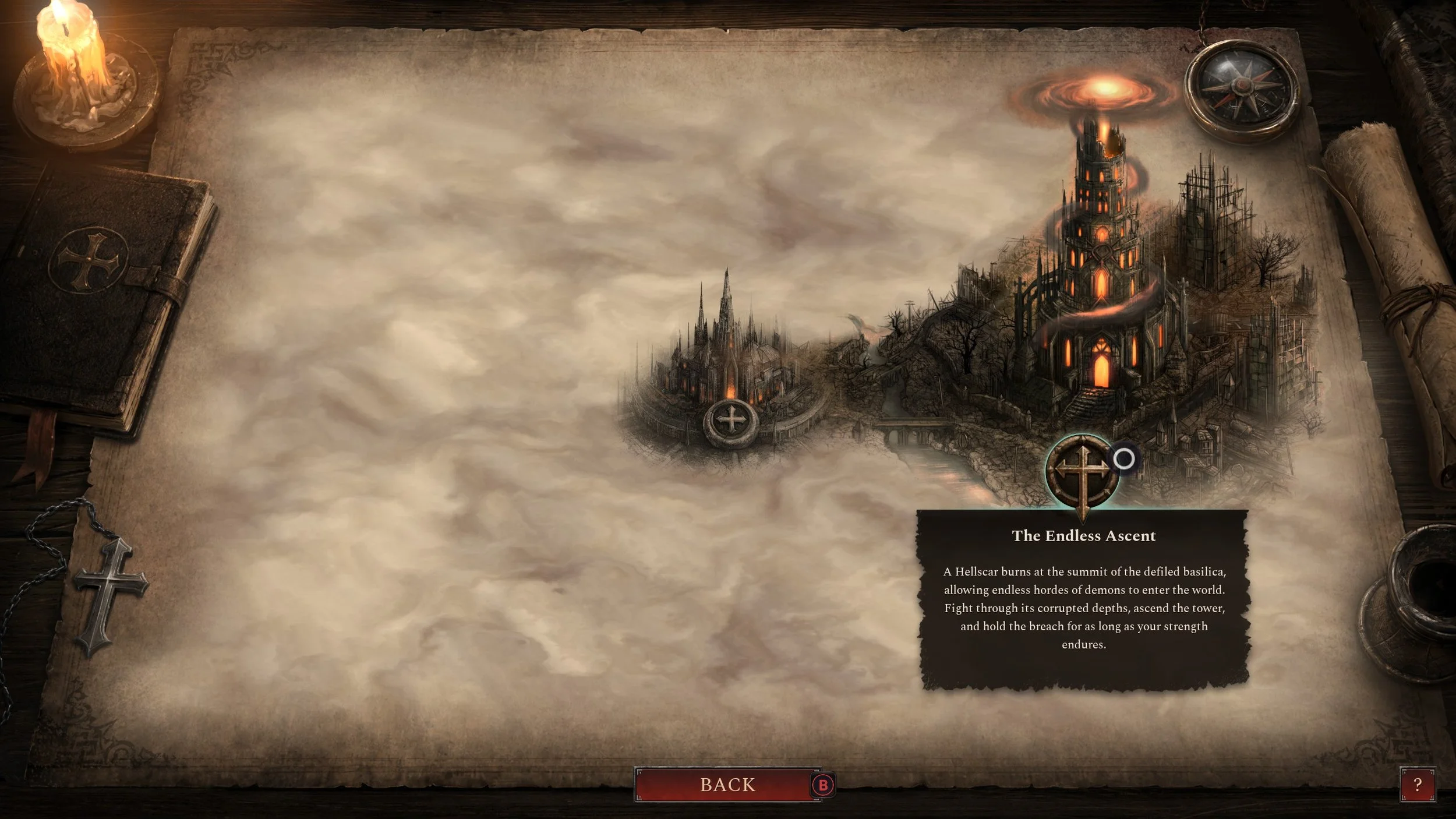
Is Arms of God just another small fish in the bullet heaven/hell survivors-lite genre, or something you can easily get lost in for hours? Well, we strongly think it is the latter. With 10 characters, 10+ weapons to use and merge, and short-form levels to jump in and out of (you can save and quit between stages, allowing for completion later), Arms of God provides a completely new and refreshing spin on a genre that has entirely too many clones. There are some minor issues, but this is an Early Access game that has more content than most games that release in Early Access. An endless mode was recently added if you are looking for a challenge, and the 1.0 release is slated to have local co-op and additional heroes, locations, and weapons. The game is available now on Steam for $11.50 (or your equivalent regional pricing) with 1.0 planned to release in Q4 2026/Q1 2027.