

Dear Gamers, this wasn’t written with AI
…but why is that a headline?
I know if you’re like me, you’re probably feeling burnt out by the AI bubble and the discussion around it. But I’ve been sitting on some thoughts that I think are worth sharing, and I promise to make good use of whatever time you’re willing to give me.
That said, this is a gaming media site – and so my frame of reference is just that: gaming. But I think a lot of what I have to say applies beyond the scope of gaming or even just AI for that matter. So with a bit of grace, let’s start with a hypothetical situation.

Hypothetical:
There’s an hour-long video interview between Developer Jones and Industry Analyst Taylor. Your current assignment as a writer is to put together a 1000-word executive summary recapping the main talking points from the interview.
Scenario 1:
To make your job faster, you use an AI-generated transcript of the video since that will be much easier to search and scan than jumping around from point to point in the video when looking for exact quotes or key moments in the discussion.
You don’t copy/paste from the transcription and AI does not do any of the writing for you, but an AI tool was used to assist you when gathering materials for the summary blog post you ultimately write and publish for the site.
Scenario 2:
To make your job faster, you use an AI-generated transcript of the video since that will be much easier to search and scan than jumping around from point to point in the video when looking for exact quotes or key moments in the discussion.
But this time, you DO copy/paste from the transcription. You’re on a deadline, you’re not particularly passionate about this style of recap writing, and you just need to get it done. AI transcription is mostly fine, but what you don’t realize is that it hasn’t captured some of the names and proper nouns correctly. When you submit your article, you’ve accidentally produced 1000 words misattributing quotes to Developer Joans instead of Jones, and even the game names for projects he referred to are sometimes incorrect during his interview with a “tailor.”
Scenario 3:
You realize that the executive summary of the interview won’t drive enough clicks. Presenting a recap article isn’t a strong enough hook to pull in internet traffic so you scrap the summary idea.
Instead, you upload the video/transcript to ChatGPT and ask it to write 1000 words based on the developer’s main talking points about how game delays around GTA VI’s projected launch window will affect the industry. No quotes are attributed, some of the information is accurate, but some of it includes AI hallucinations as well. After a couple of prompts, you’ve got a decent sounding article about how next Black Friday’s financial results will be even worse than 2025’s, resulting in new studio closures and layoffs.
Scenario 4:
You watch and study the entire interview thoroughly. You take solid notes and come up with a compelling way to present the developer’s points. You don’t overly editorialize, but you have something that your readers will want to read and even benefit from. You use zero AI when creating your content and publish it with all the right SEO keywords and tags to get it seen online.
Google’s built-in AI registers those strong SEO signals. It scrapes your content and others of a similar topical nature from the past 1-2 years. It conflates some of the data and even gets certain facts outright wrong, but it produces a summary that sits at the top of the Google search results page. It doesn’t attribute where it pulled all its information from, only citing the top search result – which isn’t your article. It even mistakenly cites GTA VI’s prior launch date for May 2026 at one point in the summary. Your article gets little to no organic search traffic, and you see people quoting the summary’s incorrect information on social media.
I could keep going, but I’ll stop there. AI is everywhere; we know this. But in some cases, it’s already so normalized that we don’t even register something as AI use.
For example, if a developer says they don’t use AI anywhere in their development pipeline, what does that mean? No AI at the company PERIOD or just no GenAI-created assets, concept art, etc.? Do they use video transcripts for their meetings like the one in the scenario I described above? Do they use Grammarly or ChatGPT to help draft emails about their work?
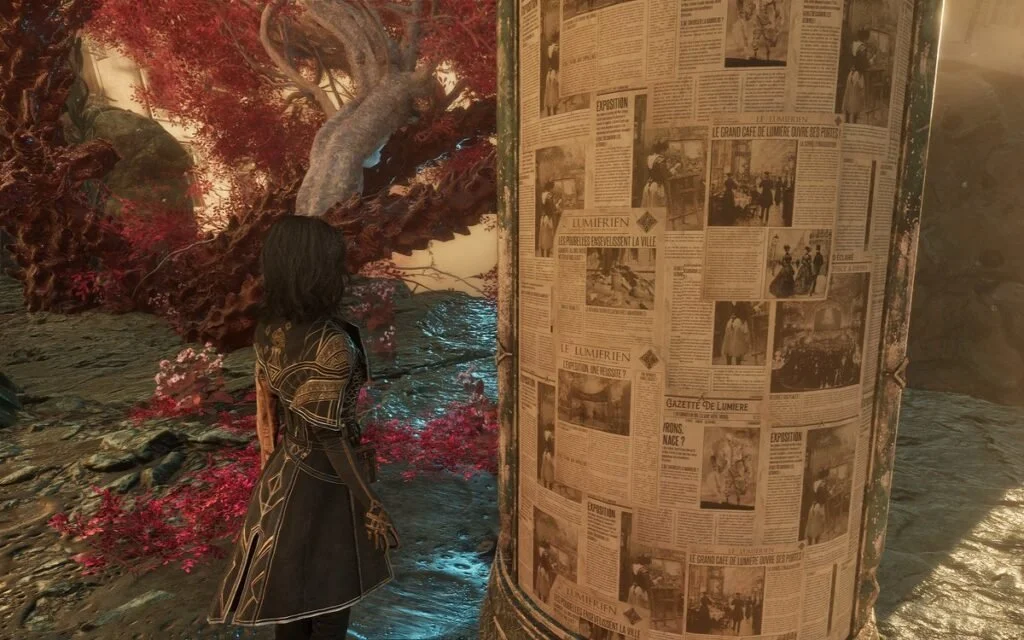
Lune from Clair Obscur: Expedition 33 looking at a surface with AI-generated textures removed from the game 5 days post launch
Even if someone says they don’t use AI… nowadays it’s becoming even harder to avoid. Have you used Google lately? Did you look at the AI summary? Did you always ignore it and click through to someone’s real article or video instead?
The ubiquitous nature of AI is only going to become more normalized this year and beyond. Even if the AI bubble bursts and AI doesn’t suddenly replace every single job on the planet or radicalize the advancement of tech everywhere, it will persist in various key use cases – both big and small. And some of those have become so ingrained in the apps, browsers, and even hardware that we use on a daily basis that most people already don’t register it every time they interact with AI.
To bring it back to the gaming frame of reference, what are the main concerns that most of us care about when it comes to the use of AI? Of course there are people’s jobs, especially on the back of record setting years for industry-wide layoffs as major players like Microsoft double down on AI investments. Then there’s plagiarism and the fear of creative bankruptcy – or to borrow 2025’s word of the year, AI “slop.”
Some people are also genuinely invested in the environmental ramifications that result from building more AI infrastructure. And at the current time of writing, the costs of all things tech are spiking due to AI-related RAM and storage shortages, creating concerns for companies and consumers alike.
Basically, a crude summary would be that we don’t want worse products that cost more while paying people less and hurting us all in the long run.
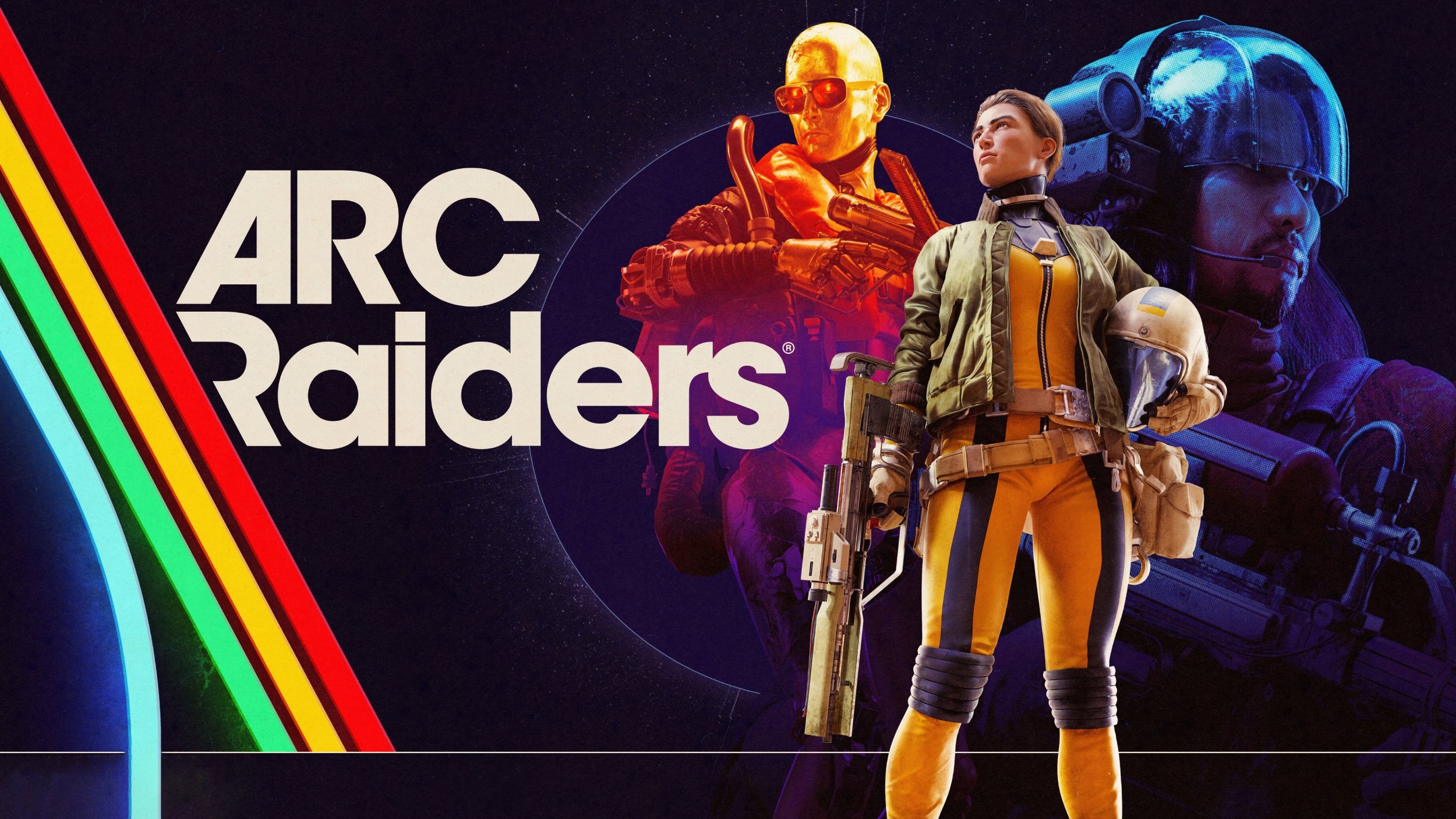
Key art for the widely popular game Arc Raiders that has faced some backlash for the use of AI voice lines
The reason I’m writing this isn’t to add more doom and gloom to the gaming timeline. There’s more than enough of that already. But while there are still plenty of questions around what “can” AI do today, it’s going to become less about what “can” AI do and what “should” we do with it sooner than you think.
Just because AI can do something – if not today, then maybe tomorrow – does that mean it should? Morally, ethically, cognitively – should you let an AI do certain things for you? Should you let it replace your research? Your critical thinking? Your creativity?
I also want to be careful about prescribing answers – even here in my own blog. My entire point today is to urge people to think for themselves and be mindful about how we all consume, share, and engage with content. Especially when it comes to topics like AI that take over the timeline.
Now, more than ever, focusing on high quality, original, human-made content and sharing that as a part of constructive conversations online is important. So here are 8 points I’ve put together, some more for creators and others for consumers, but hopefully all helpful nonetheless:
#1: Don’t just read headlines and react. Actually read or watch the content to get the full context and information. The power of the social media echo chamber to spread misinformation was already an issue before the AI boom, and now it’s only getting easier for Headline A that pops off to get picked up by creator B using an AI bot to scrape trending topics so that they can replicate content C until all of sudden you have 10 articles repeating the same out-of-context headline.
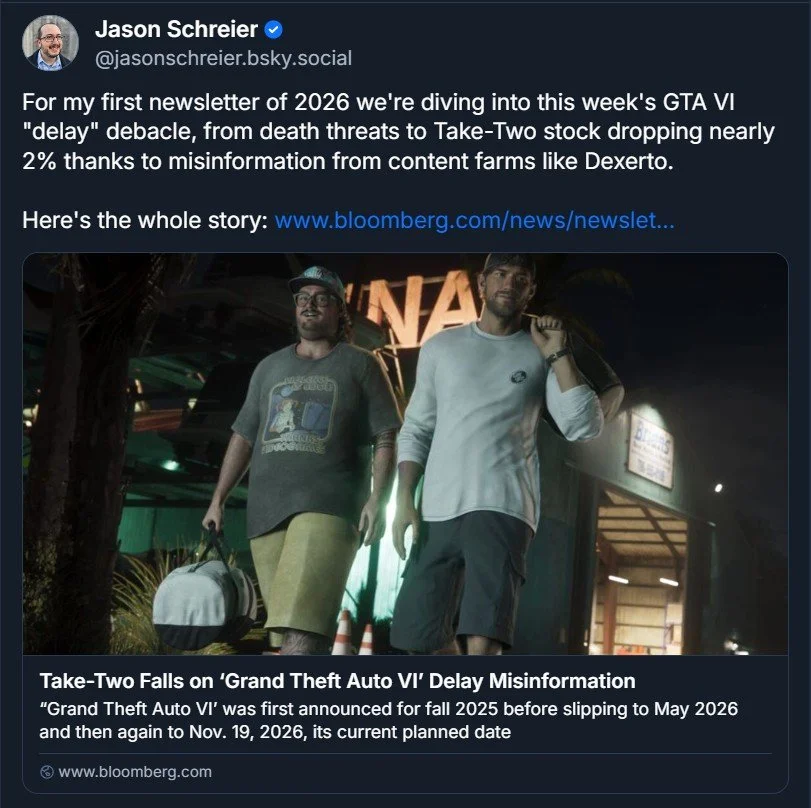
#2: Assess content quality and validity for yourself. Don’t just attribute authority to someone because they have a following or a lot of clicks. Whether it’s a journalist name you trust, an outlet whose content you view semi-regularly, or the top search result, don’t be complacent and take everything at face value. It’s insanely easy for even a good source like a Jason Schreier article to get misquoted and repeated until the original context is almost completely removed.
#3: Check sources. If someone is citing a quote or a statistic, where does it come from? If it originates in another language, was it translated by a human or AI? View the source yourself if you can – and assess it for trustworthiness. This is especially important in gaming leaks and insider culture. Just because NateTheHate said he hasn’t heard anything about [insert game name here] in six months doesn’t mean that it’s been cancelled – and yet that’s how some content creators or influencers will report it.
#4: Don’t cry AI without evidence. Human error can look like AI and vice versa. This isn’t a gaming example, but a few months ago there was an episode of One Piece where a character was animated with six fingers. With AI being notoriously bad with fingers… the accusations practically wrote themselves. But when it blew up, an animator in charge of the scene had to come forward to say no – that was actually my mistake. Moral of the story: be thoughtful about critiques and focus on what you CAN assess with your own eyes and ears. Focus less on accusations (especially in the absence of proof) and more on what the actual issue of your critique is.

A Gorosei from One Piece mistakenly animated in a scene with six fingers
#5: Be mindful about what you share. Don’t repost content without viewing it fully for yourself first so that you don’t become a part of spreading misinformation or low-quality content that doesn’t deserve your support or anyone else’s attention. Whether it’s AI-generated content or just bad information, don’t repost it – even if you’re quote posting with a contradictory opinion, you’re still giving it visibility, traffic, and power.
#6: Creators: AI-proof your content. Especially content that offers definitions, summaries, walkthroughs and guides – AI is primed to take over your content. Already, Google search results can easily scrape your content and summarize it so that potential viewers don’t need to click through to your page. But think about patents like Sony’s for an AI that can play a game for someone. While it offers upsides for accessibility, it also comes with new concerns: if people don’t need to leave a game to go to a guide, why do they need your content? If AI can play a game start to finish without breaks, it can generate walkthroughs or let’s plays faster than you. It could diminish the credibility of a reviewer who “says” they beat an entire game.
So, consider: What’s YOUR voice? YOUR unique value? What is the personal style you bring to bear that can’t be summarized in one to two sanitized sentences?

#7: Don’t rely on traditional search or internet traffic sources like SEO. If you’re a creator, big or small, engage with real human beings. Build a community wherever you find the best experience whether that’s BlueSky, Twitch, or Discord, etc. Reply to comments. Maintain friendships with other creators in your niche. Help each other find and grow an engaged community together that cares about having real, human conversations.
#8: If you say you don’t use AI, be mindful about what that means and state it clearly. Do you actively avoid all AI sources, even incidental ones? Do you check with other members of your team or third-party partners to make sure they keep the same standards? (Does someone help you create your thumbnails or other graphics? Does someone help write your social media posts? Does the website you use to host your domain have AI built into its suite of tools?)
Right now, there is no greater value than trust – earn it, and make sure you do what you can not to lose it.
Conclusion
Ultimately, I hope you found this more helpful than taxing. The AI discussion isn’t going anywhere right now, and I don’t want to add unnecessarily to the noise or the mental strain it puts on everyone. But the better we’re armed as a community to have the conversation, the better we’ll be able to weather this storm – and any other for that matter when it comes to hot button issues dominating the headlines and tipping the scales from scrolling to doomscrolling.
If you take anything away from this, I hope that it’s the message to support quality content. Reward good journalism. Signal-boost honest, thoughtful, constructive criticism and reviews. Share unique perspectives from original opinion pieces or cool video essays. And take accountability for the content you consume – investigate its quality, check sources, and reflect mindfully on how your perspective intersects with others’.
To think is to be human. You have a mind. Use it. Don’t trust internet authority A or unattributed source B blindly. Don’t let ChatGPT or Copilot or whatever new freemium AI app booms next do all your research and critical thinking for you. Seek out information. Absorb different opinions. Challenge your assumptions. Practice presenting your arguments.
Hone your voice. And use it effectively.
Sincerely,
Michaela